Is It Safe To Walk Around Churchill, Manitoba?
Churchill's official walking rules, the Polar Bear Alert Program, and why a guided tour is the safer way to see polar bears in the polar bear capital of the world.
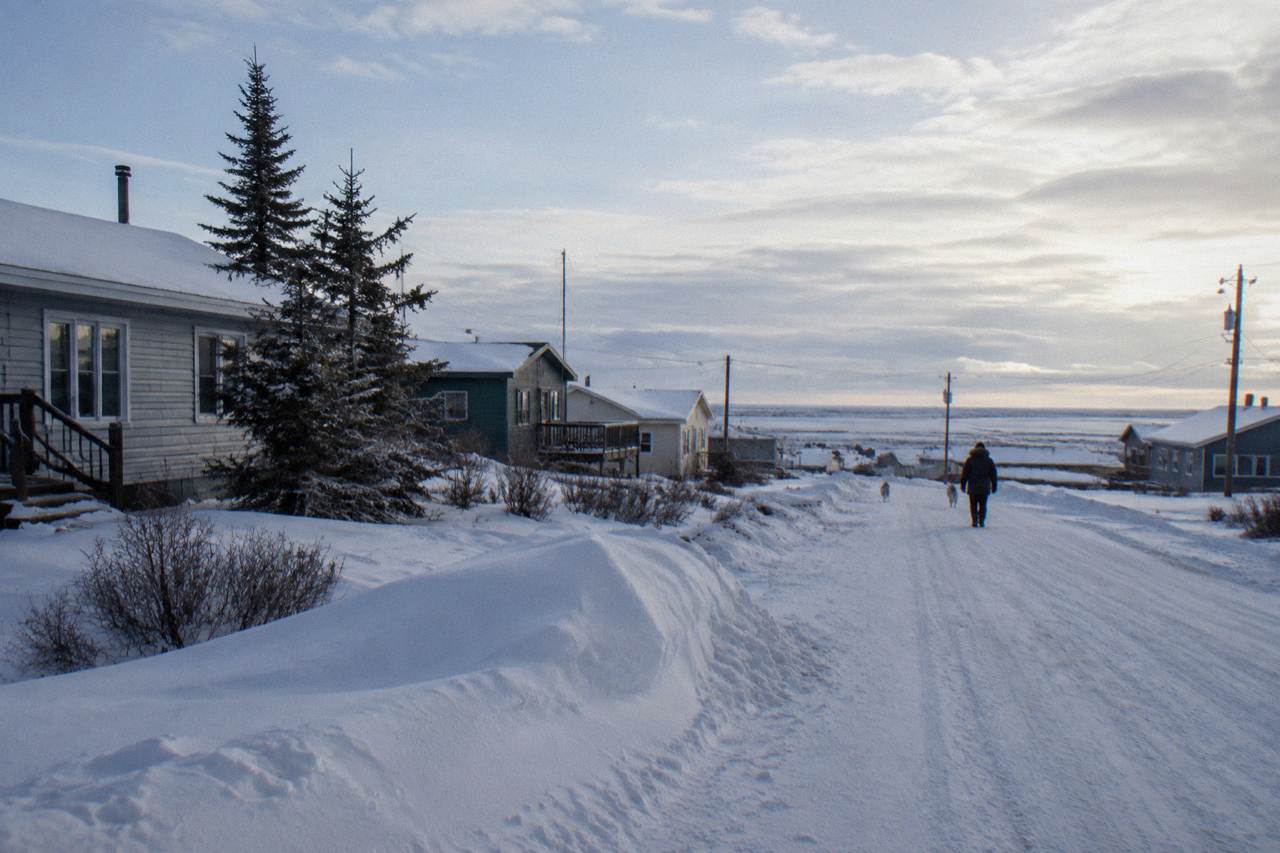
Churchill is one of the few towns on earth where a person can finish dinner, step outside, and be standing in the migration path of the world's largest land predator. About 900 people live here, per Travel Manitoba, and from mid-October to mid-November an average of 600 polar bears roam the Hudson Bay shore waiting for the ice to form. The question every visitor asks is not whether the bears are real, it is whether a person can walk around town at all. The short answer: yes, people walk in Churchill every day, but under rules most southern towns never need, and with a hotline number every local knows by heart. Before you plan a trip around the bears, it helps to know the town draws visitors year-round, and our guide to what makes Churchill famous covers the belugas and northern lights that fill the rest of the calendar.
Is It Safe To Walk Around Churchill?
Yes, walking in Churchill is safe within limits, and the town runs on rules written in response to real bear encounters. Manitoba's guidance is blunt: if walking is absolutely necessary, stay on the main streets of Churchill, never walk in dimly lit areas, and report any bear sighting immediately. The town is small, lit, and patrolled, and the risks drop sharply once you follow the system the community and the alert program have built. If you've heard travelers mention a "three bear rule" for Churchill, the real bear safety rules and the Polar Bear Alert Program explain what actually applies.
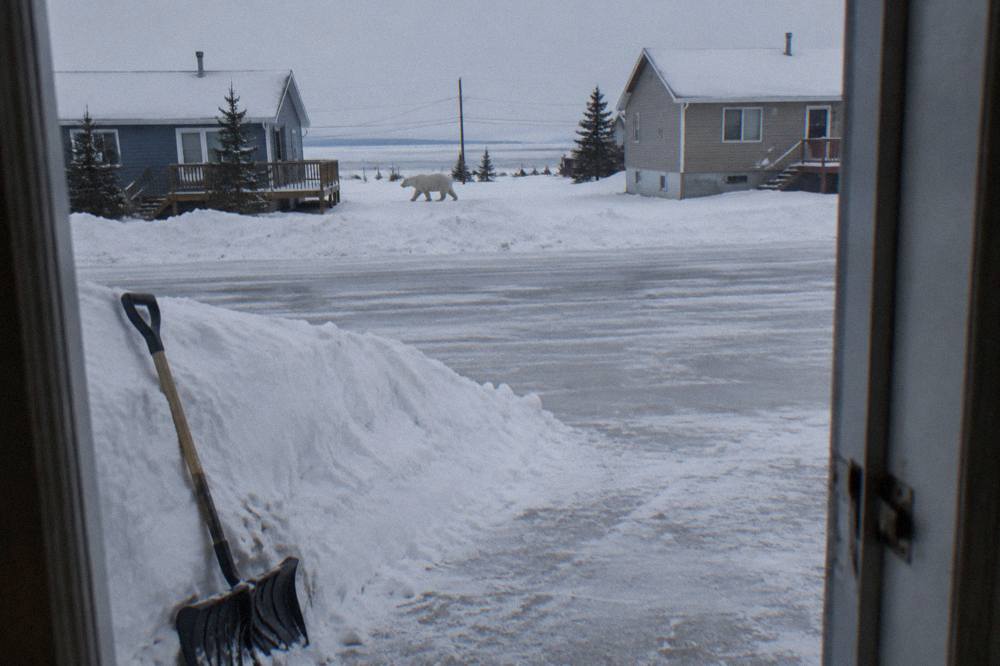
The honest framing matters here. Churchill is not a dangerous town in the ordinary sense. There is very little violent crime, everyone knows everyone, and the streets are quiet. The single hazard that shapes daily life is the polar bear, and the town treats it the way coastal towns treat hurricanes: as a predictable, managed, seasonal event with a whole infrastructure behind it. Manitoba Conservation runs a dedicated Polar Bear Alert Program with a 24-hour hotline, 204-675-2327, monitored around the clock through the active season. Locals do not treat that number as trivia. It is the first thing schoolchildren learn and the thing visitors should have in a pocket before walking anywhere. If you want a sense of how often that system is actually tested, the history of polar bear incidents in Churchill offers a reassuring look at the numbers behind the town's safety record.
What tends to surprise first-time visitors is how ordinary the town feels given all this. People walk to the bakery. Kids cycle on the main roads. The difference is that nobody walks the dim back routes at night, nobody wanders the shoreline alone, and nobody leaves town on foot toward the coast. The risk in Churchill is not diffuse, it is concentrated in specific places at specific times, and the community has mapped all of them. The town publishes its own alert zone maps and a "Safety in Polar Bear Country" pamphlet, available through the municipal site, so the boundaries are not folklore, they are published policy.
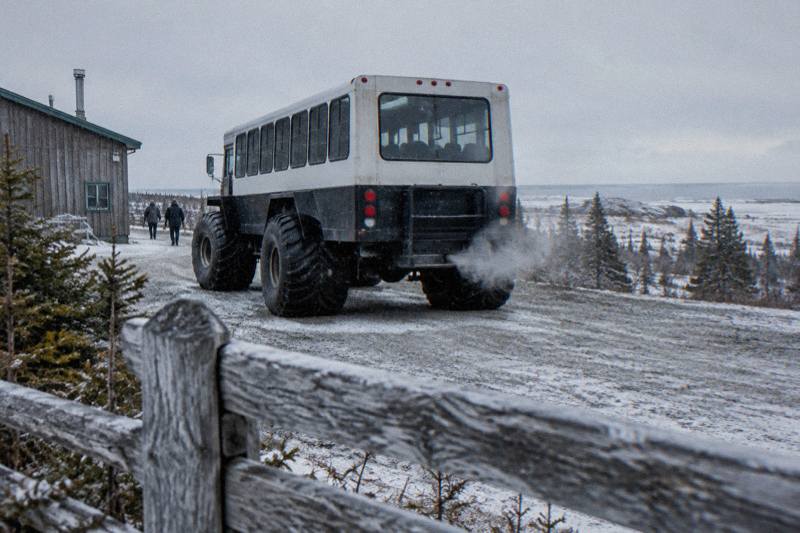
For travelers whose main goal is seeing bears, the practical conclusion is simple: the safest bear viewing happens from a licensed vehicle, not from a walking route. The eight-hour Tundra Buggy day trip with lunch aboard, run by Frontiers North Adventures, keeps guests on an elevated deck inside the Churchill Wildlife Management Area while bears move through their own habitat below. That is the format the entire safety system is built around, and it exists precisely because walking toward bears is the one thing this town never does.
What Are The Official Rules For Walking In Churchill?
The official rule set is short and specific: stay on main, well-lit streets only; avoid dimly lit areas and shortcuts; report any bear sighting at once to the alert line; and never approach, feed or harass a bear. Doors around town are often left unlocked so anyone can shelter quickly. These rules come from Manitoba's own polar bear safety guidance, not from local legend.
The province publishes its walking guidance in an official safety document, and the wording is worth reading closely because it is more restrictive than most visitors expect. The guidance says that if walking is absolutely necessary, stay on the main streets of Churchill, never walk in dimly lit areas. That phrasing, "if absolutely necessary," tells you the provincial posture: walking after dark in bear season is treated as a last resort, not a normal activity. During the day, walking around the townsite on main routes is a completely ordinary thing to do.
| Situation | Official guidance | What it means in practice |
|---|---|---|
| Daytime walking on main streets | Permitted, normal | Walk Kelsey Boulevard and central routes like a local |
| Walking dimly lit or back routes | Never, per Manitoba guidance | Take the lit, longer way, every time |
| Walking after dark in bear season | Avoid if at all possible | Arrange a ride or a guided pickup instead |
| Seeing a bear anywhere near town | Report immediately, do not approach | Call the alert line, 204-675-2327, and get indoors |
| Wandering the coastline or outside town on foot | Not advised, outside the managed zone | Use a licensed tour vehicle for any wildlife viewing |
Two details in that table deserve emphasis. First, the reporting rule is not optional politeness. The alert program depends on early calls: a bear spotted at the town edge can be hazed away with noisemakers before it ever reaches a street. A bear that goes unreported for hours can end up in the holding facility, which is worse for the bear and, in the worst case, riskier for people. Second, the unlocked-doors custom is real and deliberate. Around Churchill, doors are often left unlocked so that anyone caught outside can shelter fast. That is a community adaptation to living with bears, and it is also why visitors should never be surprised when a door opens without a key. There is a whole post on this custom, why locals leave their cars unlocked in Churchill, if you want the full story.
The rules extend beyond town, too. Wapusk National Park, which covers 11,475 square kilometres east of Churchill, requires a licensed guide for all activities and has no independent access at all: Parks Canada states plainly that visitors must arrange transportation with a licensed tour operator because there are no roads into the park. That requirement is not bureaucratic caution. It is the same principle the town walking rules follow, applied at landscape scale. In polar bear country, the licensed-operator rule is the safety rule.
How Does The Polar Bear Alert Program Keep The Town Safe?
The program runs a controlled zone around the townsite where bears are simply not permitted, responds to public reports around the clock, uses aversive hazing first, and holds persistent bears in the Polar Bear Holding Facility near the airport until the sea ice forms. It is a preventive system, not a reactive one, built to keep bears and people apart before they ever meet on a street.
The mechanics are worth understanding because they explain why the walking rules are shaped the way they are. When a bear is reported near the controlled zone, staff respond with aversive conditioning first: noisemakers, paintballs and rubber bullets designed to make the town feel like a bad place to be. Most bears take the hint. A bear that persists, or one that has already entered the townsite or the dump area, may be live-trapped and moved to the Polar Bear Holding Facility, a converted former military building near the airport with up to 28 cells, including family-group cells. The average hold runs about 30 days, or until the ice forms, and the bears are deliberately not fed, because feeding them would teach them to associate people with food. The facility is not open for public visits inside, though it is a well-known landmark and visitors do view it from outside.
| Alert program step | What happens | Why it works |
|---|---|---|
| Public report to 204-675-2327 | Staff dispatched, monitored around the clock in active season | Early reports keep bears far from streets |
| Aversive hazing | Noisemakers, paintballs, rubber bullets | Makes the town unpleasant, teaches avoidance |
| Live capture | Persistent bears moved to the holding facility | Removes the bear without harming it |
| Holding, no feeding | Up to 28 cells, average hold about 30 days | Prevents food conditioning |
| Release on the ice | Bears freed when Hudson Bay freezes | Returns them to seal-hunting grounds |
The program's preventive design is the reason a visitor can walk to dinner in October without a second thought. The controlled zone means the town itself is actively kept clear, and the hotline means the perimeter is watched by hundreds of residents, not just a few officers. The system is not perfect, no system that manages wild animals is, but records note only two fatal attacks in the town's modern history, in 1968 and 1983, and a non-fatal mauling on 1 November 2013 in which two people were injured and survived. No serious human injuries from bears have been reported in Churchill since 2013. Those numbers are not luck. They are the output of a program that treats every bear near town as a same-day problem.
For context on the population the program manages: the latest aerial survey of the Western Hudson Bay bears, flown in late summer 2021, estimated 618 animals with a wide interval of 425 to 899, down from about 842 in the 2016 survey. No newer government survey has been published since. The point is not the precision of the figure, it is that a substantial bear population moves through the coast near town every fall, and the alert system exists to keep two sets of residents, human and bear, from meeting each other on foot. If you want the deeper background on the program and the holding facility, the site's guide to the Polar Bear Alert Program and the polar bear jail covers it in full.
Where Can You And Can You Not Walk In Churchill?
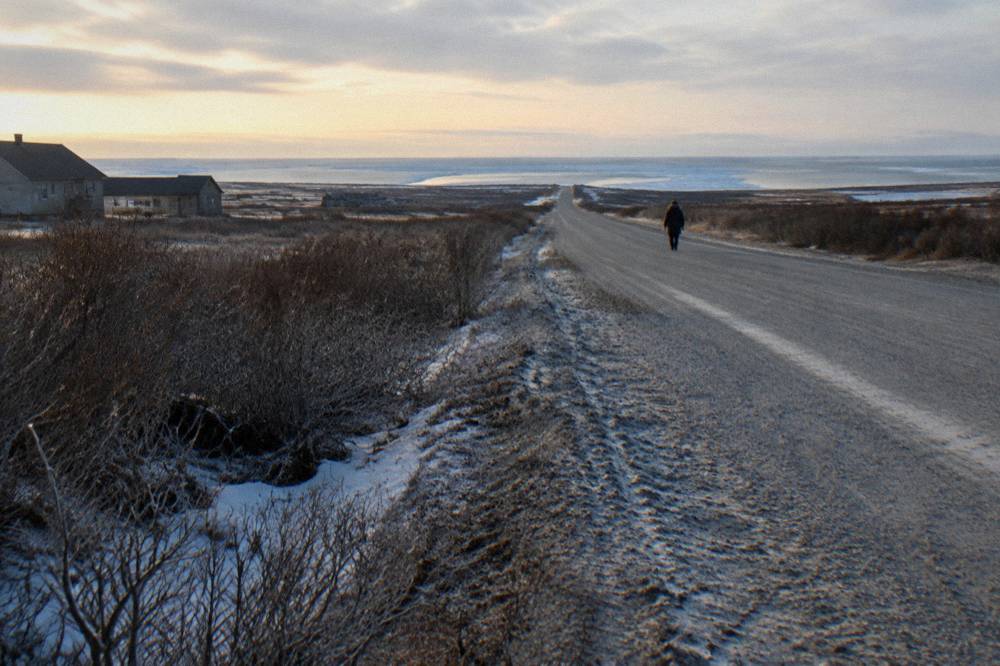
Inside the townsite, on main lit streets, walking is normal. Outside the managed zone, on the coastline, the tundra beyond town, or anywhere in the Wildlife Management Area, walking for wildlife viewing is effectively off the table: provincial regulation restricts vehicle operation and structures in the management area to licensed operators, and Wapusk requires a licensed guide for everything.
The geography draws the line for you. Churchill is a compact townsite on a point between the Churchill River and Hudson Bay, and the interesting wildlife habitat starts almost the moment the pavement ends. That boundary is exactly where the rules change character. Within town, the alert program's controlled zone does the work. Beyond it, you are in bear habitat without a managed perimeter, and the only sanctioned way to view bears out there is from a licensed vehicle, on a licensed operation, under the provincial regulation that governs the Churchill Wildlife Management Area. Other pages covering the same trip are gathered on Churchill Polar Bear Tours Canada.
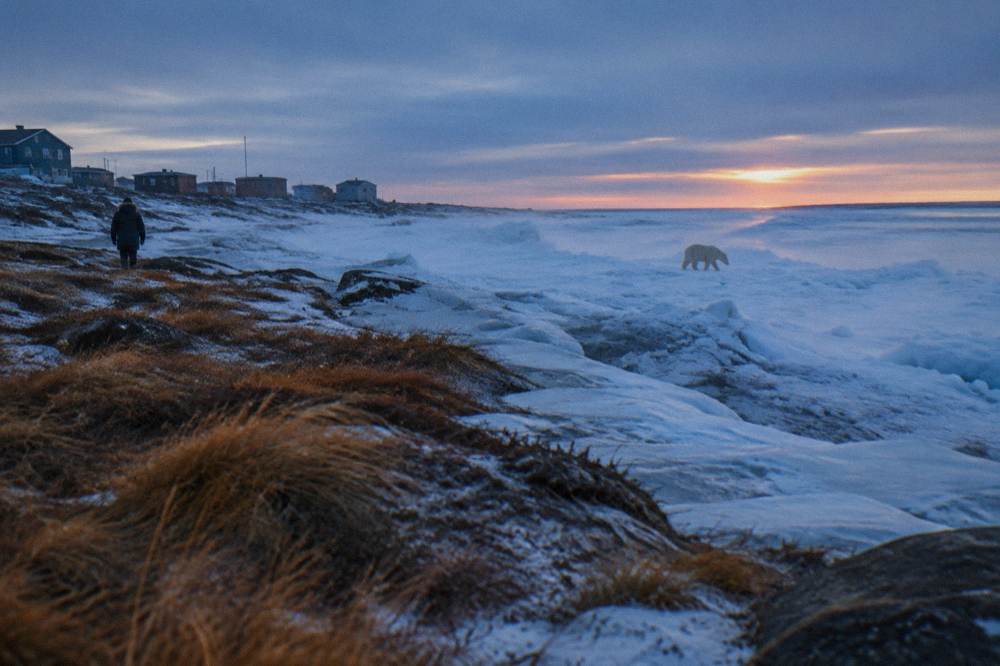
This is the single most important thing a first-time visitor can internalize: the town and the tundra are two different safety worlds. In town, the risk is a rare, managed event, and the walking rules are about not being caught outside during one. Out on the coast, the risk is structural, because you are walking through the habitat the bears are actively using. Nobody in Churchill walks out to look for bears, and no honest guide will ever suggest it. Bears are wild animals, sightings are never promised on any day, and the safe vantage is always height and distance, which is exactly what the elevated Tundra Buggy format provides.
For travelers who want flexibility without joining a fixed bus schedule, the private options are worth knowing about. A private heated SUV road safari around Churchill and the Hudson Bay coast, with your own guide, hotel pickup and free cancellation up to 24 hours before start, runs about eight hours from $1,474 USD per private group. It is a new listing with no reviews yet, so there is no rating to cite, but the format itself, a guide who knows the roads and the sightlines, sits firmly on the safe side of the line the town draws.
Is Churchill Safe At Night?
Nighttime is when the walking rules get strict, and the honest answer is that walking after dark in bear season is something the town itself avoids. Manitoba's guidance to stay on main, well-lit streets and never walk in dimly lit areas is written for exactly this situation, and in October and November the practical move is to arrange rides rather than walk.
The reason is seasonal rhythm. Bears move at night, especially in the fall when they are waiting on the ice and covering ground along the coast. A town that is safe to stroll at 2 p.m. in July is a different place at 11 p.m. in late October. The alert program still works, the hotline still answers, and the controlled zone is still enforced, but the margin for error narrows after dark, which is why every piece of official guidance leans the same direction: minimize walking, use main routes, and get indoors when told to.
The nights in Churchill are also, famously, worth being out for, which creates a tension visitors should resolve with vehicles rather than foot travel. Aurora season runs late August into April, with February and March the darkest and clearest months, and Churchill sits directly under the auroral oval, which is why Travel Manitoba calls it one of the most reliable northern lights spots in the world. The safe way to chase that sky is a guided drive. The private aurora night tour, a five-hour run out of town in a warm vehicle with just your group of up to five, costs from $702 USD per private group and includes hotel pickup plus free cancellation up to 24 hours before start. It is a new listing with no reviews yet, so no rating can be cited, but the format answers the night-safety question directly: you get the dark sky and the aurora without ever being a pedestrian in it.
For anyone weighing the full picture of town safety and wildlife risk, the site's Churchill polar bear safety guide goes deeper into what to do in an encounter, and the record on how many polar bear attacks there have been in Churchill puts the risk in honest historical context rather than in headlines.
Why Is A Guided Tour Safer Than Exploring On Your Own?
A guided tour puts a licensed vehicle, an experienced operator and a known route between you and the wildlife, which is exactly the arrangement provincial regulation and the alert program are built around. Operators in the management area work under licence, follow the same safety protocols the town trusts, and keep guests elevated and inside a managed perimeter instead of on foot in habitat.
The comparison is not subtle. Self-guided exploring in Churchill means you are a pedestrian making your own judgments about a hazard the town has spent generations learning to predict. Guided touring means you are inside a system: a licensed operation, in the case of the buggy tours a purpose-built vehicle with an elevated viewing deck, a heated cabin and a washroom near the back, per the operator's own pages, running a set route through the management area with a guide whose job includes reading bear movement all day. The operator's pages describe the Tundra Buggy as heated fleet-wide, with a window for every guest, a rear deck with a grated metal floor, and 1.7 m tires, which is the machinery of a format designed around safe distance.
The listing for the eight-hour buggy day with lunch aboard, from $484 USD per person with Frontiers North Adventures, carries a 4.6 rating from 30 reviews, and the guest reports on it are consistent about the safety culture. One review from a guest in Canada describes a guide who "ensured we had the best experience possible resulting in seeing about 12 bears starting with a momma bear and two cubs" and adds that "our safety and the bear's safety was the top priority." Another, from the United Kingdom, calls the day "Best day ever!" and notes "the buggy was warm and comfortable." Those are individual days, not promises, but the pattern in the reviews matches the format's design: the vehicle does the approaching, at a distance the bears themselves choose, and the guests never step into the habitat.
For travelers who want the fullest version of the guided approach, the six-day Classic Churchill Polar Bear Experience from Winnipeg, from $7,926 USD per person with a 4.8 rating from 59 reviews, bundles flights both ways, Tundra Buggy days on the tundra and town time, all inside one licensed operation. Its reviews describe exactly what a managed trip looks like from the inside: one guest wrote that the tour "was beyond amazing and exceeded expectations" and praised a guide who "always made sure the entire group had everything they needed." That is the tone of a trip built around group logistics and safety, and it is the far end of the spectrum from walking a dim back street alone.
Common Questions About Walking Safely In Churchill
Is It Safe To Walk Around Churchill?
Yes, within the official limits. Manitoba's guidance is to stay on main, well-lit streets, never walk in dimly lit areas, and report any bear sighting immediately to the alert line at 204-675-2327. During the day, walking the main streets of Churchill is an ordinary thing to do; after dark in bear season, the town itself minimizes walking.
What Is The Polar Bear Alert Hotline Number?
The hotline is 204-675-2327, or 204-675-BEAR, and it is monitored 24 hours a day during the active season. Anyone who spots a bear near town should call it immediately and get indoors rather than watch or approach.
Why Do People In Churchill Leave Doors And Cars Unlocked?
Doors around Churchill are often left unlocked so that anyone caught outside during a bear encounter can shelter quickly in the nearest building. It is a deliberate community adaptation to living with polar bears, not carelessness.
Can You Walk Out Of Town To See Polar Bears?
No, and nobody in Churchill does. The coastline and tundra outside the townsite are bear habitat without a managed perimeter, and the Churchill Wildlife Management Area is restricted to licensed operators under provincial regulation. Safe bear viewing happens from a licensed vehicle such as a Tundra Buggy, never on foot.
How Many Polar Bear Attacks Have Happened In Churchill?
Records note two fatal attacks, in 1968 and 1983, and a non-fatal mauling on 1 November 2013 in which two people were injured and survived. No serious human injuries from bears have been reported in Churchill since 2013.
Is Churchill Safe To Visit With A Tour?
Yes. Licensed tours operate under provincial regulation in the management area, use elevated vehicles, and keep guests inside a managed operation. The eight-hour Tundra Buggy day trip, for example, carries a 4.6 rating from 30 reviews, with guests describing safety as the top priority on the day.