Polar Bear Alert Program And Polar Bear Jail
Churchill is one of the few towns on Earth where a dedicated provincial program, a round-the-clock hotline and a purpose-built holding facility exist for one reason: keeping people and polar bears out of each other's way. Here is how the system works, and what it asks of you as a visitor.
Short answer
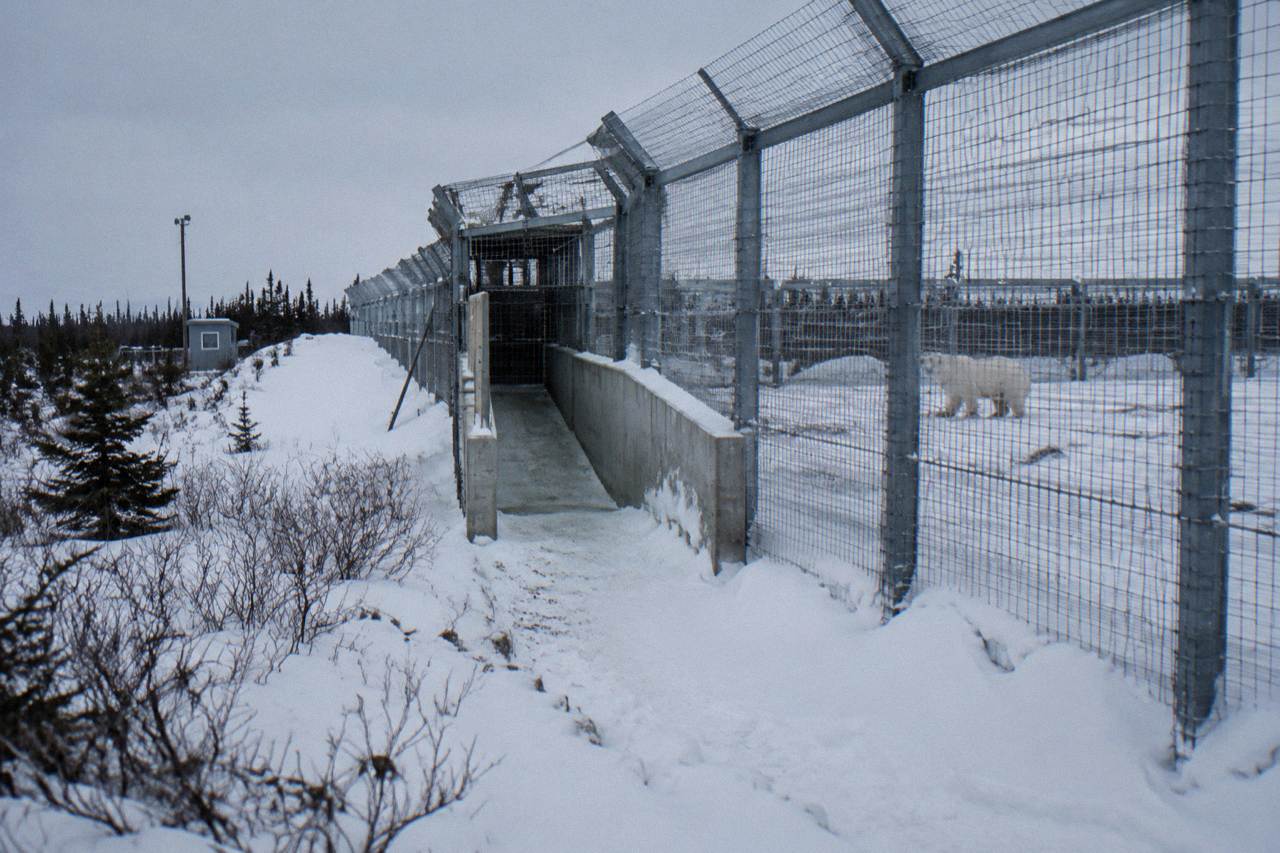
Manitoba's Polar Bear Alert Program runs a 24-hour hotline, 204-675-2327 (675-BEAR), through the active season, keeps a controlled zone around the townsite where bears are never permitted, and holds persistent bears in a facility near the airport with up to 28 cells and an average hold of about 30 days. The facility is not open to the public inside.
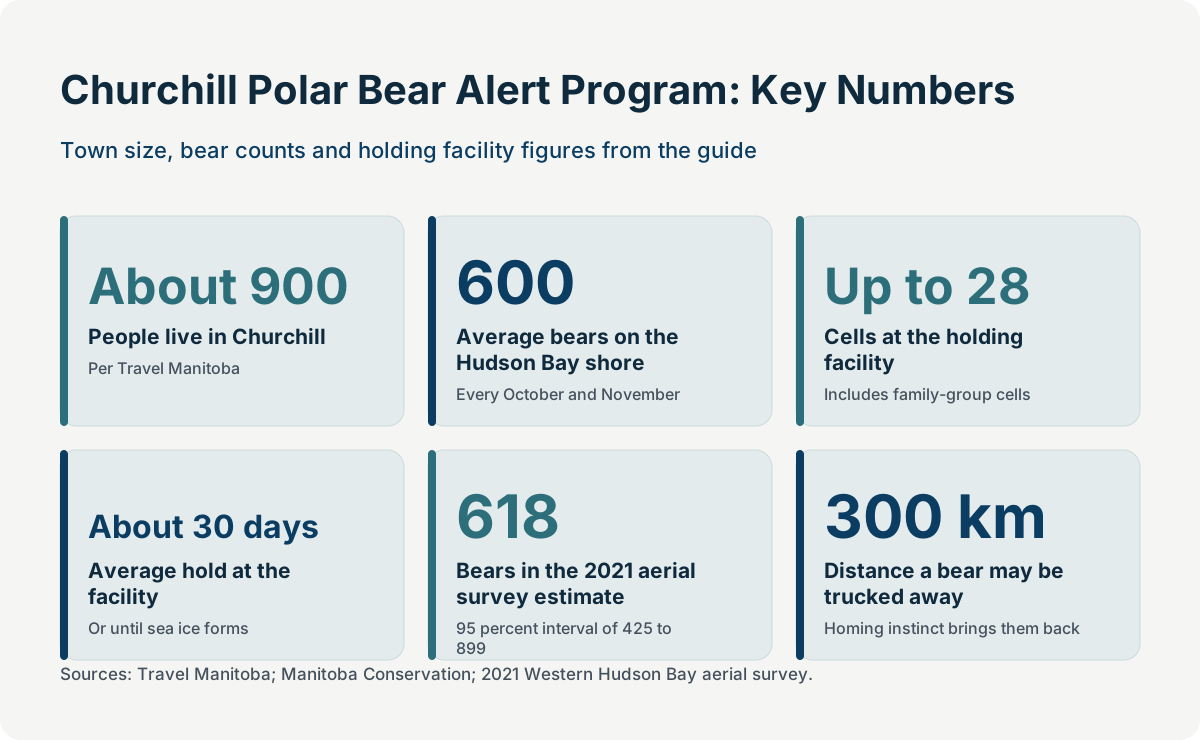
Churchill sits on the shore of Hudson Bay, more than 1,000 km from Winnipeg, with no road in at all: the town's only connections to the rest of the world are its airport, its train station and the port. About 900 people live here, per Travel Manitoba, and every October and November an average of 600 polar bears roam the Hudson Bay shore waiting for the bay to freeze. Put those numbers side by side and the question stops being whether the town has a bear management plan and becomes how anyone made it this precise.
The answer is the Polar Bear Alert Program, a Manitoba Conservation operation that has run in Churchill for decades, backed by a 24-hour hotline, a controlled zone around the townsite and a holding facility near the airport that locals call the polar bear jail. This guide walks through how each piece works, what the rules ask of visitors, and how the licensed tour industry fits into the same safety system. If you are weighing a trip, the short version is reassuring: the program exists precisely so that bears and visitors rarely meet on foot, and the numbers bear that out.
What Is The Polar Bear Alert Program In Churchill?
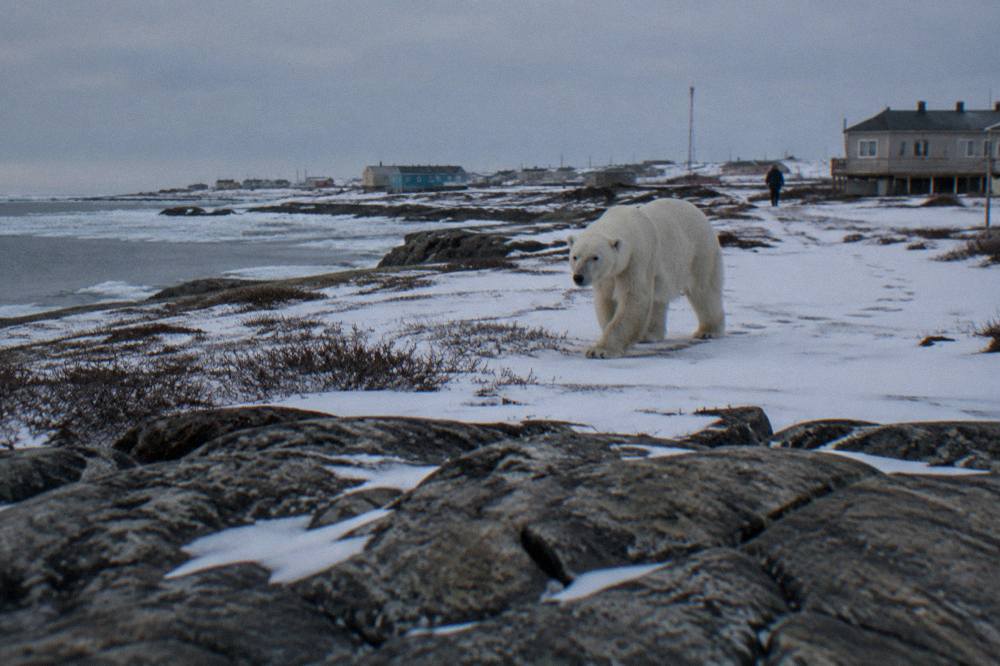
The Polar Bear Alert Program is Manitoba Conservation's dedicated bear management operation for the Churchill area: it maintains a controlled zone covering the townsite and the dump where polar bears are never permitted, responds to public reports, and moves bears out of conflict before they become a danger. The program is preventive by design, and its stated purpose is protecting bears, people and property in the Churchill area, all at once. That same protective mindset shapes daily habits around town, which is why locals leave their car doors unlocked for a surprising reason.
The program's logic is simple and it is worth understanding before you arrive, because it explains half of what you will see in town. Polar bears that approach or enter the community are not tolerated the way a raccoon might be in a southern city. A bear in the controlled zone triggers a response, and the response escalates in steps rather than jumping straight to capture. The first tool is aversive conditioning: noisemakers, paintballs and rubber bullets, used to make the town an unpleasant place for a bear to be. Most bears take the hint and leave.
Bears that persist, or that return, are live-trapped and moved to the holding facility near the airport. The facility holds them until the sea ice forms on Hudson Bay, at which point they are released onto the ice, away from town and away from the food that drew them in. The point of the whole ladder is that no bear is destroyed for the crime of wandering, and no person is left waiting for one to. Manitoba's own polar bear pages describe the program as working to protect polar bears, people and property in the Churchill area, and that ordering, bears first, is deliberate: the bears were here long before the town was.
For a visitor, the practical takeaway is that Churchill is not a place where bears wander the streets at will. It is a place where a provincial program, staffed through the active season, works a hotline and a holding facility so that the streets stay empty of bears. The town also publishes zone maps and a Safety in Polar Bear Country pamphlet, which you can find referenced on the town's own safety pages.
| Program element | What it does | What it means for you |
|---|---|---|
| Controlled zone | Townsite and dump area where bears are never permitted | The core of town is actively kept bear-free |
| Aversive conditioning | Noisemakers, paintballs, rubber bullets used first | Most encounters end with the bear hazed away |
| Live trapping | Used when hazing fails or a bear persists | The bear goes to the holding facility, not worse |
| Hotline | 204-675-2327 (675-BEAR), monitored around the clock in active season | One number to report any bear sighting |
| Holding facility | Up to 28 cells near the airport, average hold about 30 days | Bears wait for ice, then are released onto it |
How Does The Polar Bear Hotline Work For Visitors?
The hotline, 204-675-2327 or 675-BEAR, is monitored 24 hours a day through the active season, typically running from mid-summer through freeze-up in late fall. Any person in Churchill, resident or visitor, can call it to report a bear sighting, and the program asks that you report immediately rather than waiting to see what the bear does.
The number is printed on signage around town, and the culture around it is matter-of-fact. Reporting a bear is not considered an overreaction in Churchill; it is considered the correct move, every time, because the program's response ladder only starts when someone makes the call. Staff respond to public reports outside the controlled zone as well as inside it, which means a bear spotted along the coast road or near the edge of town gets the same attention as one on a main street.
Two things visitors sometimes get wrong are worth correcting here. First, the hotline is for sightings and safety, not for tour information or bear viewing tips; it is a conservation line, not a visitor line. Second, calling it does not mean the bear will be trapped. As covered above, the first response is hazing, and a bear that turns around after a noisemaker never sees the inside of the holding facility. The trap is the second step, reserved for bears that keep coming back.
The active season framing matters too. Churchill's bear activity peaks in October and November, when the bears gather along the coast waiting for the bay to freeze, and the hotline is staffed around the clock through that period and the quieter months before it. If you are traveling in the shoulder season, the line still exists; the intensity of monitoring simply tracks bear movement, which follows the ice.
The question of how likely you are to see a polar bear in Churchill, in the wild and from a safe distance, is covered in full elsewhere on this site, and it is a different question from how likely you are to encounter one in town. The program exists to keep the second number near zero, and by the record it succeeds.
What Happens Inside The Polar Bear Jail?
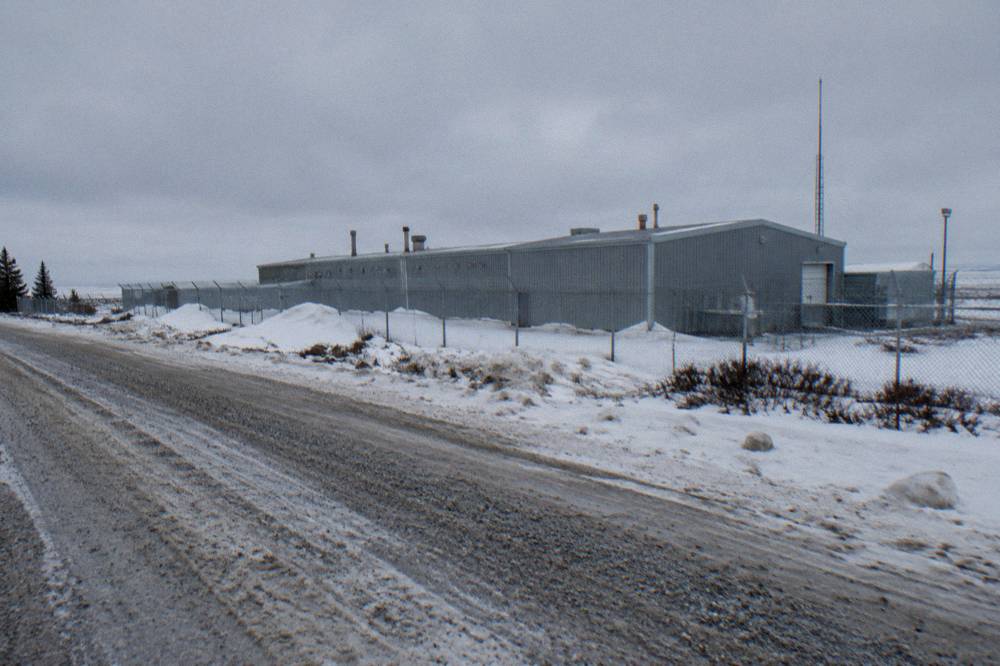
The Polar Bear Holding Facility, in a former military hangar near Churchill airport, holds problem bears in up to 28 cells, including family-group cells and some that are air-conditioned, for an average of about 30 days or until the sea ice forms. The bears are not fed during their hold, and the facility is not open to the public inside.
The no-feeding rule is the part that surprises people, and it is the most important design decision in the whole building. A fed bear is a bear that has learned that towns mean food, and that bear will return, and returning bears end up in worse situations than a holding cell. By holding bears without food and releasing them onto the ice when it forms, the program breaks the association between town and reward. It is uncomfortable to think about and it is deliberately so: the discomfort is the mechanism.
The building itself sits near the airport, in a converted military structure, and it handles dozens of bears over the course of an active season. The cells are individual, the family-unit cells exist so a mother and cubs are not separated, and the average hold runs about 30 days, which in practice means most bears are waiting out the last weeks before freeze-up. Hudson Bay near Churchill does not typically refreeze until around early November, so a bear trapped in mid-October is usually looking at a few weeks, not months.
What the facility is not is an attraction you can enter. There is no public access inside, no tours of the cells, no viewing corridor. Visitors can see the building from outside, and it is named in local tourism listings as a point of interest precisely because the program itself is part of what Churchill is famous for, but the experience ends at the fence. Anyone selling you a walk through the polar bear jail is selling something that does not exist.
The facility is one of the free or low-cost sights referenced in our piece on free things to do in Churchill, viewed from outside only, alongside the Itsanitaq Museum, Cape Merry and the Miss Piggy wreck. If the program's story is what draws you, the honest way to engage with it is from the road and through the town's published materials, not by looking for a way in.
| Holding facility fact | Detail |
|---|---|
| Location | Near Churchill airport, in a former military hangar |
| Capacity | Up to 28 cells, including family-group cells |
| Conditions | Some cells air-conditioned; bears held individually |
| Average hold | About 30 days, or until sea ice forms |
| Feeding | Bears are not fed, to prevent food conditioning |
| Public access | Not open to the public inside; viewable from outside only |
Why Are Bears Hazed Instead Of Relocated Far Away?
Bears are hazed first because relocation does not work for polar bears the way it can for other wildlife: a polar bear moved hundreds of kilometres will often simply travel back, and the hazing ladder teaches a bear that the town itself is unpleasant, which is the only lesson that keeps it away. The holding facility is the fallback, not the first resort, and its release-on-ice design replaces relocation entirely.
The hazing tools, noisemakers, paintballs and rubber bullets, sound harsh, and they are meant to be unpleasant for the bear without injuring it. The point is a negative memory attached to a specific place. A bear that gets a paintball round near the dump learns the dump is bad; a bear that is trucked 300 km away learns only that a truck ride happened, and homing instinct does the rest. Polar bears are strong swimmers and determined travelers, and the coastline is their home range, so distance is not the deterrent people assume it is.
The holding facility solves the timing problem that hazing cannot. In late October, a hazed bear has nowhere better to be: the ice has not formed, the coast is where the food chain will restart, and the bear's only real move is to wait. Holding it for those final weeks, then releasing it onto the newly formed ice, gives the bear exactly what it was waiting for, in the place it was always going to go, without the town in between. It is the most humane option in the toolkit, and it is why the program's answer to a persistent bear is a cell rather than a long haul south.
For context on the population the program is managing: the latest aerial survey of the Western Hudson Bay polar bear population, flown in late summer 2021, estimated 618 bears, with a 95 percent interval of 425 to 899, down from about 842 in the 2016 survey. No newer survey has been identified. Those are the bears the whole system is built around, and the fall gathering of an average of 600 along the shore is a seasonal concentration, not the whole population standing outside town.
The safety record, framed the way the sources frame it, is part of the same story. Records note fatal attacks in the Churchill area in 1968 and 1983, and a non-fatal mauling in town on 1 November 2013 in which two people were injured and both survived. No serious human injuries from bears have been reported in Churchill since 2013. That record sits alongside a program that has been refining its response ladder for decades, and the two are not a coincidence.
How Safe Is It To Walk Around Churchill During Bear Season?
Walking in Churchill during bear season is safe on the main, well-lit streets, and the provincial safety guidance is explicit: if walking is necessary, stay on the main streets, never walk in dimly lit areas, and report any bear sighting at once. Doors around town are often left unlocked so that anyone can shelter inside, which tells you how the community treats the possibility of a bear.
The unlocked-door custom is the detail that lands hardest with first-time visitors, and it deserves a plain explanation rather than a legend. It is not carelessness. It is a shared understanding that in the rare moment a bear appears on a street, the nearest door is the shelter, and a locked door is a door that cannot do that job. Visitors are asked to respect the custom and not to prop, block or lock doors that others rely on.
The walking rules themselves are short. Main streets only, at night especially. No shortcuts along the coast, no dimly lit routes, no walks out to the edge of town to look for bears, which the program's guidance and every honest local voice treat as the single dumbest thing a visitor can do. If you see a bear, you call the hotline, 204-675-2327, immediately, and you get inside. You do not approach it, photograph it from close range, or wait to see its direction of travel.
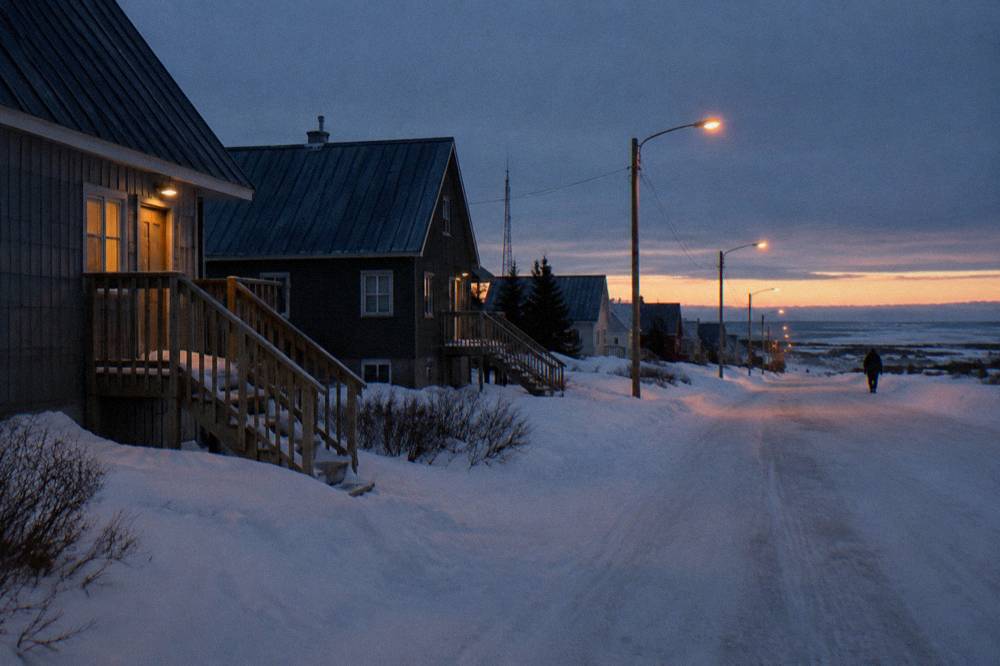
What the rules do not say is that you should stay indoors. Churchill in October and November is a working town with restaurants, a visitor centre in the VIA Rail station building, and a museum, and people move around it constantly. The risk being managed is not the main street at 7 p.m.; it is the unlit shortcut at 11 p.m., the solo walk along the shoreline, the visitor who steps out of town to get a better photo. The full set of walking guidance, including what the town's zone maps show, is laid out in our guide to polar bear safety in Churchill, and the question of whether the town feels safe day to day is answered in our piece on walking around Churchill safely.
One more framing point, because it changes how the rules read. Bears are not tame, friendly or harmless, and nothing in the program's design suggests otherwise; the system exists because the town takes the animals seriously as a hazard worth a hotline and a holding facility. The comfort visitors feel on Kelsey Boulevard comes from management, not from the bears' disposition.
| Situation | What the guidance says to do |
|---|---|
| Walking at night | Main, well-lit streets only; never dimly lit areas or shortcuts |
| Seeing a bear anywhere | Call 204-675-2327 (675-BEAR) at once; get inside |
| A bear near you | Get indoors through the nearest unlocked door; do not run toward the coast |
| Wanting a photo | Never approach; a distant bear is not a photo opportunity |
| Doors around town | Often left unlocked for shelter; leave them as you find them |
What Rules Apply In Wapusk National Park?
Wapusk National Park, which covers 11,475 square kilometres east of Churchill, requires that visitors be accompanied by a licensed guide or Parks Canada staff for all activities; there is no independent access, no camping, and no roads into the park, which means visitors must arrange transportation by aircraft with a licensed tour operator. Feeding, approaching or disturbing wildlife is prohibited, all garbage must be packed out, and no campfires are allowed.
Wapusk is where the maternity dens are, and it is the part of the region a visitor cannot simply walk into, which is the entire point of the rules. The park is designated high-risk polar bear habitat, and Parks Canada's position is unambiguous: a licensed tour operator is required for all activities in the park. There are no roads in, so access itself is by aircraft with a licensed operator. For a traveler, this means there is no version of a Wapusk visit that you arrange yourself on arrival.
The behavioural rules inside the park mirror the town's logic at a larger scale. Do not disturb, feed, approach or harass wildlife. Pack out all garbage, because a food-conditioned bear in a national park is the same problem it is near the dump. No campfires. Obey closures and warnings when they are posted. General visitors do not carry firearms in the park; outfitters and guides operate under their own permitting. The Parks Canada pages on Wapusk safety and regulations carry the full text, and the park's visitor information pages are the authority on what is currently permitted.
The connection to the Alert Program is direct. The hotline and the town's controlled zone manage the bears that come to Churchill; the park's licensing requirement manages the people who go to the bears. Both systems share one assumption, that unmanaged contact between people and polar bears is the thing to be prevented, and both are built so that the contact that does happen happens on managed terms: a licensed vehicle, a licensed guide, a controlled distance.
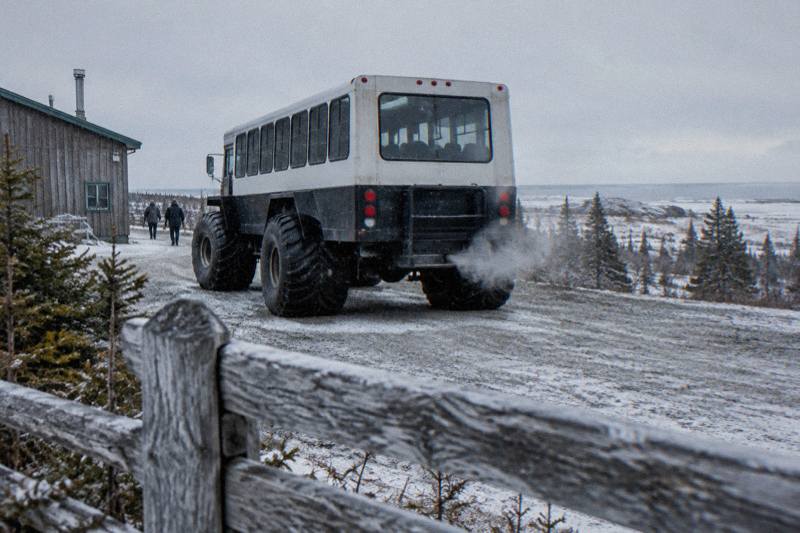
That is also why the tour industry in Churchill is not a loophole around the safety system but a component of it. Tour operators in the Churchill Wildlife Management Area operate under provincial regulation: while supplying accommodation or touring facilities in the management area, no person may operate a vehicle or occupy a structure except under that regulation, and the operators are licensed. The elevated Tundra Buggy vehicles, the private guided road safaris, the packages from Winnipeg, all of them run inside the licensed framework rather than outside it.
| Wapusk rule | Detail |
|---|---|
| Guide requirement | Licensed guide or Parks Canada staff required for all activities |
| Access | No roads; transportation by aircraft with a licensed tour operator |
| Camping | Not permitted for general visitors |
| Wildlife | No disturbing, feeding, approaching or harassing |
| Garbage and fires | Pack out all garbage; no campfires |
| Firearms | Not carried by general visitors; guides operate under permits |
How Do Licensed Bear Tours Fit Into The Safety System?
Licensed bear tours fit into the safety system as its viewing arm: operators in the Churchill Wildlife Management Area work under provincial regulation, use elevated vehicles that keep guests above the bears rather than among them, and coordinate with the same conservation authorities that run the Alert Program. Watching bears from a licensed vehicle is the managed way to see them; walking out to find one is the unmanaged way, and the program exists to catch the second.
The distinction is worth spelling out because visitors sometimes frame tours as an alternative to the town's safety apparatus, as though the serious option were to see bears without a vehicle. It is the reverse. The elevated viewing model, big-tired vehicles with raised decks and outdoor platforms, was built so that guests and bears can be near each other safely: the vehicle is licensed, the route is in the management area, and the bears, which are habituated to the vehicles and may approach or stand against them, are under no pressure. Frontiers North's own pages describe the Tundra Buggy as heated, seating up to 40 with day tours capped at 36 or 40, a window for every guest, a rear deck with a grated metal floor, 1.7 m (5.5 ft) tires and a single-use bathroom near the back.
The licensed tour formats cover a real range. The eight-hour buggy day with lunch aboard, from $484 USD per person with a 4.6 rating from 30 reviews, is the lowest verified per-person bear tour. The six-day package from Winnipeg, from $7,926 USD per person with a 4.8 rating from 59 reviews, adds flights both ways and multiple tundra days. The private road safari, from $1,474 USD per private group, includes hotel, airport or railway pickup, and is one of only two listings on the roster that offers pickup at all, and one of the few with free cancellation, up to 24 hours before start.
Guest reviews on the buggy day listing describe exactly the managed encounter the system is built for. One guest review notes, "Our guide, Luke, was passionate and knowledgeable about the area and Polar Bears. His stories were entertaining and informative. He ensured we had the best experience possible resulting in seeing about 12 bears starting with a momma bear and two cubs." Another reads, "Best day ever! So many bears including lots of cubs and even triplets. Couldn't have asked for a better trip. Marc was our guide so friendly and knowledgeable. Great lunch and the buggy was warm and comfortable." Those counts are one guest's day, not a promise; bears are wild and no honest listing guarantees them.
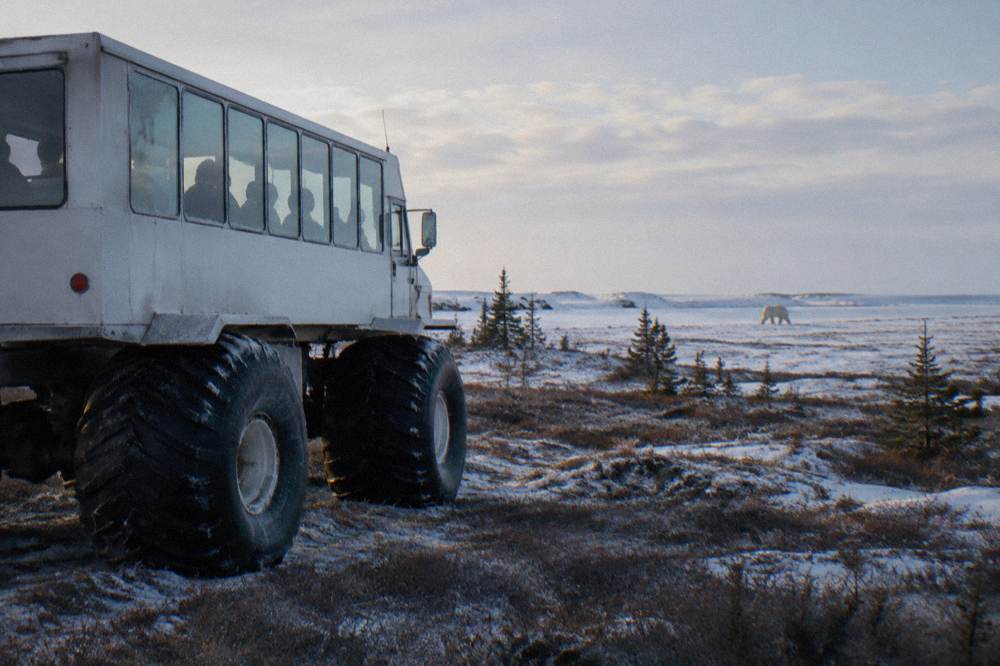
The autumn day tour format is the most direct version: check-in around 7:45 a.m. at the Fifty Eight North shop in Churchill, transfer to the launch site, lunch of sandwiches, soup, cookies and beverages aboard, eight hours on the tundra, return around 5 p.m. The listing for that format, from $496 USD per person with a 4.3 rating from 15 reviews, states the meeting-point departure plainly, so plan on making your own way to the shop. Neither buggy day listing offers free cancellation, which is worth knowing before you book: these are non-refundable, cannot be changed, and Travel Manitoba's guidance to book early, since day tours tend to sell to capacity, collides with that policy in a way that rewards firm dates.
If a single day on the tundra sounds like the right weight, the full comparison of formats is in our guide to one-day polar bear tours in Churchill. The longer question, how many days you actually need in town for bears, aurora or belugas, is answered in our piece on how many days you need in Churchill, and it changes the answer to which tour to book.
What Should You Do If You See A Bear While Visiting Churchill?
If you see a bear while visiting Churchill, you call the hotline at 204-675-2327 (675-BEAR) immediately, you get inside the nearest building through its unlocked door, and you stay there until the program responds. You do not approach the bear, you do not try to photograph it at close range, and you do not wait to see whether it moves on by itself.
The sequence is short because panic is the enemy of it. Report, shelter, wait. The program staff handle everything after the call, and they are the ones with the hazing equipment, the traps and the authority to use both. A visitor's job in the moment is to be a good witness: where the bear is, which direction it is moving, whether it is alone or with cubs. That information is what the response ladder runs on.
Before you ever need the sequence, there are two habits that make it unnecessary. The first is to stay on the main streets, covered above, which removes most of the geography where an encounter could happen. The second is to build your bear viewing into a licensed tour, which removes the motivation to go looking on foot. Nearly every incident pattern in the record involves someone outside the managed system: on the coast, at the edge of town, at night, alone. Inside a buggy or a guided vehicle, with a licensed operator in the management area, you are in the part of the region designed for exactly what you came to do.
It is also worth carrying the hotline number in your phone before you arrive, because the moment you need it is not the moment to search for it. 204-675-2327. The town's published safety materials, the zone maps and the Safety in Polar Bear Country pamphlet, are worth a look on arrival as well, and they are the same materials the program itself points to.
For travelers who want the safety story and the wildlife story in one trip, the pairing that works is a licensed day tour for the bears plus the free town sights for the program's context: the holding facility from outside, the Itsanitaq Museum, the Parks Canada Visitor Centre in the station building. That combination gives you the system and the animals without ever asking you to stand in the middle of either.
Why Does Churchill Run A Program Like This At All?
Churchill runs the Alert Program because geography leaves it no alternative: the town sits on the fall migration route of the Western Hudson Bay polar bears, the bay does not refreeze until around early November, and hundreds of bears wait on that coast each October and November, within walking distance of a community of about 900 people. A hotline, a controlled zone and a holding facility are cheaper, safer and kinder than any of the alternatives.
The seasonal mechanics explain the whole thing. Polar bears hunt seals from sea ice. When Hudson Bay melts in summer, the bears come ashore and live off stored fat, and when the ice reforms in late fall, they go back to it. Churchill's stretch of coast is on that route, and the ice historically forms here about as early as anywhere on the bay, so the bears gather, and the town is simply in the way of the gathering. From mid-October to mid-November, Travel Manitoba's figure is an average of 600 bears along the Hudson Bay shore.
Bears also show up outside the peak. The same sources note bears along the coast from July to September in smaller numbers, and the hotline's active season, mid-summer through freeze-up, matches that wider window. Summer visitors in town for belugas, which arrive in the Churchill River estuary between mid-June and mid-September with July and August the sure window, share the town with a smaller bear presence, and the program's quieter-season work is part of why that sharing stays uneventful.

The program is also, honestly, a large part of what people come to see. Churchill is famous for polar bears, and the fame rests on the fact that this is one of the most accessible places on Earth to see them, safely, from a licensed vehicle, during a predictable seasonal gathering. The alert system is the other half of that accessibility: it is why a town of 900 can host thousands of visitors each October without a running toll of incidents. The bears are the draw; the program is the reason the draw is survivable.
That framing is why this site, Churchill Polar Bear Tours Canada, treats the safety pages and the tour pages as one subject rather than two. The licensed buggy days, the packages from Winnipeg, the private guided drives, all of them run inside the system this guide describes, and the system is the reason any of them can be sold to families.
Common Questions About The Polar Bear Alert Program And Polar Bear Jail
Can You Visit The Polar Bear Jail In Churchill?
No. The Polar Bear Holding Facility near the airport is not open to the public inside; there are no tours of the cells and no viewing corridor. Visitors can see the building from outside, and it is named in tourism listings as a point of interest viewed from the road, but the experience ends at the fence.
What Is The Polar Bear Alert Hotline Number?
The hotline is 204-675-2327, or 675-BEAR, and it is monitored 24 hours a day through the active season, typically mid-summer to freeze-up in late fall. Anyone in Churchill, resident or visitor, can call it to report a bear sighting, and the program asks that you report immediately.
How Long Are Bears Kept In The Holding Facility?
The average hold is about 30 days, or until the sea ice forms on Hudson Bay, which near Churchill does not typically happen until around early November. Bears are then released onto the ice, away from town. The facility has up to 28 cells, including family-group cells.
Are The Bears In The Holding Facility Fed?
No. Bears held in the facility are not fed, deliberately, because a fed bear learns that towns mean food and will return. The hold is designed to break that association, with release onto the ice as the payoff for waiting.
Is It Safe To Walk Around Churchill During Bear Season?
Yes, on the main, well-lit streets. The provincial guidance says to stay on main streets, never walk in dimly lit areas, and report any bear sighting at once. Doors around town are often left unlocked so anyone can shelter inside.
What Happens First When A Bear Comes Near Town?
Aversive conditioning comes first: noisemakers, paintballs and rubber bullets used to haze the bear away. Live trapping and the holding facility are the next step, used only for bears that persist or return. No bear is destroyed simply for wandering near town.