What Is The 3 Bear Rule?
No official Manitoba or Parks Canada source defines a 3 bear rule for Churchill. Here is what the real rules are, from the Polar Bear Alert Program to licensed tour requirements.
What Is The 3 Bear Rule?
No official source defines a 3 bear rule for Churchill. The phrase was not found in Manitoba Conservation material, in Parks Canada guidance for Wapusk National Park, or in the provincial regulation covering the Churchill Wildlife Management Area. What visitors repeat as a numbered rule appears to be traveling folklore, passed along without a document behind it. The rules that do exist are specific, written down and enforced.
The phrase circulates in travel forums and comment threads, usually attached to some claim about how many bears may approach a vehicle, or how many sightings a town tolerates before it acts, or how many bears a guide is allowed to show a group. The details vary from telling to telling, which is the first clue that no regulation sits behind it. A real rule does not change depending on who repeats it. A regulation has a page, a number and an enforcement arm behind it. Folklore has a forum thread.
Manitoba's Polar Bear Alert Program page describes a control zone, a hotline and a holding facility, and says nothing about a count of three. Parks Canada's Wapusk safety pages describe a licensed guide requirement and wildlife disturbance rules, and say nothing about a count of three. The provincial regulation governing the Churchill Wildlife Management Area sets out how tour operators are licensed to use vehicles and structures there, and it contains no numbered bear rule either.
So the honest answer to the question is that the rule, as commonly stated, does not exist. That does not leave a vacuum. Churchill is one of the most carefully managed polar bear towns on earth, precisely because bears and people share a small peninsula every fall. The rest of this article walks through what the official rules actually say, how the town's alert program works, what tour operators must follow, and what a visitor arriving in October should genuinely do. One habit that surprises many first-time visitors is explained in why Churchill locals leave their car doors unlocked, a custom rooted in the same bear-aware mindset.
If you are reading this while choosing a tour, the short version is this: the rules push visitors toward licensed vehicles and licensed guides, and away from walking out to look for bears on their own. The listings below are all licensed operations running in the management area.
What The Official Rules Actually Say In Churchill
The official framework has three layers: Manitoba's Polar Bear Alert Program governs the town and its surroundings, the Churchill Wildlife Management Area regulation governs who may operate vehicles and structures on the tundra, and Parks Canada rules govern Wapusk National Park, where a licensed operator is required for all activities. None of the three contains a 3 bear rule. Each layer is written, published and enforced, and together they cover almost every situation a visitor will encounter. If you're curious how well those layered rules have actually worked in practice, the history of polar bear incidents in Churchill shows what the town's safety record really looks like.
The provincial layer is the one most visitors touch first. Manitoba's page on the program states that the province "works to protect polar bears, people and the property in the Churchill area," and it names a 24-hour hotline, 675-2327 or 675-BEAR. The program establishes a control zone around the townsite and the dump where bears are not permitted. When a bear shows up where it should not be, staff respond first with aversive hazing: noisemakers, paintballs and rubber bullets, used to push the bear away without harming it. Bears that persist are trapped and held.
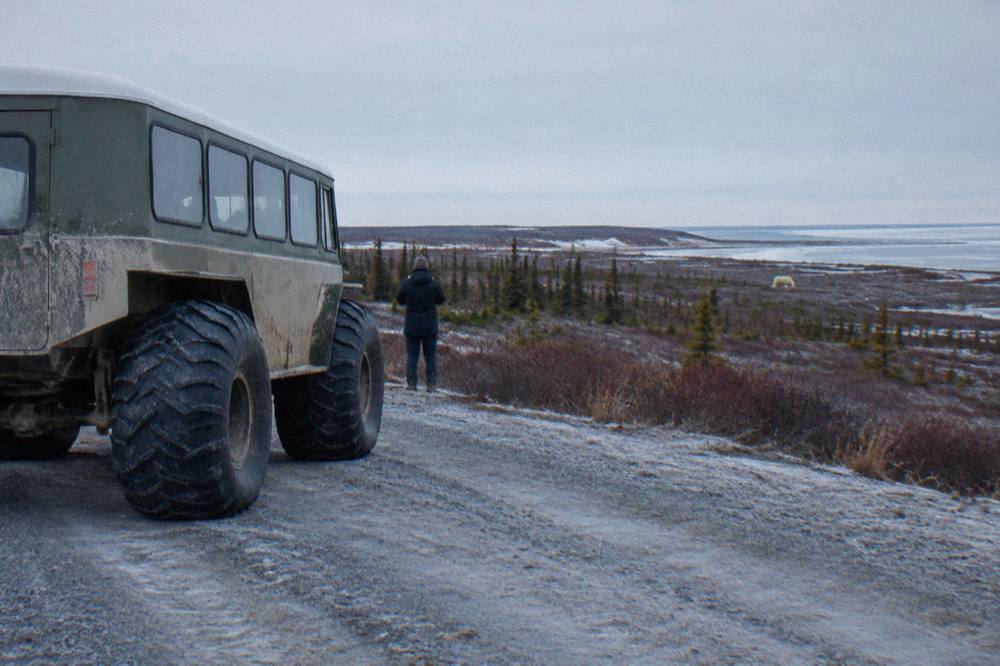
The second layer covers the tundra itself. The Churchill Wildlife Management Area regulation states that while supplying accommodation or touring facilities in the area, no person may operate a vehicle or build or occupy a structure except under the regulation. In practice this means tour vehicles out there are licensed operations, not freelance trucks. When you board a Tundra Buggy or a private safari vehicle in the management area, you are riding with an operator holding the provincial permission to be there.
The third layer is Wapusk National Park, east of town. Parks Canada is direct about it on its Wapusk visit page: "a licensed tour operator is required for all activities in the park," and there are no roads in, so access is by aircraft with a licensed operator. Independent access and camping are not permitted, garbage must be packed out, campfires are banned, and disturbing, feeding, approaching or harassing wildlife is prohibited.
| Source | What it actually says | Any numbered bear rule? |
|---|---|---|
| Manitoba Polar Bear Alert Program | Control zone around townsite and dump, aversive hazing first, live trap next, holding facility for problem bears, 24-hour hotline | No |
| Churchill Wildlife Management Area regulation | Vehicles and structures in the management area only under the regulation, tour operators licensed | No |
| Parks Canada, Wapusk | Licensed operator required for all activities, no independent access, no feeding or approaching wildlife | No |
If someone tells you a rule about three bears while you are in Churchill, the useful response is to ask which document it comes from. The answer, so far as every official source shows, is none.
How The Polar Bear Alert Program Works In Churchill
The Polar Bear Alert Program is preventive by design. It keeps a controlled zone where bears are not allowed, hazes them away with noisemakers, paintballs and rubber bullets first, and holds persistent bears in the Polar Bear Holding Facility near the airport: up to 28 cells, an average hold of about 30 days, no feeding, no public access inside. The hotline, 204-675-2327, is monitored around the clock in the active season.
The logic of the program is food conditioning. A bear that learns to associate people with food comes back, and a bear that comes back becomes a candidate for removal or, in the worst case, destruction. So the program removes the reward instead of the bear wherever possible. Bears in the holding facility are not fed, precisely so that time in a cell costs them nothing but time. When the sea ice forms on Hudson Bay, the held bears are released onto it, away from town, and they go back to hunting seals.
The facility itself sits near the airport in a former military building. It is a working piece of conservation infrastructure, not an attraction. Visitors can see it from outside, and it appears on the town's list of points of interest as part of the coexistence story, but there are no public tours of the inside. The cells include family-group units, because a mother with cubs is handled differently from a lone adult male.
The hotline matters more than visitors expect. The program depends on public reports: a bear sighted outside the control zone is often first known because someone called it in. Manitoba's own safety material asks people to report any sighting immediately and to never approach or harass a bear. That instruction, report at once and keep your distance, is a real rule with a real number behind it, unlike the folk version.
The alert program is also why the town's streets look the way they do in October. Signs mark higher-risk areas, and residents leave doors unlocked, not out of carelessness, but so that anyone walking can step inside quickly if a bear appears. That habit is described in the town's safety material and it is one of the small adaptations that lets about 900 people, per Travel Manitoba's figure, live alongside one of the world's largest land predators.
What Tour Operators Must Follow On The Hudson Bay Tundra
Tour operators in the Churchill Wildlife Management Area work under the provincial regulation: while supplying touring facilities, no person may operate a vehicle except under that regulation, so the buggies, crawlers and safari vehicles out on the tundra are licensed operations. In Wapusk National Park, Parks Canada requires a licensed operator for all activities and prohibits feeding, approaching or disturbing wildlife. Elevated tundra vehicles give safe viewing because bears stay at ground level while guests watch from a raised deck.
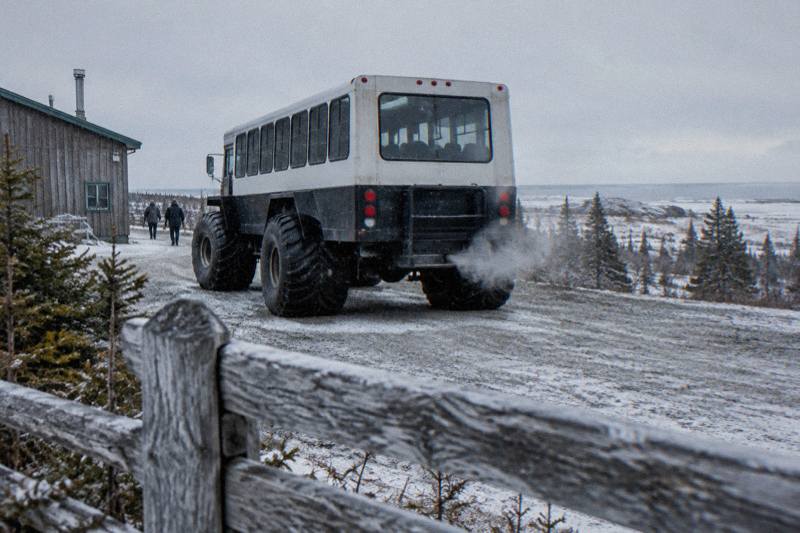
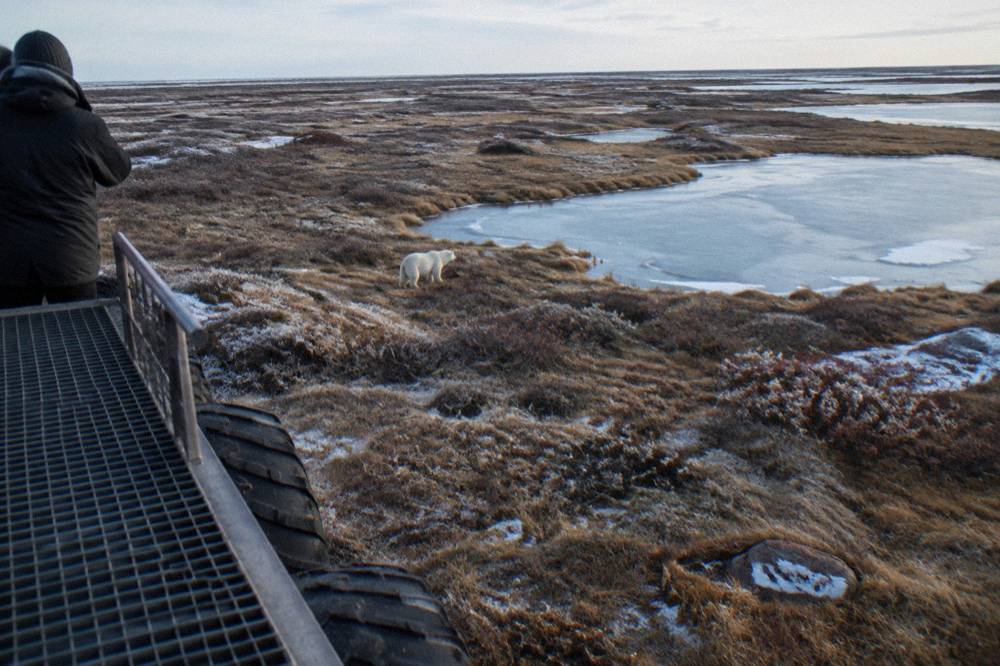
This is the layer that touches a tour buyer most directly. When you compare a Tundra Buggy day against a private road safari, you are comparing two licensed formats, not licensed versus unlicensed. The buggy is a purpose-built vehicle with 1.7 m tires, a heated cabin, a window for every guest and a rear viewing deck with a grated metal floor. Frontiers North's own pages state the buggy seats up to 40, with day tours capped at 36 or 40, and carries a single-use bathroom near the back. The elevated height is the safety feature: guests view bears from well above ground level, and the bears are habituated to the vehicles, sometimes approaching or standing against them, without any contact.
The private format works differently but under the same provincial framework. The Private Polar Bear and Hudson Bay Road Safari from JAINVOYAGERS INC runs about eight hours with your own guide, hotel, airport or railway station pickup included, and a price from $1,474 USD for the private group. It stays on roads around Churchill and the Hudson Bay coast rather than crossing the management area on tundra trails, and it lists free cancellation up to 24 hours before start, which the big fixed-departure products do not.
The same rulebook explains why the formats differ. Elevated tundra vehicles give viewing from height inside the management area, and bears that are used to the vehicles may walk close to or stand against them, which is safe from the raised deck but would not be safe on foot. Walking safaris are a different product entirely, ground-level guided excursions in remote coastal areas, often single file with guards, run under their own permits rather than as an exception to the vehicle rules. A visitor choosing between them is choosing a viewing height and a price, not a safety tier.
What no licensed operator may do is bait, feed or chase bears. The listings we verified describe viewing, not pursuit. A guest review on the exclusive buggy listing captures the tone operators aim for: "Everything was organized, efficient and our safety and the bear's safety was the top priority." That phrasing, safety for both species as one priority, is the working culture the rules are meant to produce.
How Many Polar Bears Gather Near Churchill Each Fall
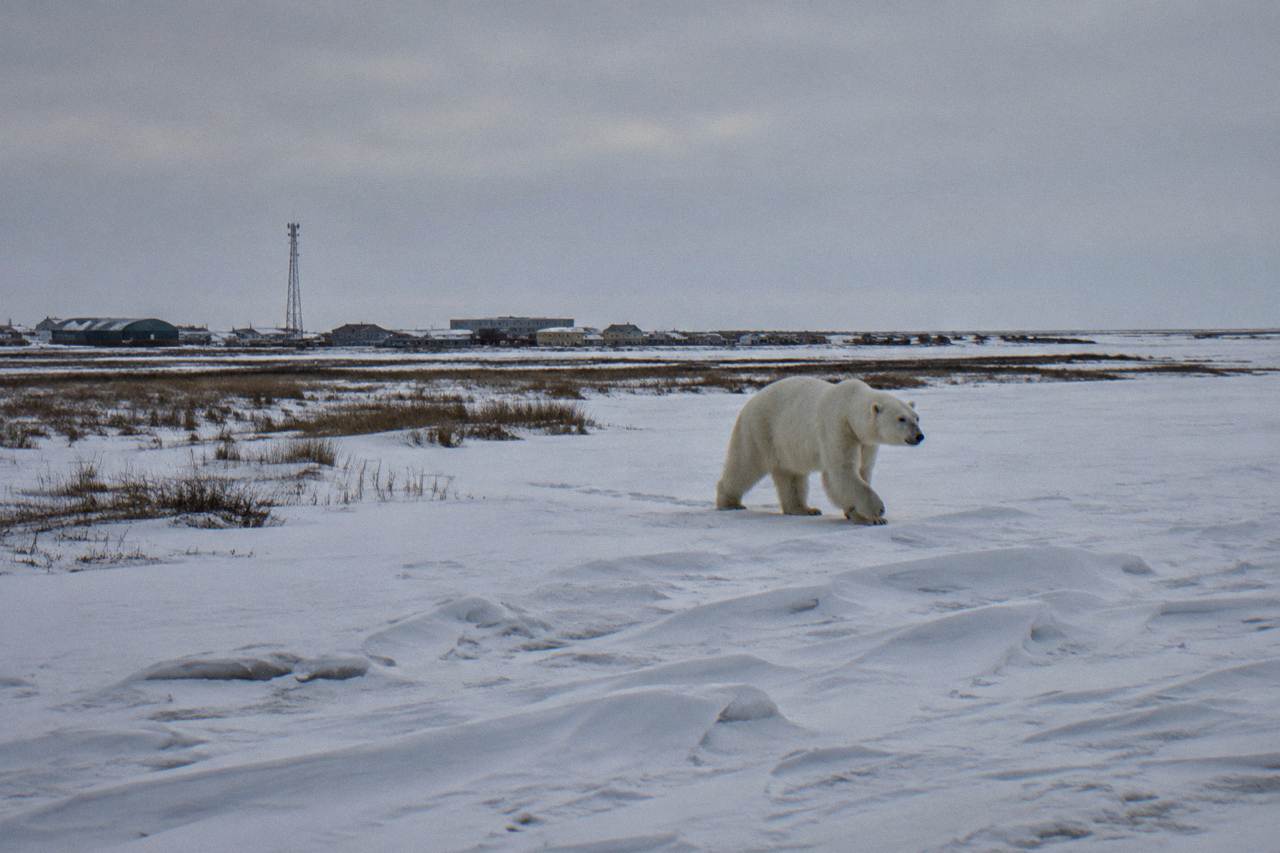
From mid-October to mid-November an average of 600 bears roam the Hudson Bay shore waiting for the ice to form, per Travel Manitoba. The latest aerial survey of the Western Hudson Bay population, flown in late summer 2021, estimated 618 bears with a 95 percent interval of 425 to 899, down from about 842 in the 2016 survey, and no newer survey has been identified. Freeze-up near Churchill does not usually come until approximately early November.
Those two numbers get confused constantly, and the confusion feeds folk rules like the 3 bear rule. The 600 figure describes a seasonal gathering: bears waiting near shore for the sea ice that lets them hunt seals again. The 618 figure is a population estimate across the whole Western Hudson Bay subpopulation from a single survey, with wide uncertainty bands printed beside it. Neither number is a cap, a trigger or a rule. Nobody in Churchill counts to three, or to 600, and then does something. More of these guides are collected on Churchill Polar Bear Tours Canada.
The gathering happens because of the bay's freeze-up cycle. Bears come off the land in summer when the ice melts, wait through the warm months in a fasting state, and move toward the coast in fall as the ice approaches. Churchill sits on a peninsula that funnels that movement, which is why the town and the management area next to it see so many bears in a short window. Travel Manitoba also notes bears can be spotted from July to September, but in fewer numbers, with August bears roaming the coast where shoreline lodges make the best vantage point.
Records of serious trouble are rare, and the town's safety material handles them plainly. Records note fatal attacks in 1968 and 1983, and a non-fatal mauling on 1 November 2013 in which two people were injured. Framing matters here: a town that has recorded two fatal attacks in six decades, while hosting thousands of bear-season visitors, is a town whose management system mostly works. The 3 bear rule story and the real rules both come from the same place, an honest desire not to become a statistic. Only one of them is written down.
Walking Around Churchill: What Manitoba Advises
Manitoba's guidance for walking in Churchill is short and literal: if walking is absolutely necessary, stay on the main streets, never walk in dimly lit areas, report any bear sighting immediately, and never approach or harass a bear. Doors around town are often left unlocked so anyone can shelter quickly. The advice is not to walk out looking for bears, and no official source suggests any count of three makes that safe.
This is the section where folk rules do real damage. The fantasy version of Churchill, where you stroll to the edge of town and watch bears from a respectful distance, is exactly what every official source tells people not to do. The town publishes zone maps and a "Safety in Polar Bear Country" pamphlet, and the province's bear safety booklet carries the main-streets instruction verbatim. Our Churchill polar bear safety guide condenses those official instructions into what a visitor actually needs on the ground. The town of about 900 people, per Travel Manitoba, lives with these habits the way coastal cities live with hurricane season: as background knowledge, not as drama.
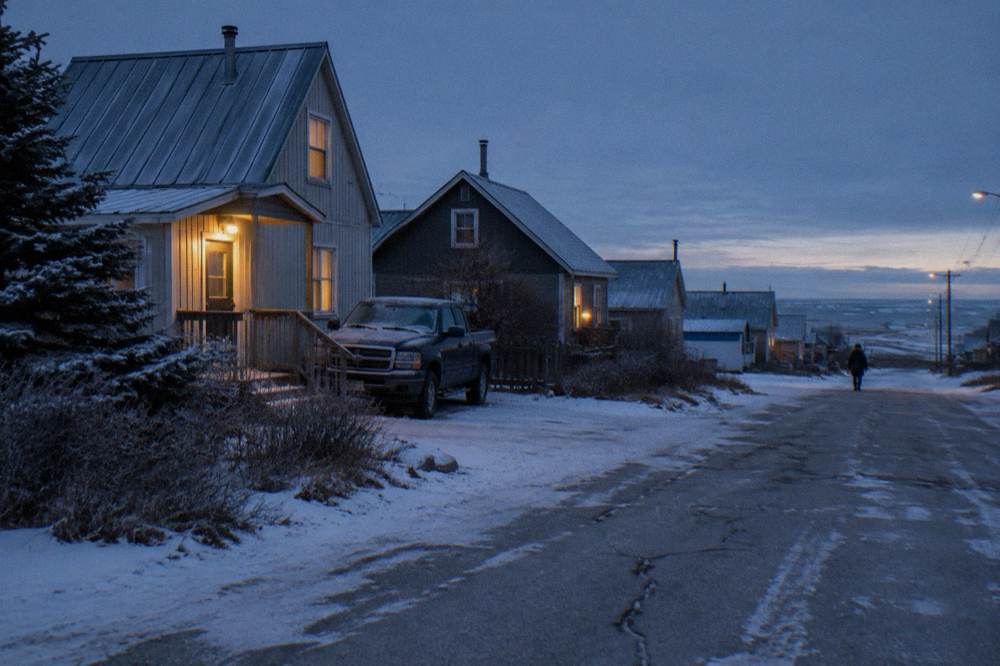
For a visitor, the practical translation is simple. Walk the main, well-lit streets between your hotel, restaurants and the tour meeting point. Do not take shortcuts along the coast or behind buildings after dark. Save the phone number 204-675-2327 in your phone on arrival. If you see a bear, report it at once rather than filming it first. And leave the bear viewing to the licensed vehicles, which is what the whole system is built around.
The safety-minded reader will notice that every one of these instructions pushes toward the same product category: a licensed tour. That is not a marketing coincidence. The town's economy and its safety system were built together, and the tours hub on this site exists because the licensed-vehicle format is the sanctioned way to see bears. The alternative to a tour is not a free, self-guided version of the same experience. It is not seeing bears up close at all, which is a legitimate choice, and the town's free sights, from the Itsanitaq Museum to Cape Merry, fill a visit nicely.
What A Licensed Tour Actually Looks Like On The Ground
A licensed Churchill bear tour means a licensed operator and viewing from a vehicle or with a guide permitted to be where you are going. On the roster we verified, that ranges from a $484 per person Tundra Buggy day with lunch aboard, to a $7,926 per person six-day package from Winnipeg with flights included, to private group options from $1,474. None promises a sighting.
The eight-hour buggy day is the entry point most first visitors choose. The listing for the Churchill Exclusive Tundra Buggy Day Trip, rated 4.6 from 30 reviews, describes a full day on the tundra with Frontiers North Adventures, from $484 USD per person, with lunch listed aboard and a 40-passenger buggy. Check-in for the autumn day tours is about 7:45 a.m. at the Fifty Eight North shop, with a transfer to the launch site, lunch of sandwiches, soup, cookies and beverages served aboard, and a return about 5 p.m. It is non-refundable and cannot be changed, which matters when you are planning.
Guest reviews on that listing describe what the format delivers. One guest wrote, "Best day ever! So many bears including lots of cubs and even triplets. Couldn't have asked for a better trip. Marc was our guide so friendly and knowledgeable. Great lunch and the buggy was warm and comfortable." Another reported, "The experience was excellent! We saw more than 15 polar bears and I loved it!" Those are single days, not promises; another guest in the last week of the season wrote about expecting few bears and striking gold with a mother and cub. Bear counts in reviews are one guest's day, never a schedule.
The package tier adds flights and town time. The Classic Churchill Polar Bear Experience from Frontiers North Adventures, rated 4.8 from 59 reviews, runs six days and five nights from $7,926 USD per person, departing the Lakeview Signature hotel in Winnipeg with round-trip flights to Churchill included and a 70 lb luggage limit split as 50 lb checked and 20 lb carry-on. A reviewer named Richard T. wrote, "This trip has ben on our bucket list for a decade, and we finally went. Our guide, David, was fantastic, the town of Churchill was welcoming, and the polar bears did not disappoint. I'd highly recommend this to anyone who wants to see polar bears in the wild."
| Format | Price as listed | Group | Pickup | Free cancellation |
|---|---|---|---|---|
| Exclusive Tundra Buggy Day Trip, 8 hours | From $484 USD per person | 40-passenger buggy | No, meeting point in Churchill | No |
| Classic six-day package from Winnipeg | From $7,926 USD per person | Max 22 travelers | No, Winnipeg hotel meeting point | No |
| Private Polar Bear and Hudson Bay Road Safari, about 8 hours | From $1,474 USD per private group | Private group | Yes, hotel, airport or station | Yes, up to 24 hours before |
Booking lead time is the practical wrinkle. Travel Manitoba advises planning and booking at least a year in advance for the October to November peak, and Frontiers North notes its Tundra Buggy day tours tend to sell to capacity. The autumn day tour is, on average, booked about 180 days in advance. A safety-minded reader who has read this far should treat the booking decision itself as part of the safety plan: the licensed seats are finite, and the unlicensed alternative does not exist.
Where The Folk Rule Came From And Why It Sticks
Folk rules stick because they compress a real anxiety into something portable. The 3 bear rule compresses Churchill's genuine complexity, a control zone, a hotline, a holding facility, licensed vehicles, main-street walking, into a number a visitor can remember. It survives because it sounds like the kind of rule a place like Churchill would have. But no Manitoba Conservation page, Parks Canada page or provincial regulation contains it, and repeating it can make the real instructions feel optional.
The closest real analogues are count-adjacent but different in kind. The holding facility has up to 28 cells, and its average hold is about 30 days. The alert program responds to public reports, and its hotline takes them around the clock in the active season. The management area caps tour vehicles through licensing, and the buggy fleet seats up to 40 with day tours capped at 36 or 40. Every one of those numbers is attached to a mechanism, a cell, a phone line, a seat. The 3 bear rule is attached to nothing. It also fails the simplest test of a rule, which is the consequence: ask what happens at bear number four, in any telling, and the story dissolves.
If you want the deeper story, the polar bear jail and alert program guide covers the holding facility and the hotline in detail. For the question every safety-minded reader eventually asks, the odds of seeing a polar bear separate the seasonal averages from the single-day luck that reviews describe.
The pattern to take away is that Churchill's rules are unusually legible for a remote town. The province publishes the program description, the town publishes zone maps, Parks Canada publishes the Wapusk requirements, and the operators publish their itineraries. A visitor who reads those four things knows more than a visitor carrying a folk number, and the reading takes about twenty minutes. The licensed tours, from the eight-hour buggy day with lunch aboard to the six-day package from Winnipeg, sit inside that published framework, which is exactly why this site, Churchill Polar Bear Tours Canada, points readers toward them rather than toward the tundra on foot.
Common Questions About The 3 Bear Rule
What Is The 3 Bear Rule?
No official source defines a 3 bear rule. The phrase was not found in Manitoba Conservation material, Parks Canada guidance for Wapusk National Park, or the Churchill Wildlife Management Area regulation. The real rules are the Polar Bear Alert Program, the licensed operator requirement and the main-streets walking guidance.
Is there any official bear-count rule in Churchill?
No. The numbers that do exist attach to mechanisms, not to bear counts: up to 28 cells in the holding facility with an average hold of about 30 days, a 24-hour hotline, and licensed tour vehicles seating up to 40. None of them is a rule about seeing three bears.
What number do I call to report a polar bear in Churchill?
The Polar Bear Alert hotline is 204-675-2327, or 675-BEAR, monitored around the clock in the active season. Manitoba asks that any sighting be reported immediately and that bears never be approached or harassed.
Can I walk out of town to see polar bears?
No official source supports that. Manitoba's guidance says that if walking is absolutely necessary, stay on the main streets and never walk in dimly lit areas. Bear viewing happens from licensed vehicles or with licensed guides, not on foot outside town.
Do I need a licensed operator to see bears in the area?
In Wapusk National Park, yes, a licensed operator is required for all activities and there is no independent access. In the Churchill Wildlife Management Area, tour vehicles operate under the provincial regulation. Licensed tours range from an eight-hour buggy day at from $484 per person to private group safaris from $1,474.
Do tours guarantee a polar bear sighting?
No, and any listing that promised one would be dishonest. Bears are wild and weather-dependent. Guest reviews describe days with a dozen or more bears and quieter days near season's end, and operators frame both as normal outcomes.