How Likely Are You To See A Polar Bear In Churchill?
A realistic look at polar bear sighting odds in Churchill by week of season and tour type, with the official population figures, guest reports and what no operator can promise.
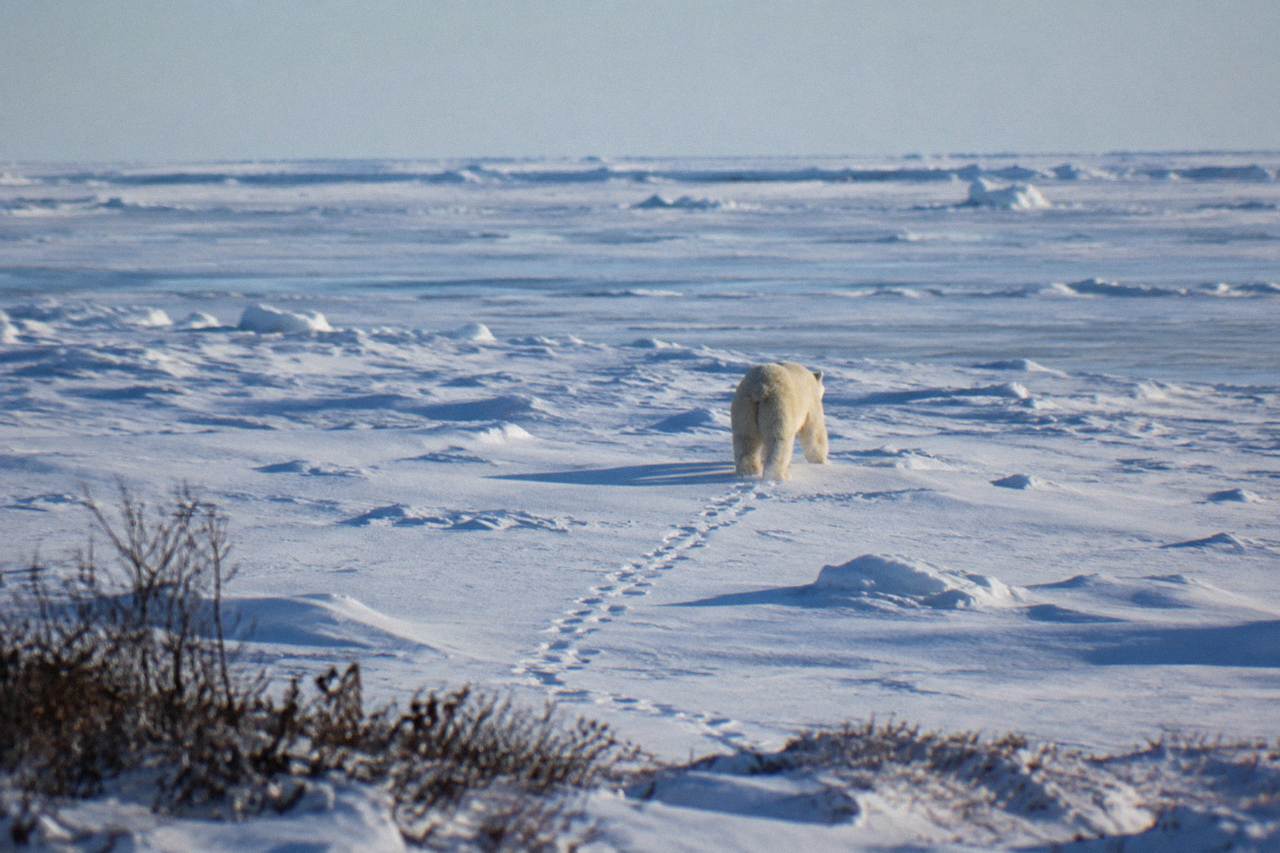
Churchill sits on the shore of Hudson Bay, more than 1,000 km north of Winnipeg, where a town of about 900 people, per Travel Manitoba, hosts one of the most concentrated polar bear gatherings on the planet. The honest answer to the odds question is: very likely in the right week, on the right vehicle, and never guaranteed on any listing. Travel Manitoba reports that from mid-October to mid-November an average of 600 bears roam the Hudson Bay shore waiting for the ice to form, and the tours that put you inside the Churchill Wildlife Management Area in that window are the ones that consistently put guests near them.
How Likely Are You To See A Polar Bear In Churchill?
In the peak window of mid-October to mid-November, guests on tundra vehicle tours in the Churchill Wildlife Management Area report frequent, often multiple sightings in a single day; Travel Manitoba's figure is an average of 600 bears along the shore in that period. No listing on this site guarantees a sighting, and bears are wild and weather-dependent. Your odds climb sharply when you match the week to the season and the vehicle to the terrain.
That is the honest headline, and it deserves unpacking rather than a single number. The reason Churchill works at all is geography: Hudson Bay near Churchill does not refreeze until approximately early November, according to the Churchill Northern Studies Centre, so the Western Hudson Bay bear population that hunted on the ice all summer is pushed ashore ahead of the freeze and waits along this stretch of coast. The bears are not scattered across the Arctic; they are funneled toward the region's best waiting ground, and the town and its licensed tour vehicles sit in the middle of it.
The population behind those odds is worth stating carefully. The latest aerial survey of the Western Hudson Bay subpopulation, flown in late summer 2021, estimated 618 bears with a wide interval of 425 to 899, down from about 842 in a 2016 survey; no newer survey has been published since. That is a research estimate of a whole subpopulation spread across the coast, not a count of bears standing near the buggies on your travel dates, and it should never be read as a promise of anything on a given day.
What the estimate does tell you is that the fall gathering is real, large and predictable in its timing even when individual bears are not. The eight-hour buggy day with lunch aboard, the full-day guided Tundra Buggy outing and the six-day package from Winnipeg all operate inside that fall window, and all three are built around the same seasonal logic: put a raised, heated vehicle in the management area while the bears are waiting for ice, and let the bears' own movement patterns do the work.
What Week Of The Season Has The Best Odds?
Travel Manitoba frames the peak as October and November, with an average of 600 bears on the Hudson Bay shore from mid-October to mid-November; the same source notes bears can be spotted from July to September in fewer numbers. The strongest odds sit in that mid-October to mid-November band, and the season tapers on both ends of it.
The calendar is the single biggest lever on your odds, bigger than any choice between vehicles or operators. Early in the fall, bears come off the ice and the coast gradually fills; by mid-October the concentration near Churchill is at its height; and once the bay begins to freeze in early November, the bears leave the shore and head out onto the ice to hunt seals, which is what they were waiting for all along. A tour late in the season can still deliver, but the logic of the migration is that the bears eventually go where the food is, and the food is on the ice.
That taper has a practical consequence for booking. Travel Manitoba advises planning and booking at least a year in advance for the October to November peak, and Frontiers North's own pages note that Tundra Buggy day tours tend to sell to capacity, with the operator's autumn day tour on average booked about 180 days ahead. Waiting for a last-minute weather window is a poor strategy in a town where the peak weeks are the scarcest product.
| Season Window | What The Sources Say | Odds Picture |
|---|---|---|
| Mid-October to mid-November | Average of 600 bears on the Hudson Bay shore, per Travel Manitoba | Highest concentration, peak odds |
| Late October into early November | Freeze-up near Churchill is approximately early November, per Churchill Northern Studies Centre | Bears still ashore, season winding toward the ice |
| July to September | Bears can be spotted in fewer numbers, per Travel Manitoba | Possible but far less concentrated |
| Late season buggy days | One guest in the season's last week still reported a mother and cub, on the buggy day listing | Individual days vary, no promise |
One guest report on the eight-hour buggy day listing makes the late-season point better than any statistic: a traveler named Maria, in what she describes as the last week of the season, wrote that she did not expect many bears but struck gold with a mother and her big cub. That is one person's day, not a pattern and not odds, but it shows how much single-day variance sits on top of the seasonal curve.
How Does Your Tour Type Change The Odds?
Tundra vehicle tours in the Churchill Wildlife Management Area, the buggy day trips and the packages built around them, offer the most consistent odds because they operate where the bears gather; summer beluga-season packages carry lower bear odds by the operators' own seasonal framing. The six-day package from Winnipeg stacks multiple buggy days, which raises your chances across a week versus a single day.
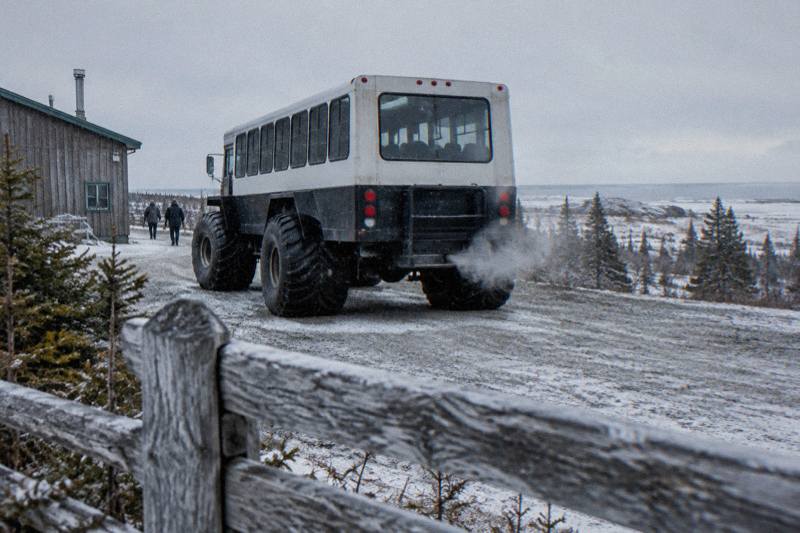
The vehicle question matters because of how the fall gathering is accessed. The Churchill Wildlife Management Area is governed by a provincial regulation under which touring vehicles operate under licence, and the elevated vehicles, the Tundra Buggy with its 1.7 m tires and raised rear deck, are the licensed way to move through bear country safely. Bears may approach the vehicles, and the elevated platform is what keeps the encounter at a safe distance for both species. This is also why walking out on your own is never the alternative: the management area and Wapusk National Park both require licensed operators, and Parks Canada states plainly that a licensed tour operator is required for all activities in the park. More of these guides are collected on Churchill Polar Bear Tours Canada.
The vehicle itself is built for a long, patient day of watching. Frontiers North's own pages state the Tundra Buggy is heated fleet-wide, seats up to 40 with day tours capped at 36 or 40, has a window for every guest, a rear deck viewing platform with a grated metal floor, and a single-use bathroom near the back. The autumn day tour checks in about 7:45 a.m. at Fifty Eight North, transfers to the dock, serves lunch of sandwiches, soup, cookies and beverages aboard, spends eight hours on the tundra and returns about 5 p.m. None of that changes where the bears are, but it does change how long you can afford to sit in the places they move through, and patience is a real component of the odds.
The six-day Classic Churchill Polar Bear Experience from Winnipeg, rated 4.8 from 59 reviews and priced from $7,926 per person, is the odds-maximizing format in this roster: it bundles flights from Winnipeg, multiple days out on the tundra and town time, so a slow bear day gets another chance the next morning. The eight-hour buggy day trips, from $484 per person for the Exclusive Tundra Buggy Day Trip and from $496 for the Tundra Buggy Autumn Day Tour, are the single-day format, and they are where most of the strongest guest reports on this roster come from.
At the other seasonal end, the seven-day summer Belugas, Bears and Blooms package, from $6,974 per person, is built around beluga whales, which arrive in the Churchill River estuary in the tens of thousands, about 57,000 into Hudson Bay with about 4,000 into the estuary per Travel Manitoba. Bears are part of that summer picture but, per Travel Manitoba, in fewer numbers than the fall. The winter aurora package, from $5,783 per person, is timed for darkness and the aurora oval, not for bears on the shore.
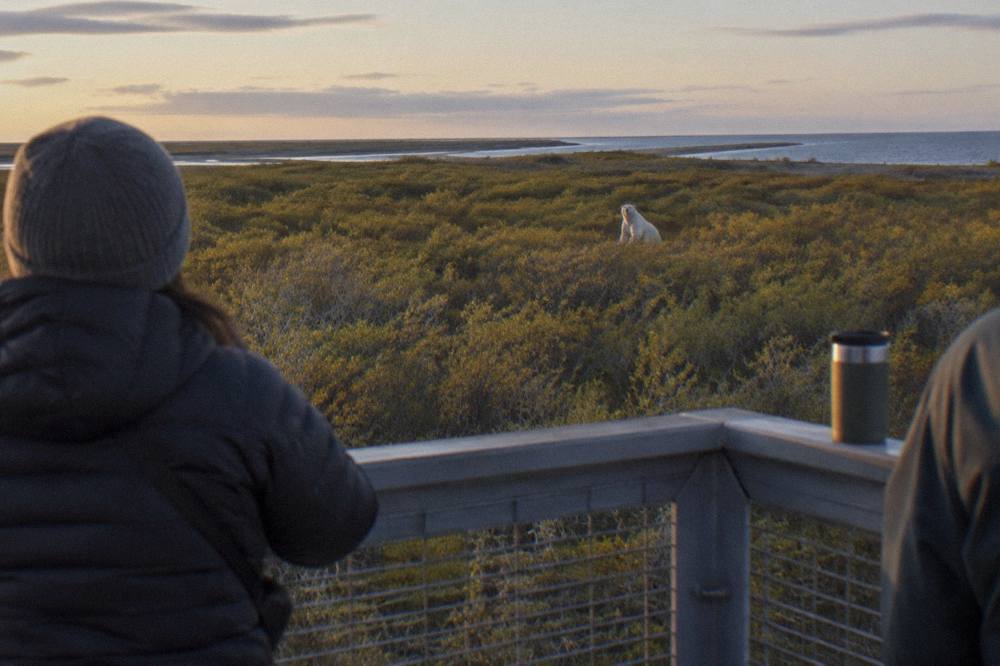
The two private tours in the roster sit differently on the odds question. The private heated SUV road safari, from $1,474 for the group with pickup included, is a road-based format around Churchill and the Hudson Bay coast at a flexible pace; it is a new listing with no reviews yet, so there is no guest record to draw on. The private aurora night drive, from $702 per group of up to five, is an aurora product, not a bear product. Neither should be bought as a bear-odds play, and neither listing carries a rating at all yet.
What Do Guest Reports From The Buggy Day Tours Actually Say?
The Exclusive Tundra Buggy Day Trip holds a 4.6 rating from 30 reviews, and its guest reports include days with roughly 12 bears and days with more than 15; the Tundra Buggy Autumn Day Tour holds 4.3 from 15 reviews. These are individual guest reports, not operator claims and not odds, and no listing guarantees a sighting.
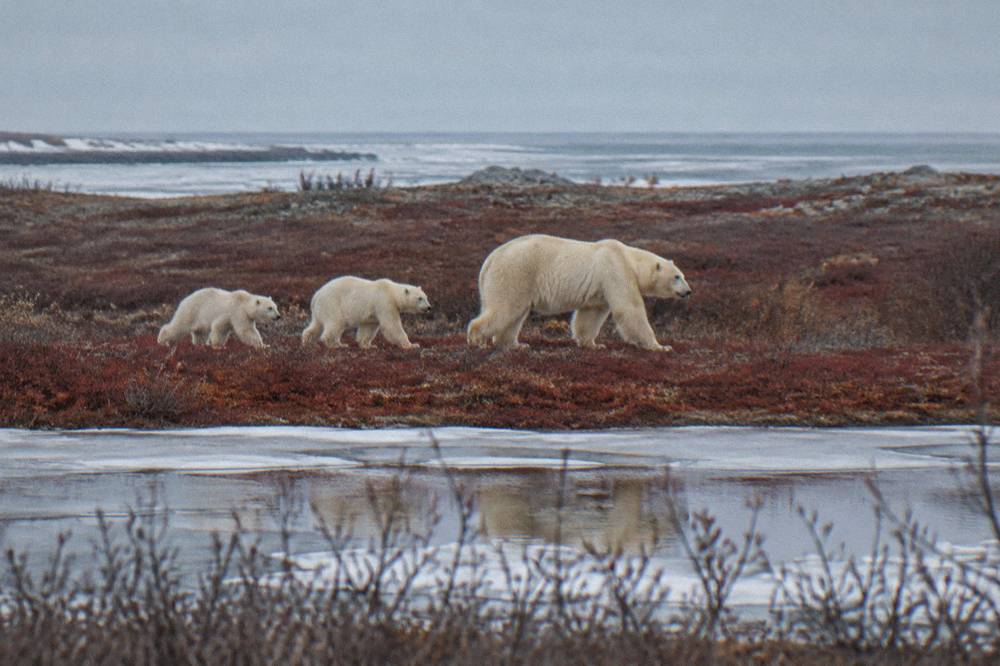
The verbatim reviews are the closest thing this roster has to a field record, and they deserve to be read as exactly that: one person's day, written down. Debbie from Canada reported that her guide Luke's work resulted in seeing about 12 bears, starting with a mother and two cubs, with safety for the group and the bears described as the top priority. Samantha from the United Kingdom called it the best day ever, with so many bears including lots of cubs and even triplets. Adriana from Mexico wrote that she saw more than 15 polar bears. Maria from Canada, in the last week of the season, reported a mother and her big cub.
Read together, those reports say something real: on this specific listing, in the fall season, guests have repeatedly recorded multi-bear days, including mothers with cubs, which is the sighting most travelers are actually hoping for. Read carefully, they also say what they cannot: none of them is a promise, the sample is 30 reviews on a listing that runs daily departures through a two-month season, and the bear counts in them are those guests' days, not a baseline you are owed.
The six-day package has its own record, 4.8 from 59 reviews, the deepest review pool on this roster. Michelle G. wrote that the tour was beyond amazing and exceeded expectations, a unique experience to see polar bears in their natural habitat, very well organized. Richard T. wrote that the trip had been on their bucket list for a decade and the polar bears did not disappoint. Again: strong, verbatim, individual. Neither reviewer was promised anything, and both are describing a week-long format that stacks several tundra days, which is precisely why the odds work out.
| Roster Tour | Rating And Pool | Price Basis | What Bears It Covers |
|---|---|---|---|
| Exclusive Tundra Buggy Day Trip | 4.6 from 30 reviews | From $484 per person | Eight hours in the management area, fall season |
| Tundra Buggy Autumn Day Tour | 4.3 from 15 reviews | From $496 per person | Eight hours in the management area, fall season |
| Classic Churchill Polar Bear Experience | 4.8 from 59 reviews | From $7,926 per person | Six days, multiple tundra days, flights from Winnipeg included |
| Private Polar Bear and Hudson Bay Road Safari | No reviews yet, new listing | From $1,474 per private group | Road safari around Churchill and the coast |
| Belugas, Bears and Blooms | 5.0 from 2 reviews | From $6,974 per person | Summer format, bears in fewer numbers per Travel Manitoba |
A note on what a rating is worth here. With pools of 30, 15, 59, 4 and 2 reviews, none of these listings has the volume that would justify calling any of them the best or the most popular, and this page will not. What the ratings can honestly support is narrower: on the listings with reviews, guests have recorded their days, and on the buggy day trips those days have often included multiple bears.
Why No Tour Can Guarantee A Sighting
Every listing on this roster treats bears as wild and weather-dependent, and the town's own safety machinery exists precisely because bears move on their own terms; the Manitoba Polar Bear Alert Program, the licensed-vehicle rules in the management area and the Parks Canada requirements in Wapusk all assume unpredictable bear movement. Any product promising a sighting is promising something no operator controls.
The system around Churchill is built on the assumption that bears decide where bears go. Manitoba's Polar Bear Alert Program maintains a controlled zone around the townsite where bears are not permitted, responds to public reports on a 24-hour hotline in the active season, uses aversive hazing first, and holds persistent bears in the Polar Bear Holding Facility near the airport, up to 28 cells with an average hold of about 30 days, before release onto the ice. The program's whole design, moving bears away from people, is a reminder that the animals are not managed for viewing; they are managed for coexistence, and where they end up on a given morning is not a scheduling question.
The same is true inside the viewing economy. The provincial regulation for the Churchill Wildlife Management Area requires touring vehicles and structures to operate under the regulation's licensing, and Parks Canada requires a licensed operator for all activities in Wapusk, which has no road access at all. Licensed operators work with the bears' behavior, elevated platforms, patient positioning and local knowledge, rather than around it. A guide who positions a buggy where bears have been moving, and waits, is doing honest work; a promise of a specific bear at a specific hour would not be. If you're weighing whether a guided trip is truly necessary, our guide to whether you need a tour to see polar bears in Churchill lays out the rules and the reasoning.
That is why the guest quotes on this page are framed as guest reports and nothing more. When Debbie writes about 12 bears or Adriana about more than 15, they are describing days that happened, on a vehicle that was in the right place in the right week. The next departure inherits the season and the method, not the bear count.
For planning around the odds rather than against them, the seasonal guides on this site go deeper: the best weeks for polar bear season breaks the calendar down month by month, and the one-day polar bear tour options compares the single-day formats. If the odds question has led you toward a longer trip, the six-day packages from Winnipeg explain what the flights-included format covers.
Common Questions About Seeing A Polar Bear In Churchill
How Likely Are You To See A Polar Bear In Churchill?
Very likely in the mid-October to mid-November peak on a tundra vehicle tour, when Travel Manitoba reports an average of 600 bears on the Hudson Bay shore, but never guaranteed: every listing on this site frames bears as wild and weather-dependent, and no operator promises a sighting.
When Is The Best Week To See Polar Bears In Churchill?
Travel Manitoba frames the peak as October and November, with the strongest concentration from mid-October to mid-November. Once Hudson Bay freezes in approximately early November, per the Churchill Northern Studies Centre, the bears head onto the ice to hunt.
Can You See Polar Bears In Churchill Without A Tour?
Not reliably, and not by walking out to look. The Churchill Wildlife Management Area and Wapusk National Park both require licensed operators, and Manitoba's own safety guidance tells residents and visitors to stay on main streets in town and report any sighting to the Polar Bear Alert line at 204-675-2327.
Do The Tundra Buggy Tours Guarantee Bear Sightings?
No. The buggy day trips hold ratings of 4.6 from 30 reviews and 4.3 from 15 reviews, and guests have recorded days with roughly 12 to more than 15 bears, but those are individual reports. The listings themselves promise a licensed vehicle in bear country, not a bear.
How Many Polar Bears Are Near Churchill?
The latest aerial survey of the Western Hudson Bay subpopulation, from late summer 2021, estimated 618 bears with an interval of 425 to 899, down from about 842 in 2016. In fall, Travel Manitoba reports an average of 600 bears along the Hudson Bay shore near Churchill.
Which Tour Gives The Best Odds?
The six-day Classic Churchill Polar Bear Experience stacks multiple tundra days, which raises your chances across a week, while the eight-hour buggy day trips put you in the management area for a single full day. Both formats operate in the peak fall window; neither guarantees anything.