Polar Bear Photography In Churchill
Churchill concentrates the polar bear world into a few accessible weeks each October and November, and that concentration is what makes it a photography destination unlike anywhere else in Canada. This guide separates what the tour listings actually state from the general craft advice that applies to any subarctic shoot.
Short answer
The verified bear-viewing tours in Churchill run from $484 USD per person for an eight-hour Tundra Buggy day to $7,926 USD per person for a six-day package from Winnipeg, with a private road safari from $1,474 USD per group. No listing mentions photo-specific services, so photographers choose on format, group size and pace, then prepare their own cold-weather gear routine.
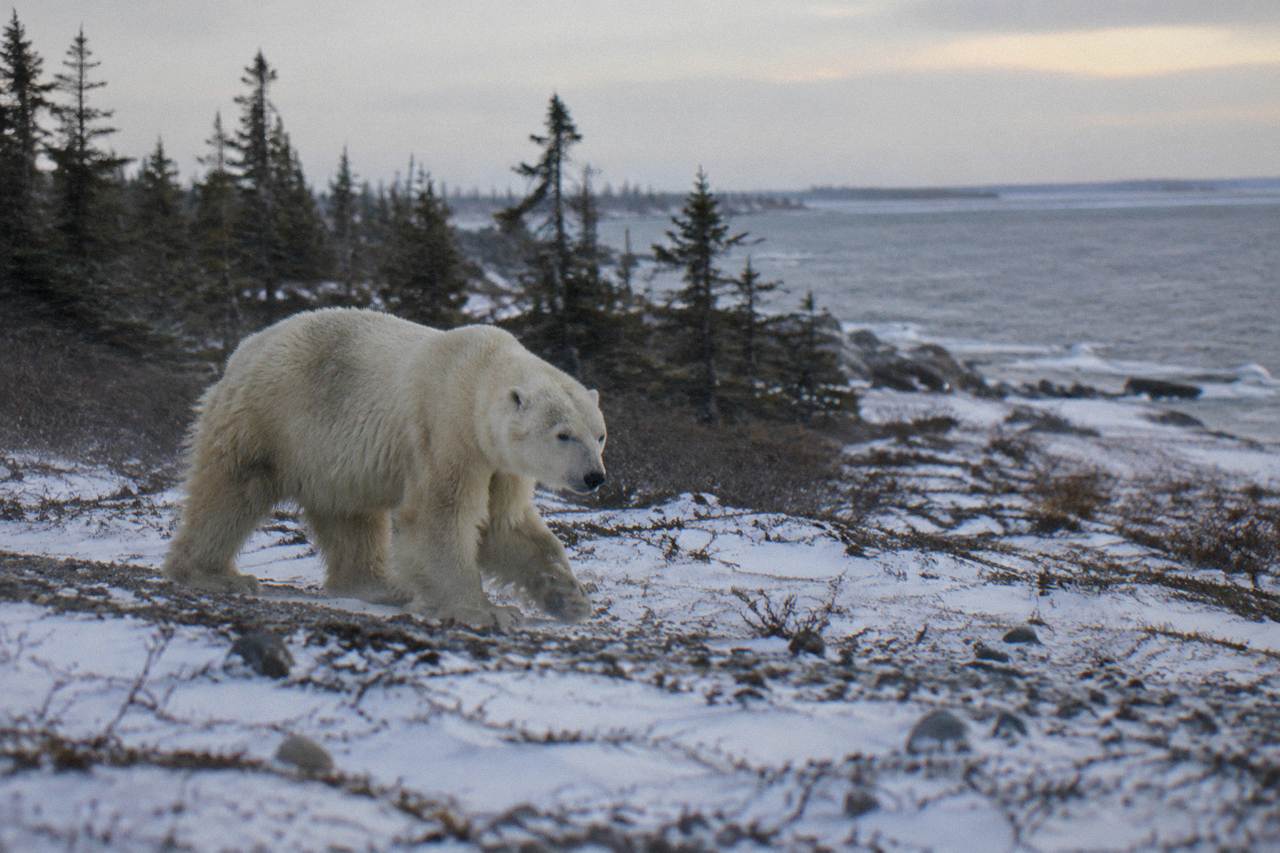
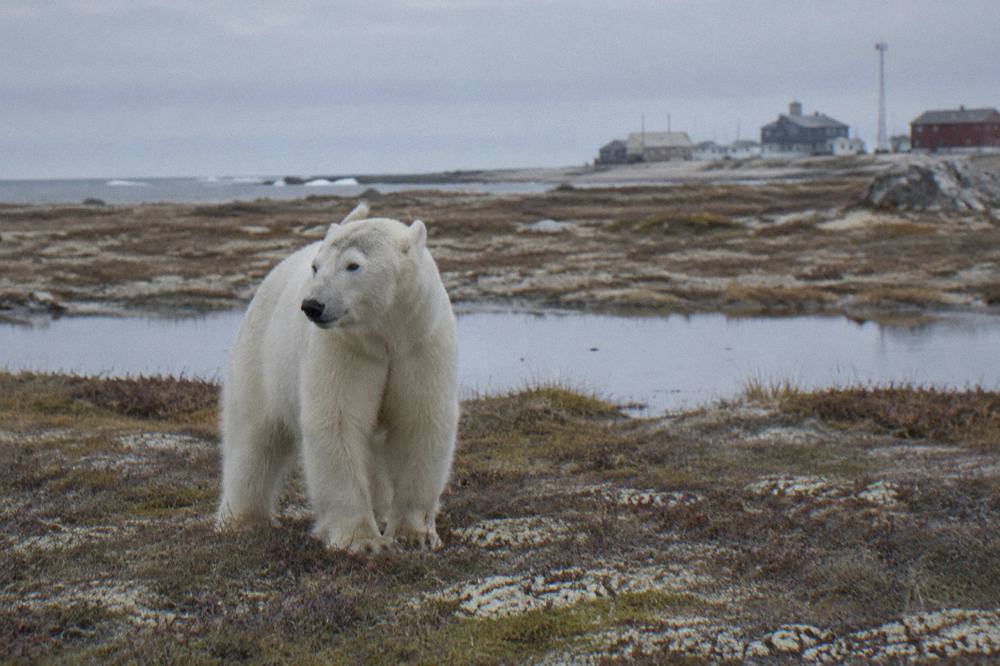
Churchill sits on the shore of Hudson Bay where the bears of the Western Hudson Bay population wait for the sea ice to form, and for a few weeks each autumn that waiting happens within reach of licensed tour vehicles. The town has no road connection, a population of about 900 per Travel Manitoba, and a tourism economy built almost entirely around two windows: bears in October and November, belugas in July and August. For a photographer, that concentration is the whole draw. You are not trekking across the Arctic hoping for a chance encounter; you are riding a licensed vehicle through a place where Travel Manitoba states an average of 600 bears roam the Hudson Bay shore from mid-October to mid-November waiting for the ice.
This guide separates the tour listings, prices and ratings from the general craft advice that applies to any cold-weather wildlife shoot. One thing to say plainly at the start: none of the seven verified listings mentions photography-specific services, workshops, photo departures or gear handling. If a page elsewhere promises a "photo safari" in Churchill, that is a different operator's product, not one of the tours sold here. What follows is honest planning guidance built on what the listings do state, plus the official climate, safety and season data.
What Does Polar Bear Photography In Churchill Actually Look Like?
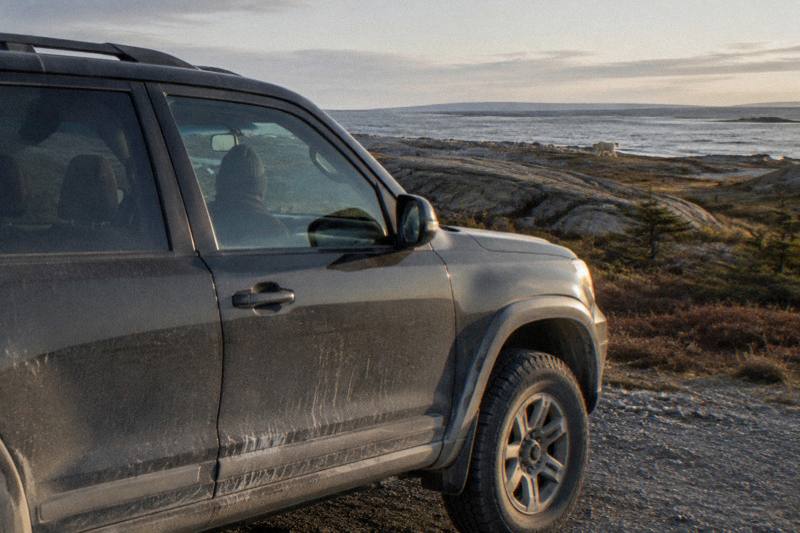
Shooting polar bears in Churchill means photographing from a licensed, elevated vehicle inside the Churchill Wildlife Management Area, or from a private vehicle on roads around town and the coast, during an October and November window when bears gather along the bay waiting for ice. The scene is flat coastal tundra, often snow-dusted, with light that sits low on the horizon for much of the day. Distances vary: some days bears are far off on the flats, other days a bear wanders close enough to the vehicle that a mid-range lens is the right call. The provincial regulation for the Churchill Wildlife Management Area requires touring facilities to operate under licence, which is why independent driving out onto the tundra is not an option and every image on this site's roster comes from a licensed operation.
The background knowledge matters for framing expectations. Travel Manitoba describes the fall gathering as mid-October to mid-November, with the bay near Churchill not refreezing until approximately early November according to the Churchill Northern Studies Centre. That means bears are present, visible and predictable in location but never in behavior. No tour on this site, and no honest operator anywhere, promises a sighting. Bears are wild animals, and a guide who guarantees bears is selling something that does not exist. What the tours do provide is repeated time in the places bears use, at eye-safe elevation, with guides who read the animals and the light.
For photographers who want the fuller context of the season, the site's guide to the best time to see polar bears covers the calendar in depth, and the question of whether you can manage without a tour at all is covered in whether you need a tour to see polar bears. The short version for a photographer: the elevated, licensed vehicle is both your legal access and your best shooting platform, so the tour choice is the photography choice.
Which Tour Format Gives Photographers The Best Odds?
The roster offers three formats that matter to a photographer: a 40-passenger Tundra Buggy day (from $484 to $496 USD per person), a private road safari where the pace is set by your group (from $1,474 USD per private group), and multi-day packages from Winnipeg (from $5,783 to $7,926 USD per person) that stack several tundra days together. More days means more light conditions and more bear behavior observed; a private format means the vehicle stops when your group wants it to. The shared buggy days trade that flexibility for a much lower per-person price and the elevated deck that the management area is built around.
The two buggy day listings are close siblings. The Tundra Buggy Autumn Day Tour from Frontiers North Adventures is rated 4.3 from 15 reviews, from $496 USD per person, eight hours, departing from the Fifty Eight North shop in Churchill. The Exclusive Tundra Buggy Day Trip, also from Frontiers North, is rated 4.6 from 30 reviews, from $484 USD per person, eight hours with lunch aboard, from a town meeting point. Both list a 40-passenger buggy, both are non-refundable, and neither lists pickup. The difference for a photographer is small on paper; the difference in reviews is real and worth reading on the live listings.
The private option works differently. The Private Polar Bear and Hudson Bay Road Safari from JAINVOYAGERS INC is a new listing with no reviews yet, so there is no rating to cite, and this site will not dress that up. What the listing states is a private road safari around Churchill and the Hudson Bay coast with your own guide, about eight hours, hotel, airport or railway station pickup included, a meal listed, free cancellation up to 24 hours before start, and a price from $1,474 USD that. The listing also says the pace is set by your group rather than a fixed bus schedule, which is the single most photographically relevant sentence on any listing in the roster.
The packages stack days. The Classic Churchill Polar Bear Experience from Winnipeg is rated 4.8 from 59 reviews, from $7,926 USD per person for six days and five nights including round-trip flights from Winnipeg and a 70 lb luggage split of 50 lb checked and 20 lb carry-on. That luggage limit is a real constraint for anyone carrying long glass, and it belongs in your planning from the first paragraph of your notes, not discovered at check-in.
| Tour | Format | Price (USD) | Duration | Group | Rating |
|---|---|---|---|---|---|
| Exclusive Tundra Buggy Day Trip | Shared buggy day | From $484 per person | 8 hours | 40-passenger buggy | 4.6 from 30 reviews |
| Tundra Buggy Autumn Day Tour | Shared buggy day | From $496 per person | 8 hours | Up to 40 travelers | 4.3 from 15 reviews |
| Private Polar Bear and Hudson Bay Road Safari | Private road safari | From $1,474 per private group | About 8 hours | Private group | No reviews yet |
| Classic Churchill Polar Bear Experience | Six-day package from Winnipeg | From $7,926 per person | 6 days, 5 nights | Max 22 | 4.8 from 59 reviews |
A quick comparison point for budget planning: the site's full polar bear tour cost breakdown covers where the money goes, including why the packages cost what they do. For photographers who already know they want the shortest possible trip, the one-day polar bear tour options are the relevant hub.
How Do You Shoot From A Tundra Buggy?
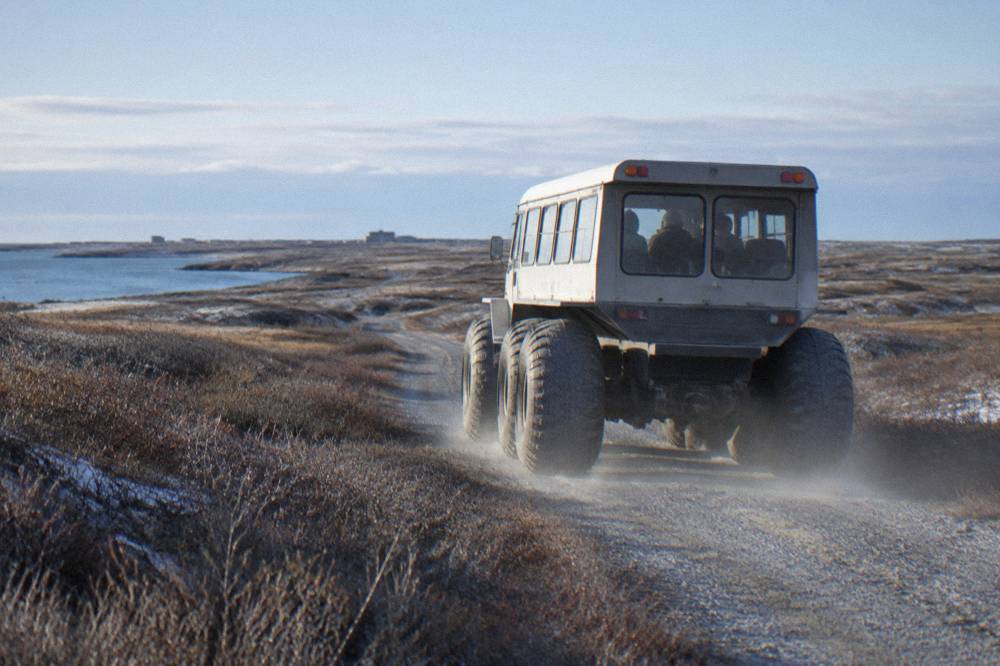
You shoot from a heated, elevated vehicle with a window for every guest, a rear outdoor deck with a grated metal floor, and 1.7 m (5.5 ft) tires, which means two distinct shooting positions: through glass from inside, or from the open deck at height above the bears. These details come from Frontiers North's own pages about the Tundra Buggy, not from a booking listing, and they define the practical craft of the day. The buggy also has a single-use bathroom near the back, which matters on an eight-hour day with no confirmed washroom stop at the launch site.
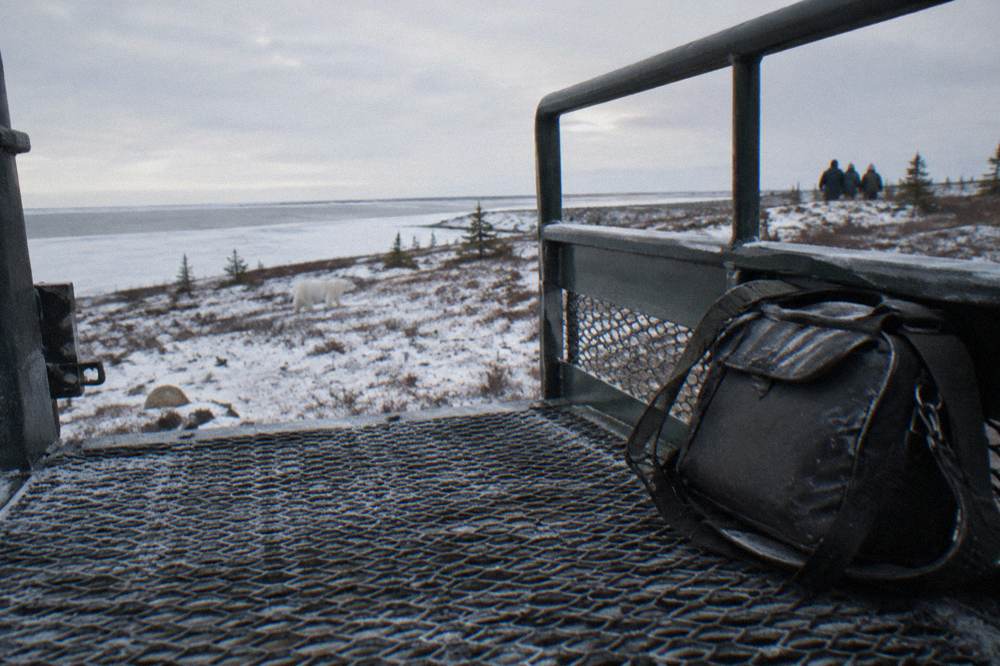
The craft implications are straightforward and general. Shooting through glass costs sharpness and invites reflections, so the deck is where the serious frames happen; the grated metal floor means a stable platform but one you should not rest a lens directly on for long exposures, and a beanbag or cloth padding is the standard general solution. Height is your friend for clean backgrounds: from the deck you are shooting down onto tundra rather than across it, which separates a bear from the ground cover. The vehicle moves on trails, so shutter speeds should assume motion, and the moments when the buggy stops are when the deck work pays off. Day tours are capped at 36 or 40 guests per the operator's pages, which means a crowded deck at a good sighting; patience and a spot near the rail matter more than any gear choice.
Bears may approach the vehicle. That is not a promise, it is a known behavior pattern of habituated bears around licensed tundra vehicles in the management area, and it is exactly why the elevated, licensed platform exists. The safety framing is official: Manitoba's Polar Bear Alert Program and the Churchill Wildlife Management Area regulation exist because bears and people share this coast, and tour operators work inside that system. A guest review on the Exclusive Tundra Buggy Day Trip listing captures a day that went well: "Best day ever! So many bears including lots of cubs and even triplets. Couldn't have asked for a better trip. Marc was our guide so friendly and knowledgeable. Great lunch and the buggy was warm and comfortable." That is one guest's day, not a promise, and the review pool is 30 reviews, small enough that it should be read as anecdote rather than statistics. If you're weighing which operator to trust with a day like that, the guide to choosing a Churchill polar bear tour company compares what the actual bookings and reviews show.
| Buggy feature (per the operator's pages) | What it means for a photographer |
|---|---|
| Rear outdoor deck, grated metal floor | Open-air shooting at elevation; pad the lens rest, expect vibration when the vehicle idles |
| A window for every guest | Indoor option for warming up and for wide scenes; watch for glass reflections |
| Heated fleet | Batteries and bodies stay workable between deck sessions |
| 1.7 m (5.5 ft) tires | High eye line over tundra; foreground vegetation drops out of frame more often |
| Single-use bathroom near the back | Eight-hour day is survivable without a launch-site stop |
| Day tours capped at 36 or 40 guests | Deck space is shared; timing and position at the rail decide your frames |
The autumn day listing states check-in around 7:45 a.m. at Fifty Eight North, a transfer to the dock, lunch of sandwiches, soup, cookies and beverages aboard, eight hours on the tundra and a return around 5 p.m. That is a full light-day on the water-adjacent flats, which is precisely what a photographer wants from a single-day product.
When Does A Private Safari Beat A Shared Buggy For Photography?
A private safari wins when your priority is controlling stops, duration at a sighting and the angle of approach, because the listing states the pace is set by your group rather than a fixed schedule; the shared buggy wins on price, elevation and the licensed trail network inside the management area. The two formats are not really competitors, they solve different problems, and a photographer should know which problem they are buying a solution to before spending four figures.
The private road safari's listing language is worth quoting precisely because it is unusual: the tour runs "at a flexible pace set by your group rather than a fixed bus schedule." For a photographer, that sentence means a sighting can hold your vehicle's attention as long as the light lasts, and a moving bear can be followed along the road network within the tour's route. The listing also states pickup from your Churchill hotel, the airport or the railway station, a meal listed, about eight hours, free cancellation up to 24 hours before start, and a price from $1,474 USD for the private group that. It is a new listing with no reviews yet, which this site states plainly rather than working around.
What the private format does not give you is the management-area trail system. The road safari runs roads around Churchill and the Hudson Bay coast, per the listing, with viewpoints over polar bear territory, local history and that flexible pace. The buggy days run inside the Churchill Wildlife Management Area on licensed trails. Different ground, different backgrounds, different access rules. A photographer with a week in town could honestly do both, and the cost of doing both is still below one package price.
What Light And Weather Should You Plan Around?
Plan around a low, fast-moving autumn sun and verified means of -1.15 C for October and -12.70 C for November in Churchill, with Frontiers North's own pre-departure page stating autumn tour temperatures can vary from -13 C to -2 C, and stronger winds pushing it lower. Those are the official 1981 to 2010 Environment and Climate Change Canada normals for the Churchill station and the operator's stated range, and together they define the two photographic problems of the season: light that changes character by the hour, and cold that attacks batteries, fingers and lens mechanics.
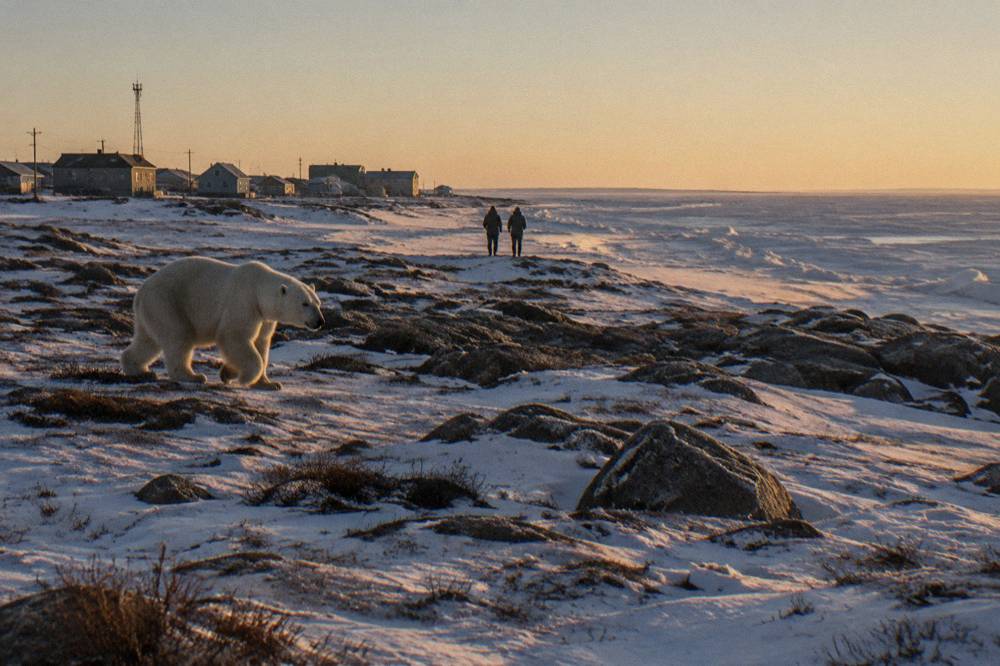
The season's timing is the light's timing. Bears gather from mid-October to mid-November, the bay refreezes around early November, and the bears leave onto the ice when it forms, so the season ends when the light gets reliably hard and the days shorten. October gives you the warmer side of the window, snow that often dusts rather than buries the tundra, and bears waiting on the flats; November gives you colder, cleaner, whiter ground and the risk that the season closes early with the ice. Neither month is photographically superior; they are different palettes, and the choice between them is really a choice between tundra tones and snow tones. The wider set of guides lives on Churchill Polar Bear Tours Canada.

| Period | Mean daily temp (1981-2010 normals) | Season state | Photographic character |
|---|---|---|---|
| Early October | Around -1 C | Bears arriving, tundra often bare or dusted | Warm-toned tundra, longer working days |
| Mid-October | Around -1 C | Gathering underway, average 600 bears on the shore per Travel Manitoba | Peak density, low sun |
| Late October | Between -1 C and -12 C | Peak viewing weeks | Snow cover builds, contrast rises |
| Early November | Around -12 C | Bay refreezes, bears head onto the ice | Cold, clean whites, season closing |
How Do You Care For Camera Gear In Subarctic Cold?
The general rule every cold-weather shooter learns: batteries fade fast in the minus-teens, glass fogs when warm gear meets cold air or cold gear meets warm air, and the fix is spare batteries kept warm, gradual temperature transitions, and sealed bags for coming indoors. No listing on this roster mentions gear storage, drying facilities or photo support of any kind, so plan as if your kit lives in your room and in your hands, and confirm storage options with your accommodation directly. This section is deliberately general: this site does not print gear model numbers or brand claims it has not verified.
The battery problem is the one that ends shoots. Cold saps charge quickly, and an eight-hour buggy day in November means carrying more charged batteries than you believe you need, keeping spares in inner pockets near body heat, and swapping before the indicator drops rather than after. The fogging problem is the one that ruins frames: a lens moved from a heated vehicle to the open deck will fog, and the honest general answer is to let glass acclimate and to avoid breathing on viewfinders and front elements. The condensation problem on return indoors is solved the boring way, with gear sealed in a bag before it comes inside and left to warm slowly.
Fingers are the other gear. The deck is open, the wind off Hudson Bay is real, and Frontiers North's pre-departure guidance notes wind pushing effective conditions lower. Thin liner gloves under whatever outer layers you use are the standard general approach, because a bare hand on a metal rail at minus 12 C is a short experiment. The site's dedicated what to wear in Churchill guide covers the clothing system in full; for the camera side, plan around the fact that you will be working bare-handed in short bursts.
| Cold-weather problem | General practice (no gear models, just method) |
|---|---|
| Battery drain | Carry more spares than seem necessary, keep them in inner pockets, swap early |
| Lens fogging on the deck | Let glass acclimate before shooting; avoid breathing on elements |
| Condensation coming indoors | Seal gear in a bag, warm it slowly, unpack after it reaches room temperature |
| Bare hands on metal in wind | Liner gloves for operation, heavier layers between shoots |
| Vibration from an idling vehicle | Higher shutter speeds, pad the lens rest on the grated deck |
Do Any Churchill Tours Offer Photo-Specific Departures?
No listing on this site's verified roster mentions photography features, photo departures, gear handling or instruction, so there is no photo-specific product to buy here; the photographer's job is to pick the format whose pace, duration and platform fit their shooting, and to bring their own craft. That is an honest gap, and stating it plainly is more useful than implying a workshop exists. What the listings do state, and what reviews do record, is enough to choose on.
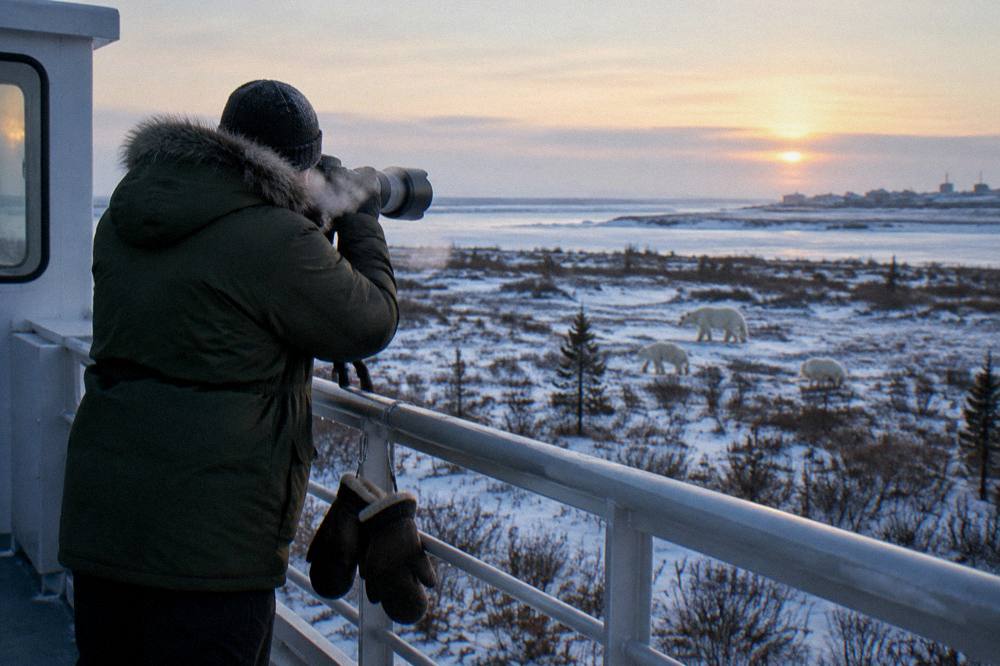
The strongest evidence for what a buggy day delivers photographically is the review pool on the Exclusive Tundra Buggy Day Trip, 30 reviews at 4.6, with several guests describing bear-dense days. One review from Canada reads: "Our guide, Luke, was passionate and knowledgeable about the area and Polar Bears. His stories were entertaining and informative. He ensured we had the best experience possible resulting in seeing about 12 bears starting with a momma bear and two cubs." Another guest reported more than 15 bears in a day. These are individual days, not averages, and this site treats them exactly that way: evidence that the platform and the season can deliver, never a promise that yours will.
The package route has its own evidence. The Classic Churchill Polar Bear Experience carries a 4.8 from 59 reviews, the deepest pool on the roster, and one guest wrote: "This trip has ben on our bucket list for a decade, and we finally went. Our guide, David, was fantastic, the town of Churchill was welcoming, and the polar bears did not disappoint. I'd highly recommend this to anyone who wants to see polar bears in the wild." For a photographer, the package's value is repetition: multiple Tundra Buggy days in the management area means multiple light conditions, multiple bear behaviors and a real chance at the one frame a single day cannot guarantee.
| Tour | What the listing states about photo features | What it does state that a photographer can use |
|---|---|---|
| Tundra Buggy Autumn Day Tour | Not stated | 8 hours, elevated decks, lunch aboard, departs Fifty Eight North |
| Exclusive Tundra Buggy Day Trip | Not stated | 8 hours, lunch aboard, 4.6 from 30 reviews |
| Private Polar Bear and Hudson Bay Road Safari | Not stated | Pace set by your group, pickup included, free cancellation to 24 hours |
| Classic Churchill Polar Bear Experience | Not stated | Multiple buggy days, flights from Winnipeg, 4.8 from 59 reviews |
| Churchill Northern Lights and Winter Nights | Not stated | Six days timed for aurora season, 5.0 from 4 reviews |
How Far Ahead Should A Photographer Book?
Book as far ahead as you can: Travel Manitoba tells visitors to plan and book at least a year in advance for the October to November peak, Frontiers North states its Tundra Buggy day tours tend to sell to capacity, and one verified listing shows day tours booked on average 180 days in advance. For a photographer the stakes are higher than for a casual visitor, because the season is short, the inventory is finite and the light does not wait for a late booking.
The deposit structure matters too. Frontiers North's booking terms list a $750 CAD per person deposit, non-refundable, with full payment due 120 days before departure and escalating non-refundable percentages inside 120 days. The day tours on the roster are listed as non-refundable and unchangeable. Against that, the two private tours from JAINVOYAGERS INC both list free cancellation up to 24 hours before start, which makes the private road safari the roster's most flexible product for a photographer whose plans might shift. Flexibility and price trade off directly here: the cheapest per-person day is fully non-refundable, and the most flexible product is the most expensive per group.
The booking window question has a second layer for photographers: the 70 lb (31 kg) luggage limit on the package flights, split 50 lb checked and 20 lb carry-on. Long lenses, tripods and winter clothing together push against that ceiling fast, and it applies to the six-day and seven-day packages that include the Winnipeg flights. The day tours and private tours, taken while already in Churchill, carry no such stated limit, which is one more reason a photographer already in town for other reasons might add a buggy day rather than book a package.
Common Questions About Polar Bear Photography In Churchill
Do any Churchill tours offer photography-specific departures?
No listing on this site's roster mentions photo features, workshops or gear handling. Photographers choose on format, pace and platform: the shared Tundra Buggy days from $484 USD per person, the private road safari from $1,474 USD per group, or the multi-day packages from $7,926 USD per person, and bring their own craft.
Can you photograph polar bears from a Tundra Buggy?
Yes, that is the design of the vehicle: an elevated deck with a grated metal floor, a window for every guest, heat, and 1.7 m tires, per the operator's own pages. Guests on the Exclusive Tundra Buggy Day Trip have reported days with a dozen or more bears, though sightings are wild and never guaranteed.
What month has the best light for polar bear photography in Churchill?
October and November frame the season. October's verified mean is -1.15 C with often only dusted tundra; November's mean is -12.70 C with cleaner snow and the risk the ice forms and the season ends. Mid-October to mid-November is the gathering window Travel Manitoba describes.
Is a private safari better for photographers than a shared buggy day?
It depends what you need. The private road safari's listing states the pace is set by your group rather than a fixed bus schedule, with pickup included and free cancellation up to 24 hours before. The shared buggy offers the elevated, licensed platform inside the management area at a much lower per-person price.
How cold is too cold for camera gear in Churchill?
Frontiers North's pre-departure page states autumn tour temperatures can vary from -13 C to -2 C, with wind pushing lower. Gear survives that with warm spare batteries, gradual temperature transitions and sealed bags for coming indoors; no listing on the roster mentions gear storage, so confirm storage with your accommodation.
How far ahead should I book a polar bear photo trip?
Travel Manitoba says to plan and book at least a year in advance for the October to November peak, and one verified listing shows day tours booked on average 180 days ahead. Frontiers North's terms list a non-refundable $750 CAD deposit with full payment 120 days before departure.