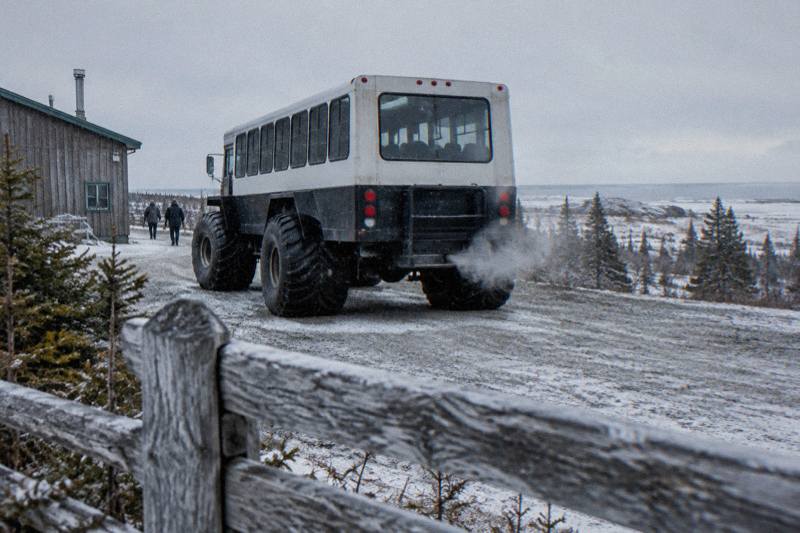
Do You Need A Tour To See Polar Bears In Churchill?
In practice yes: Wapusk National Park requires a licensed operator, the Churchill Wildlife Management Area regulates tour vehicles, and official guidance tells walkers to stay on main streets. Here is why a licensed tour is the way to see polar bears in Churchill.
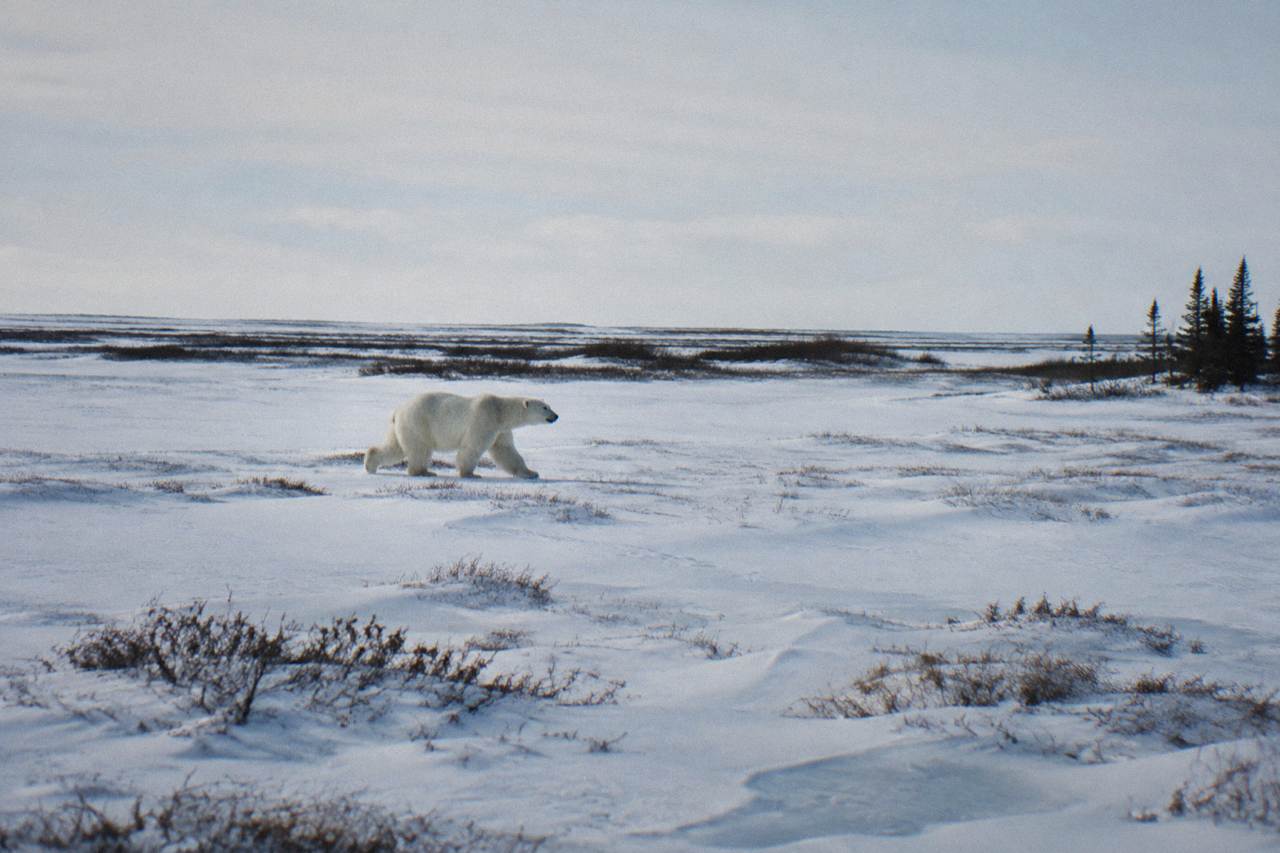
Do You Need A Tour To See Polar Bears In Churchill?
In practice, yes. The two places where polar bears reliably gather near Churchill, Wapusk National Park and the Churchill Wildlife Management Area, are both governed by rules that channel visitors through licensed operators, and the Manitoba safety guidance for the town itself tells people to stay on main, well-lit streets rather than seek bears out on foot. A licensed tour is not a marketing upsell here, it is the mechanism the regulations are built around.
The question is fair, because Churchill looks on a map like a small town on a bay, and small towns usually let you wander. Churchill is different in three specific ways. First, the town of about 900 people, per Travel Manitoba, sits inside polar bear country during the fall migration, when Travel Manitoba reports an average of 600 bears roaming the Hudson Bay shore between mid-October and mid-November waiting for the ice to form. Second, the best viewing areas outside town fall under provincial and federal regulation that assumes licensed operators. Third, the bears themselves are the reason: an unrestricted public walking across the tundra would be unsafe for people and for bears, and the official programs in place treat it that way.
That does not mean the only option is an expensive multi-day expedition. The verified tour roster tracked on Churchill Polar Bear Tours Canada spans everything from an eight-hour buggy day with lunch aboard, from $484 USD per person, to a six-day package from Winnipeg with flights included, from $7,926 USD per person. The format you pick changes the price a great deal, but every one of them runs inside the licensed framework. Travel Manitoba's own advice is to plan and book at least a year in advance for peak season, and Frontiers North states on its own pages that its Tundra Buggy day tours tend to sell to capacity, so the decision is usually less about whether to book and more about how early.
For readers who want the short version of what the licensed options look like, here is the verified roster side by side.
| Tour | Format | Price (USD) | Duration | Cancellation |
|---|---|---|---|---|
| Exclusive Tundra Buggy Day Trip | 40-passenger buggy day, lunch aboard | from $484 per person | 8 hours | Non-refundable |
| Full-Day Guided Tundra Buggy (Autumn Day Tour) | 40-passenger buggy day from Fifty Eight North | from $496 per person | 8 hours | Non-refundable |
| Private Polar Bear and Hudson Bay Road Safari | Private heated SUV with your own guide | from $1,474 per private group | about 8 hours | Free up to 24 hours before |
| Classic Churchill Polar Bear Experience | Six-day package from Winnipeg, flights included | from $7,926 per person | 6 days, 5 nights | Non-refundable |
The three formats above cover most real situations: a single day in Churchill, a private group that wants its own pace, and a full packaged trip from Winnipeg. If you are still weighing which of those fits your plans, the trio below is a reasonable starting point, and each listing shows live availability.
Why Wapusk National Park Requires A Licensed Operator
Parks Canada states plainly that there are no roads into Wapusk National Park and that visitors must arrange transportation by aircraft with a licensed tour operator, and that a licensed tour operator is required for all activities in the park. There is no independent, self-drive or walk-in option at all. If the bears you want to see are inside Wapusk, a licensed operator is the only legal route in.
Wapusk covers 11,475 square kilometres of coastal tundra east of Churchill and was established in 1996. It protects some of the densest polar bear denning habitat in the Western Hudson Bay region, which is exactly why access is controlled the way it is. Parks Canada's rules for the park add that visitors must be accompanied by a licensed guide or Parks Canada staff, that there is no independent access or camping, that garbage must be packed out, and that fires are not allowed. The park's own pages frame it as a high-risk area for polar bears, and the permitting system for operators exists to manage that risk.
None of the seven verified tours on this site currently enters Wapusk itself. The ones that take you out among bears operate in the Churchill Wildlife Management Area, a provincial zone west and north of town where vehicle access is regulated separately. That distinction matters when you read tour descriptions: a Tundra Buggy day tour and a private road safari both run in the management area under provincial licensing, while Wapusk fly-in access is a different, more specialized product category. The principle is the same in both places, though. The land where the bears gather is not open terrain you can explore on your own, and the regulation that keeps it closed to unlicensed vehicles is the same regulation that keeps the viewing safe.
The provincial piece deserves its own sentence, because it is the one people overlook. Under the Manitoba regulation governing the Churchill Wildlife Management Area, no person may operate a vehicle or build or occupy a structure while supplying accommodation or touring facilities there except under the regulation, which is the legal footing for licensing tour operators. In plain terms, the buggy you ride in is there because its operator holds a licence, and a private vehicle you drove yourself would not be. Since Churchill has no road connection at all, that scenario is hypothetical anyway, but it explains why every legitimate way of reaching the bears involves a licensed operator of some kind.
If you are leaning toward the packaged route, where licensing, flights and tundra days are bundled together, this is a reasonable moment to check what dates remain.
Can You See Polar Bears From Churchill Itself?
Yes, incidentally and occasionally. Bears do pass near and even through town during the fall migration, and residents report sightings to the Polar Bear Alert hotline, 204-675-2327, monitored around the clock in the active season. But a bear near town is an event the Alert Program actively works to end, using hazing and, if needed, the holding facility near the airport. Town sightings are luck, not a plan.
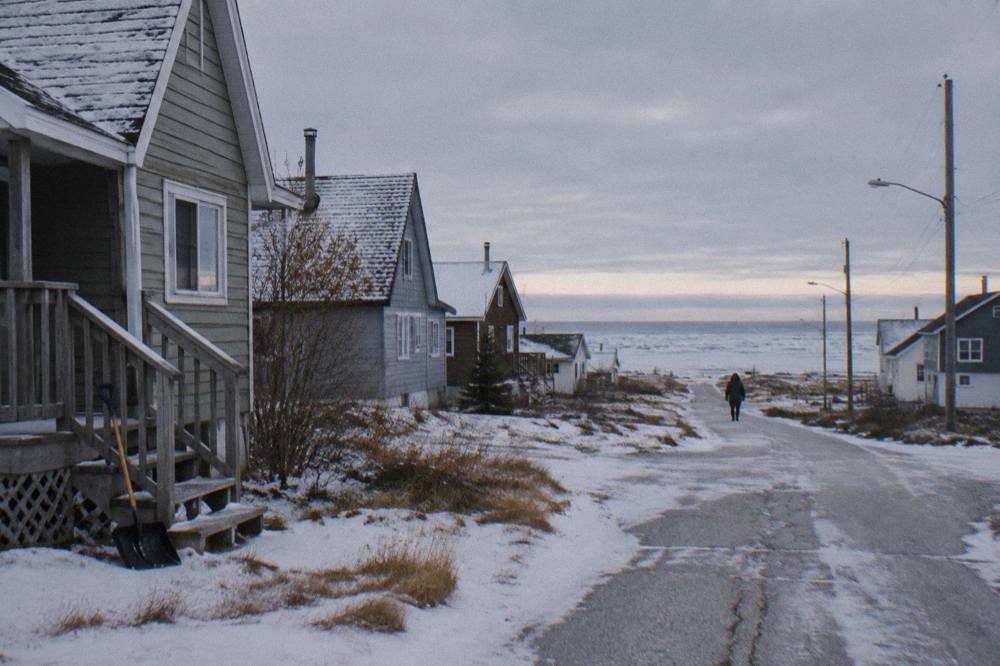
The Manitoba Polar Bear Alert Program is a preventive system, and understanding it explains why "just wait in town for a bear" is not a strategy. The program establishes a controlled zone around the townsite and the dump where bears are not permitted. When a bear is reported, staff respond and use aversive conditioning first: noisemakers, paintballs and rubber bullets to haze the animal away. Bears that persist may be captured and held in the Polar Bear Holding Facility, a converted building near the airport with up to 28 cells, for an average hold of about 30 days or until the ice forms, and the bears are not fed while held, to prevent food conditioning. The facility is not open to the public inside, though it has become a landmark people view from outside.
So the town and the tour operate on opposite logics. The tour takes you, under licence, to where the bears are allowed to be. The Alert Program works to keep the bears away from where you are allowed to be. A visitor who hopes to see a bear from a Churchill sidewalk is effectively hoping for the exact outcome the provincial program exists to prevent, and if it happens, the sighting usually ends with the bear being hazed or trapped. That is not a commentary on anyone's luck, it is how the system is designed, and it works: records note only two fatal attacks in the region, in 1968 and 1983, and a non-fatal mauling in town on 1 November 2013, with no serious human injuries from bears reported in Churchill since.
There are honest in-town vantage points, and the free and low-cost sights are covered in detail in the free things to do in Churchill guide. Cape Merry offers views over the Churchill River estuary, the Itsanitaq Museum holds Inuit carvings and artifacts, and the Parks Canada Visitor Centre in the VIA Rail station has exhibits on the area's wildlife and history. None of these is a bear-viewing platform, and hours and access are best confirmed on arrival. The realistic framing is that town sights fill the hours between licensed tours, not replace them.
Why Walking Out Onto The Tundra Is Not The Way
Manitoba's published safety guidance for Churchill is blunt: if walking is absolutely necessary, stay on the main streets, never walk in dimly lit areas, and report any bear sighting immediately. There is no official guidance anywhere that directs visitors to walk out of town onto the tundra to look for bears, and the opposite is true: the licensed-operator framework exists precisely because unaccompanied access to bear habitat is unsafe.
The guidance exists because the risk is real, not theoretical. Polar bears move through the coastal zone around Churchill throughout the fall, and a person on foot in that terrain has no safe way to manage an encounter. The town's own habits reflect this: doors are often left unlocked in Churchill so that anyone can shelter quickly, and the town publishes zone maps and a Safety in Polar Bear Country pamphlet. The provincial safety material adds that sightings should be reported at once and bears never approached or harassed. Every one of those instructions assumes you are near town, where shelter and responders exist. A kilometre out on the tundra, none of that infrastructure follows you.
It is worth being equally clear about what this means for the "no tour needed" idea in its strongest form. Some visitors imagine walking the coastal flats the way one might hike a park trail, spotting bears from a distance. That is not available here, and not only because of danger. The Wildlife Management Area regulation restricts vehicle use and structures to licensed operators, Wapusk requires a licensed guide for all activities, and the land between is a mix of private, provincial and federal jurisdiction with no maintained public trail system aimed at bear viewing. The practical, legal and safety answers all point the same direction, which is unusual and worth stating plainly: on this specific question, the marketing claim and the regulation happen to agree.
The comparison is easiest to see side by side.
| Approach | Legal status | Safety framework | Realistic outcome |
|---|---|---|---|
| Licensed buggy day in the management area | Operates under provincial licensing | Raised vehicle, trained guide, established viewing zones | Structured full-day bear viewing |
| Private guided road safari | Licensed operator, private group | Your own guide, heated vehicle, flexible pace | Guided viewing at your group's rhythm |
| Watching from town streets | Allowed, you are simply in town | Polar Bear Alert Program, unlocked doors, hotline | Incidental sighting only, bear likely hazed |
| Walking out of town to find bears | Not supported by any official guidance | None; no shelter or responders on the tundra | Unsafe and contrary to published safety rules |
If the safety picture raises questions beyond tours, the polar bear safety guide for Churchill covers the Alert Program, the holding facility and the town rules in more depth.
What A Licensed Tour Actually Gets You
A licensed tour buys three things you cannot assemble yourself: legal access to the viewing areas, a purpose-built vehicle or guided format operated under licence, and a guide whose job includes reading bear behaviour. On the buggy days, the vehicle itself is part of the value, and Frontiers North describes its equipment in detail on its own pages.
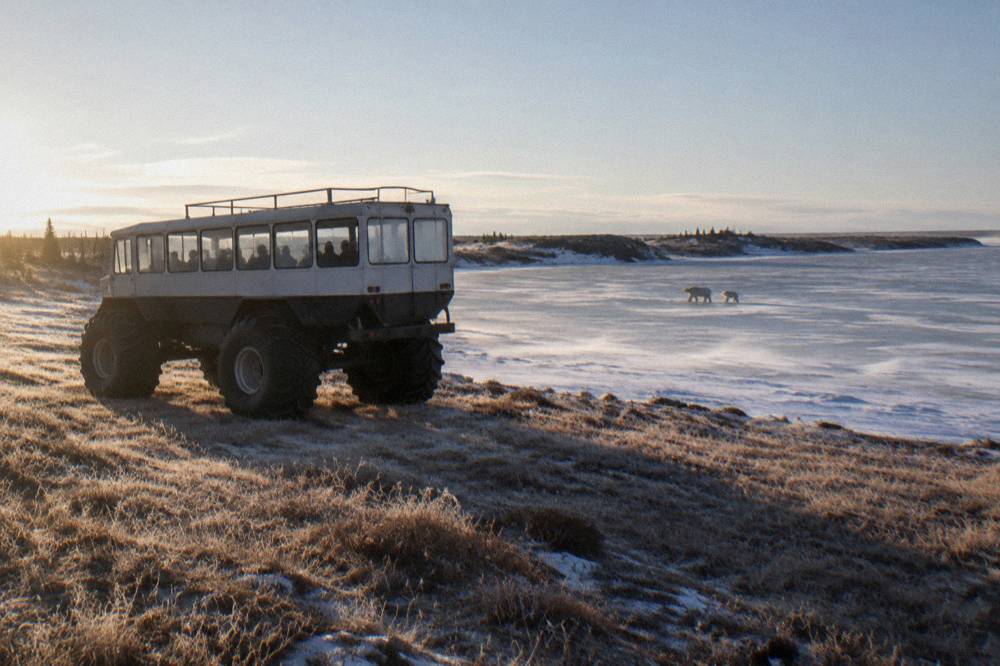
The vehicle matters more than newcomers expect. Frontiers North's own pages state the Tundra Buggy is heated, seats up to 40, has a window for every guest, a rear viewing deck and 1.7 metre tires, plus a single-use bathroom near the back. The elevated decks of a Tundra Buggy put guests well above a standing bear, and the bears themselves are habituated to the vehicles in the management area, sometimes approaching or standing against them, which is safe from that height and impossible from the ground. The eight-hour buggy day with lunch aboard is the format most first-time visitors choose, and the roster's version of it, the Exclusive Tundra Buggy Day Trip, is rated 4.6 from 30 reviews, with lunch listed and a town meeting point for departure. The autumn variant of the same day, the Full-Day Guided Tundra Buggy, is rated 4.3 from 15 reviews and departs from the Fifty Eight North shop, with check-in around 7:45 in the morning and a return around 5 in the evening, per the operator's own pages.
The guest reviews on that listing describe the day concretely. One guest review notes: "Our guide, Luke, was passionate and knowledgeable about the area and Polar Bears. His stories were entertaining and informative. He ensured we had the best experience possible resulting in seeing about 12 bears starting with a momma bear and two cubs. Everything was organized, efficient and our safety and the bear's safety was the top priority." Another reads: "Best day ever! So many bears including lots of cubs and even triplets. Couldn't have asked for a better trip. Marc was our guide so friendly and knowledgeable. Great lunch and the buggy was warm and comfortable." Bear counts in reviews are one guest's day, never a promise, but the shape of the experience, a warm vehicle, a knowledgeable guide and hours among bears, comes through consistently.
The private format trades the shared buggy for your own guide and vehicle. The Private Polar Bear and Hudson Bay Road Safari runs about eight hours in a heated SUV with pickup at your Churchill hotel, the airport or the railway station, from $1,474 USD per private group and free cancellation up to 24 hours before the start. It is a new listing with no reviews yet, so there is no rating to cite, but the format suits families and groups who want a flexible pace and a guide's full attention. Lunch is listed on the listing. For travelers already in Churchill without a buggy day booked, it is the most direct licensed alternative.
The package format adds the travel layer. The Classic Churchill Polar Bear Experience runs six days and five nights from Winnipeg, rated 4.8 from 59 reviews, from $7,926 USD per person, with round-trip flights from Winnipeg, Tundra Buggy days on the tundra and town time in Churchill, and a 70 lb luggage limit across two pieces. A review from that listing captures the packaged experience: "This tour was beyond amazing and exceeded expectations! Such a unique experience to see polar bears in their natural habitat and very well organized. Had an awesome guide that always made sure the entire group had everything they needed." The six-day winter aurora package and the seven-day summer beluga package from the same operator cover the other seasons, from $5,783 and $6,974 USD per person respectively.
What It Costs To Go With A Licensed Tour
The verified per-person floor for a licensed bear tour in Churchill is the eight-hour buggy day at from $484 USD per person, and the ceiling among verified products is the six-day package from Winnipeg at from $7,926 USD per person. Between those poles sit the autumn day tour and private group options priced per group rather than per person.
The price spread is wide, but it maps cleanly onto what is included. A buggy day is a single tundra day with lunch, meeting in town. A package adds flights from Winnipeg, several nights, multiple tundra days and town programming. The autumn day tour sits just above the buggy day at from $496 USD per person. The private road safari is priced per group, so a party of four splitting from $1,474 is in a different arithmetic than a solo traveler paying per person. Every figure is printed as the listing states it, with no seasonal variation claimed. It is worth checking the polar bear tour cost guide for the full budget picture, including the getting-there costs that packages bundle and day tours leave to you.
Two cost facts deserve emphasis because they shape booking decisions. First, the day tours and packages from Frontiers North are non-refundable on the listings and cannot be changed, while the two private tours from JAINVOYAGERS INC offer free cancellation up to 24 hours before the start. Second, Frontiers North's own booking terms list a $750 CAD per person deposit, non-refundable, with full payment due 120 days before departure, which applies to its packaged trips. Neither fact is a reason to skip booking, but both are reasons to be settled on dates before you commit, and to consider travel insurance, which operators frequently recommend for this destination.
The cheapest verified route to a licensed bear day is the buggy day with lunch aboard. For travelers weighing whether even a single day in Churchill is workable, the one-day polar bear tours guide covers the logistics of day-trip timing, and the question of how many days you need in Churchill is worth settling before you book anything.
The Short Answer For Every Kind Of Visitor
If you are already in Churchill, book a licensed day tour: the buggy day or a private guided safari. If you are planning from afar and want the deepest exposure to the bears, book a package from Winnipeg that includes flights and multiple tundra days. If your interest is incidental, enjoy the town sights and treat any town sighting as the rare, managed event it is.
That is the honest summary of the whole question. What none of these paths includes is going out onto the tundra alone, because no regulation, operator or safety program supports it. The licensed tour is not a convenience layered on top of an open landscape, it is the access system for a regulated one. The same operator pages that promote the experience also state that day tours tend to sell to capacity, and Travel Manitoba advises booking a year ahead for October and November. In other words, the constraint is rarely the rule; it is the calendar. The travelers who see the most bears are usually the ones who treated the booking as the first step of the trip rather than an afterthought.
For a final side-by-side look at the three formats this site features, the selection below shows the buggy day, the private safari and the six-day package together, each with live availability.
Common Questions About Seeing Polar Bears In Churchill
Do You Need A Tour To See Polar Bears In Churchill?
In practice, yes. Wapusk National Park requires a licensed operator for all activities, the Churchill Wildlife Management Area regulation restricts tour vehicles to licensed operators, and Manitoba's safety guidance tells people in town to stay on main, well-lit streets. A licensed tour is the supported way to see polar bears here.
Can You See Polar Bears In Churchill Without A Tour?
Only incidentally. Bears pass near town during the fall migration, and any sighting is reported to the Polar Bear Alert hotline, 204-675-2327. The Alert Program then works to haze or capture the bear, so town sightings are rare, managed events rather than a viewing strategy.
Do You Need A Licensed Guide In Wapusk National Park?
Yes. Parks Canada states that a licensed tour operator is required for all activities in Wapusk, that there are no roads into the park, and that visitors must arrange transportation by aircraft with a licensed operator. There is no independent access.
Is It Safe To Walk Around Churchill Looking For Bears?
No, and no official guidance suggests it. Manitoba's safety material says to stay on main streets, never walk in dimly lit areas, and report any bear sighting immediately. Doors in Churchill are often left unlocked so anyone can shelter quickly.
What Is The Cheapest Licensed Polar Bear Tour In Churchill?
The lowest verified per-person price on this site's roster is the Exclusive Tundra Buggy Day Trip at from $484 USD per person for eight hours with lunch aboard, rated 4.6 from 30 reviews. The autumn day tour variant is from $496 USD per person.
When Is Polar Bear Season In Churchill?
Travel Manitoba reports that from mid-October to mid-November an average of 600 bears roam the Hudson Bay shore waiting for the ice to form, and describes October and November as the peak. Some bears can be spotted from July to September, but in fewer numbers.