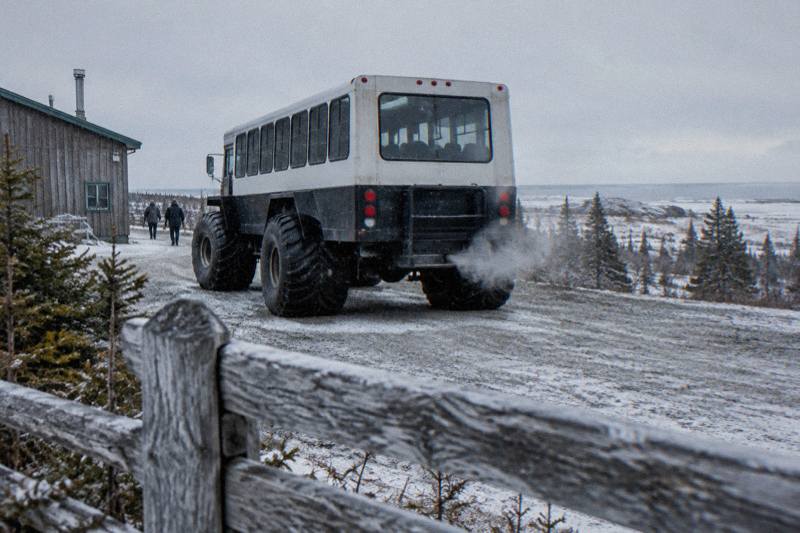
Best Time To See Polar Bears In Churchill
Polar bears gather on the Churchill coast while Hudson Bay waits to freeze, and the difference between a good week and a great week comes down to ice, light, and how early you booked.
Short answer
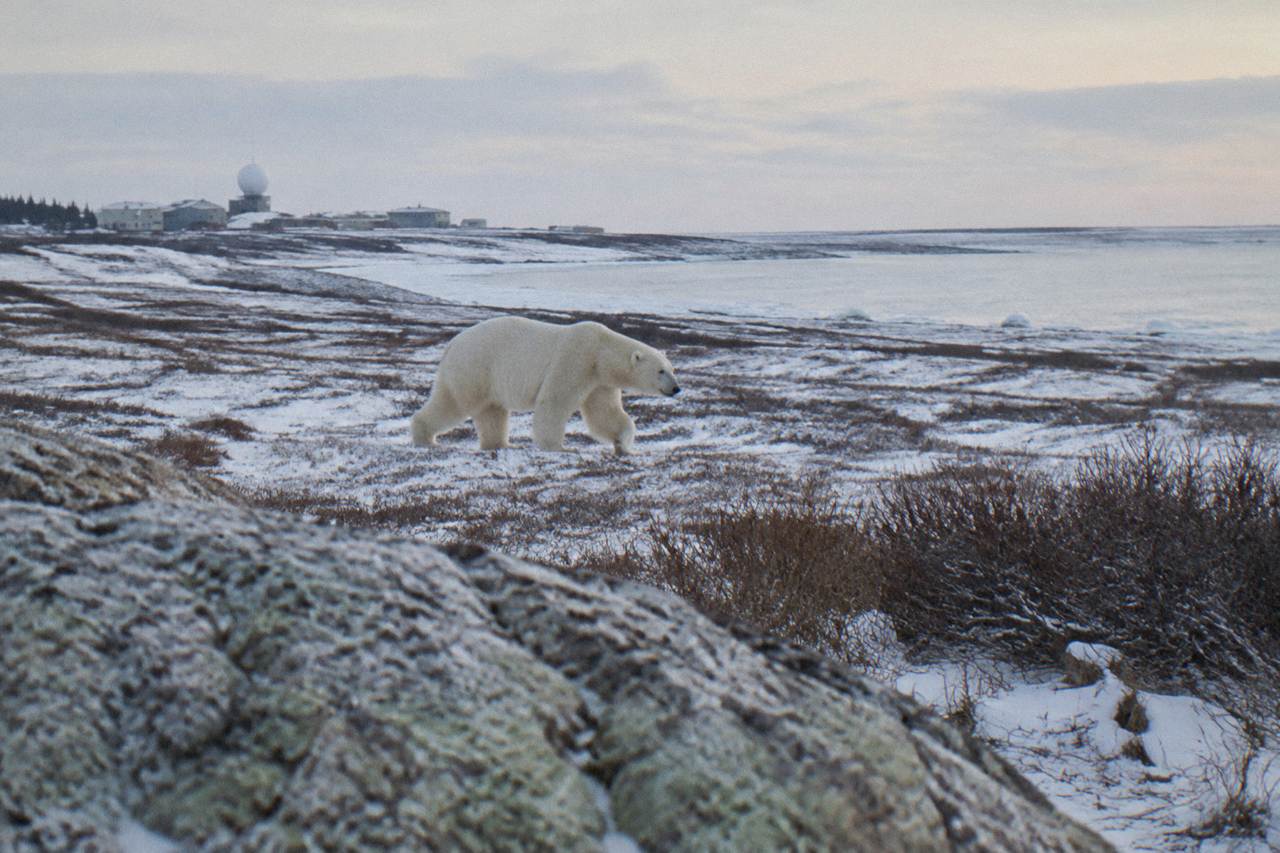
The best time to see polar bears in Churchill is mid-October to mid-November, when an average of 600 bears wait along Hudson Bay for the ice to form. Book roughly a year ahead for peak weeks. July to September offers bears in much smaller numbers, alongside beluga whales.
Churchill sits where the Churchill River meets Hudson Bay, a town of about 900 people, per Travel Manitoba, reachable only by train or plane. Every autumn the same geography that isolates the town works in its favour: polar bears that spent the summer on the tundra move toward the coast, waiting for the bay to freeze so they can return to the sea ice and hunt seals. The result is a gathering of hundreds of bears within a short drive of a small town, and a viewing season compressed into a few intense weeks. Before you commit to the trip, it helps to weigh whether the experience justifies the cost and effort, and our honest take on whether Churchill is worth the journey walks through that decision by season, budget, and travel style.
Picking the right week inside that season is the real booking decision. The six-day Classic Churchill Polar Bear Experience from Winnipeg, the eight-hour Tundra Buggy day trips, and the private road safari all run against the same clock: the bears arrive, the bay freezes, and the bears leave. This guide walks through that calendar week by week, with the weather, the light, and the freeze-up science that explains why mid-October to mid-November is the window most travellers aim for.
When Is The Best Time To See Polar Bears In Churchill?
The best time to see polar bears in Churchill is mid-October through mid-November, when Travel Manitoba reports an average of 600 bears roaming the Hudson Bay shore while they wait for the ice to form. Within that span, late October concentrates the most bears and the most tour activity. No week guarantees a sighting, since bears and ice follow their own schedule.
Travel Manitoba frames the peak plainly as October and November, and adds that more than 600 polar bears congregate near the shores of Hudson Bay each fall. The reason is hunger. Polar bears in western Hudson Bay depend on sea ice to hunt seals, and the bay near Churchill does not refreeze until approximately early November, according to the Churchill Northern Studies Centre. From the moment the ice breaks up in spring, the bears fast on land. By October they have gone months without a substantial meal, and they drift toward the coast, pacing the shoreline where the ice will first form.
That biology creates a strange and wonderful situation for visitors: the worse the news is for the bears, the better the viewing. A late freeze-up means more bears, for longer, in a smaller area. An early freeze-up clears the coast quickly, because the bears walk straight out onto the new ice and disperse across the bay. The season's quality is decided hundreds of kilometres away by ocean temperatures and wind, weeks before you board a Tundra Buggy.
The town's whole visitor economy tilts around this. Frontiers North Adventures, the operator behind the Tundra Buggy fleet, runs its autumn day tours across October and November, and its own pages note that day tours tend to sell out during peak season. The Churchill polar bear tour cost guide breaks down what those weeks cost; here the focus is when, not how much.
A Week By Week Guide To October In Churchill
October builds from a quiet opening week to the busiest stretch of the entire year. Early October offers longer daylight and fewer travellers, with bears arriving in growing numbers. By the third and fourth weeks, bear activity along the coast peaks, tour vehicles run at capacity, and the town fills with photographers from around the world.
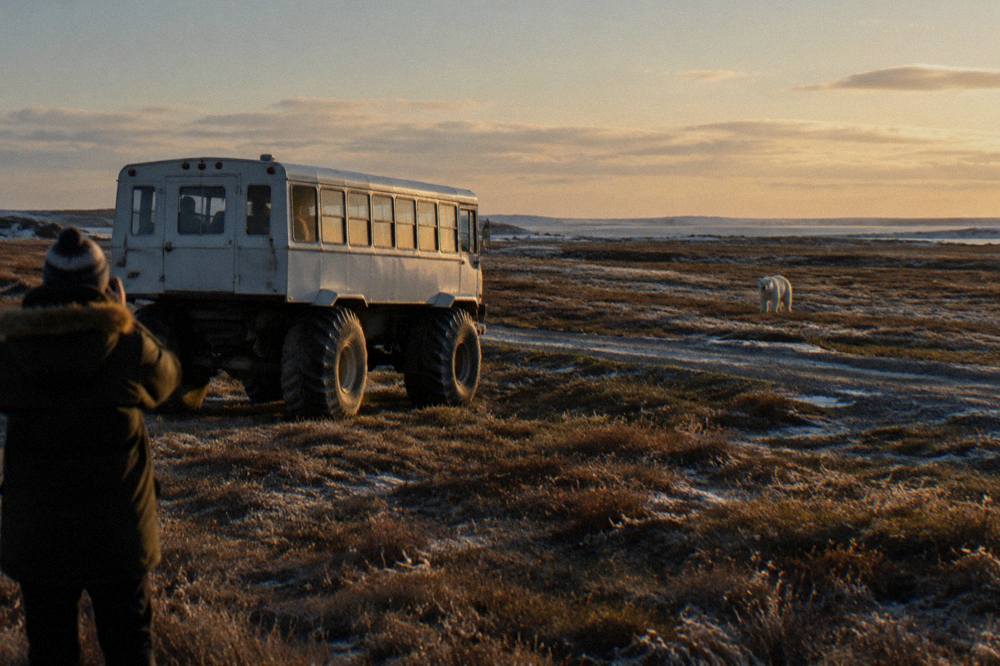
The first week of October is the connoisseur's week. Bears have been visible on the coast since summer, but the real movement toward the shore begins now. Daylight still stretches past twelve hours, which matters enormously for photography: long golden hours, soft light on the tundra berries and frost-killed grasses, and enough sun to work with all day. Temperatures sit near the freezing mark on the 1981 to 2010 Environment and Climate Change Canada normals, with an October mean daily temperature of about minus 1 C. Crowds are thinner, and the Tundra Buggy day tours are easier to book.
Mid-October is when the season visibly turns. Travel Manitoba's own guidance is that the gathering runs from mid-October to mid-November, and the operator pages show the same: Frontiers North's 2026 autumn departures cluster through the second half of the month. Bears that spent September inland move to the coast, and mothers with cubs, who stick to safer areas away from large males, become easier to find near the shoreline. The eight-hour buggy day with lunch aboard, the lowest-priced verified bear tour at from $484 USD per person, is running daily by this point. If you're still weighing which operator to book with, our guide to choosing a Churchill polar bear tour company compares what the verified listings and reviews actually show.
Late October is the peak of the peak. The last two weeks of the month combine the highest bear density with the busiest tour calendar of the year. Frontiers North's autumn day tour listing is booked on average 180 days in advance, per the operator's own listing data, and Travel Manitoba advises planning and booking at least a year ahead for October and November. If you want the classic Churchill experience, a full buggy on the tundra with bears around it, this is the fortnight that delivers it, and the fortnight that requires the earliest planning.
| October week | Bear activity | Light and weather | Crowds and booking |
|---|---|---|---|
| Week 1 (Oct 1 to 7) | Bears present, numbers building | Longest daylight of the season, mean near minus 1 C | Quietest week, latest realistic booking |
| Week 2 (Oct 8 to 14) | Coastal movement begins in earnest | Fading golden hours, first snows possible | Moderate demand, buggy seats still findable |
| Week 3 (Oct 15 to 21) | High density near the shore | Roughly 11 hours of light, frost regular | Peak demand begins, book far ahead |
| Week 4 (Oct 22 to 31) | Peak gathering, cubs visible | Short days, winds pick up, snow likely | Busiest of the year, average 180-day advance booking |
The trade-offs are real and worth stating honestly. Early October buys you light and space; late October buys you bears and company. There is no week that reliably gives you all four.
If you are weighing formats rather than dates, the three options below span the October decision: the six-day package from Winnipeg that anchors the season, the eight-hour buggy day trip for travellers already in town, and the seven-day summer package for a completely different month.
A Week By Week Guide To November In Churchill
November splits sharply into two halves. The first two weeks still hold strong bear numbers, with the added drama of snow, ice forming along the shoreline, and the first bears walking out onto new sea ice. By mid-November the bay freezes and the season ends almost overnight, as the bears leave the coast for the ice and the town pivots toward winter.
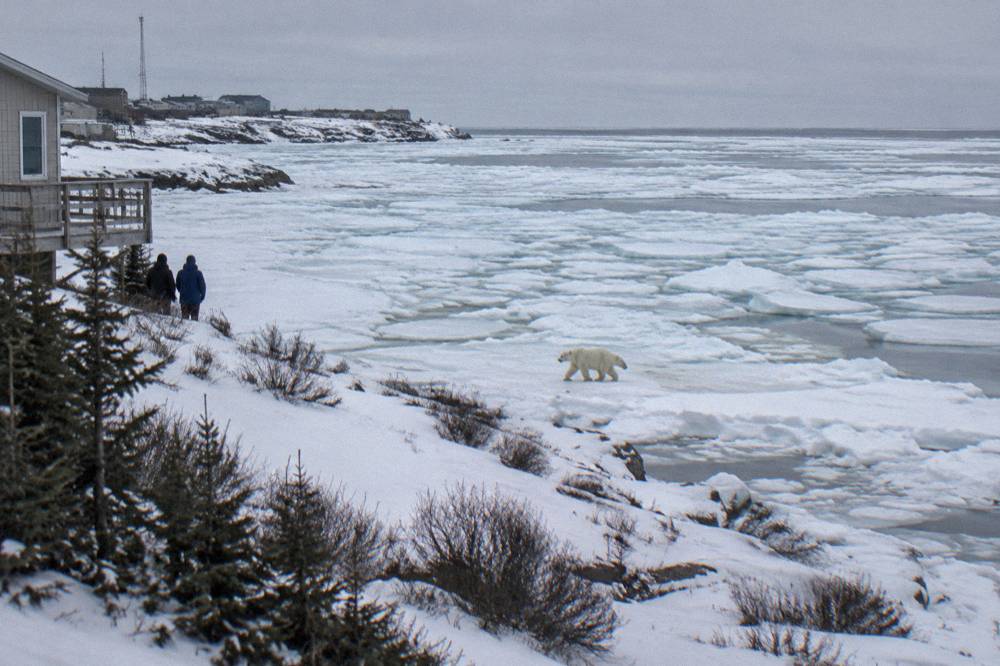
Early November is the gambler's week, and a rewarding one when it pays. The Churchill Northern Studies Centre notes that Hudson Bay near Churchill does not refreeze until approximately early November, which means the first days of the month often hold the last big concentration of bears, now in genuine winter conditions. The November mean daily temperature on the verified normals is about minus 12 C, with mean lows near minus 16 C. Snow is usually on the ground, the light is low and silver, and the photography is a completely different genre from October's gold. Bears waiting on the shore may start testing the new ice, and the sight of a bear walking out onto the frozen bay is one of the season's signature images.
The risk is structural: the same freeze that produces that image ends the season. Once the ice is solid, the bears have every reason to leave. A departure in the first week of November can coincide with a spectacular finale or with a coast already emptying out. Operators keep running through the month, and the listings show November departures in the Frontiers North calendar, but the odds shift week by week in a way October's do not.
Mid-November onward belongs to winter. The bear season winds down, and the town's attention turns to the aurora: Travel Manitoba notes the northern lights can appear 300 nights a year, with the best viewing season running January to March. Some travellers deliberately book the shoulder, a few days in late October or the first days of November, to catch the tail of the bears and the first dark, clear nights of the lights season in one trip. The northern lights tours guide covers that side of the calendar.
| November week | Bear activity | Light and weather | What to expect |
|---|---|---|---|
| Week 1 (Nov 1 to 7) | Strong numbers, first ice walks | Mean near minus 12 C, snow cover, short days | High reward, real risk of an early freeze-out |
| Week 2 (Nov 8 to 14) | Numbers falling as ice forms | Colder, mean lows near minus 16 C | Quiet tours, winter scenery, fewer bears |
| Week 3 (Nov 15 to 21) | Most bears gone onto the ice | Deep winter conditions | Bear season effectively over |
| Week 4 (Nov 22 to 30) | Occasional stragglers only | Coldest stretch of the transition | Aurora and winter season begins |
For travellers who want the November upside without the November risk, the six-day package format is the natural hedge: it builds several Tundra Buggy days into one itinerary, so a single slow day on the tundra does not define the trip.
How Freeze-Up Timing Shapes Every Churchill Season
Freeze-up is the single variable that decides how long the Churchill bear season lasts. The bay near Churchill refreezes around early November, and once the ice holds, the bears walk out onto it and disperse to hunt. A late freeze-up extends the gathering; an early one ends it abruptly, which is why no operator can promise how any given week will play out.
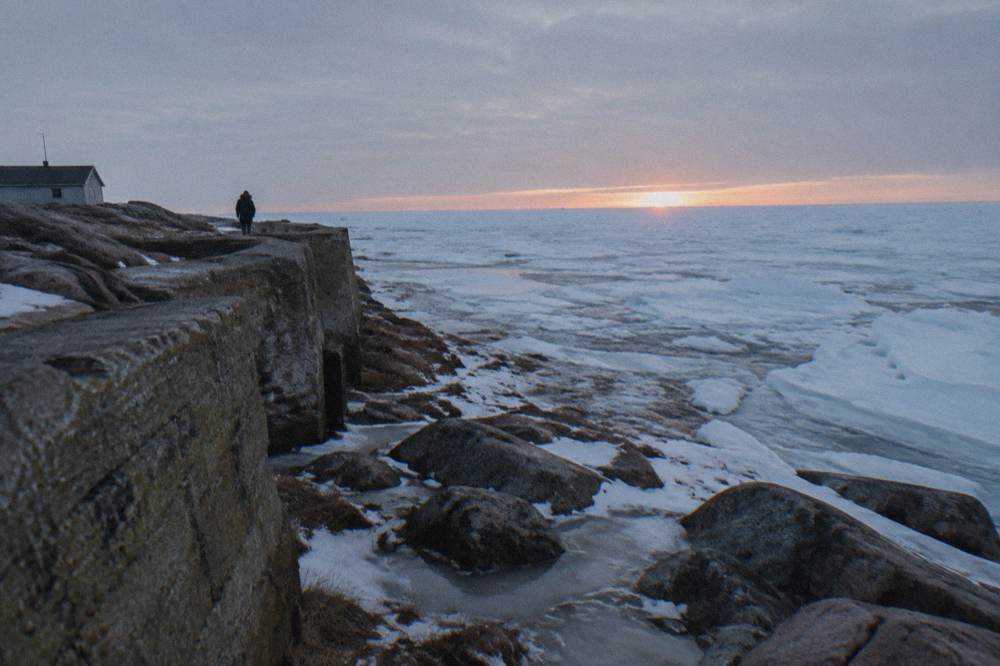
The mechanics are worth understanding because they explain the season's shape. Polar bears in this region are ice-dependent predators: seals, their main prey, are hunted from sea ice, not open water. When the ice breaks up in summer, the bears come ashore and largely fast. The Churchill Northern Studies Centre, a non-profit research facility just outside town, is one of the primary sources on this cycle, and its reading of the local freeze-up, approximately early November, lines up with the timing of the tour calendar.
Freeze-up also explains year-to-year variation in the season. A warm autumn with strong winds delays ice formation, holding bears on the coast longer. A cold, calm October can freeze the bay early and cut the gathering short. Nobody booking a tour in January knows which kind of year is coming, which is why every honest piece of advice on this subject, including this one, refuses to promise sightings. The bears are wild, the ice is a natural process, and the tour operators are licensed to put you in the right place, not to summon the animals.
The population behind the gathering has its own story. The most recent aerial survey of the Western Hudson Bay population, flown in late summer 2021, estimated 618 bears, with a wide uncertainty range of 425 to 899, down from about 842 in the 2016 survey. No newer survey has been published since. That single hedged line is the only population figure worth quoting, and it is a reminder that the spectacle visitors travel for is also a conservation story.
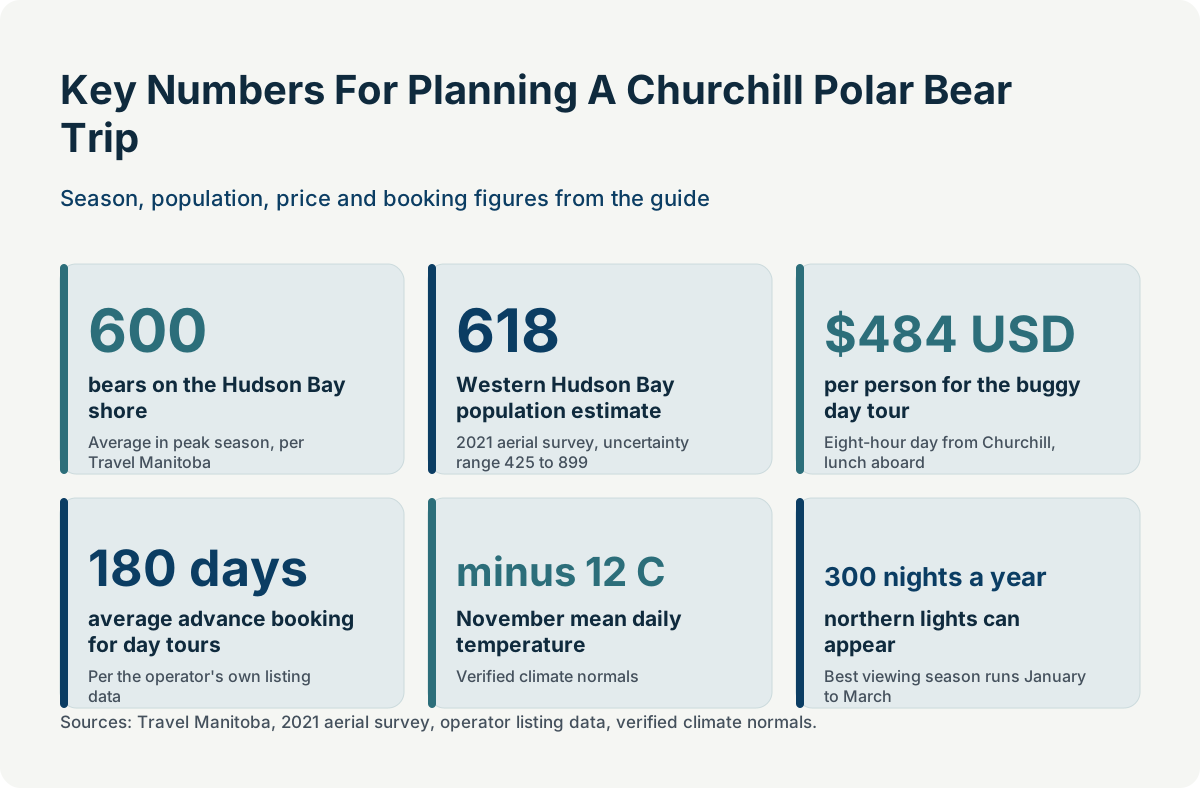
For the day-trip format, the freeze-up clock matters most of all. The eight-hour buggy day from Churchill, from $484 USD per person with lunch aboard, gives you one shot at the tundra, so its timing inside the season is the whole gamble. The listing holds a 4.6 rating from 30 reviews, and one guest review on the listing describes the upside plainly: "The experience was excellent! We saw more than 15 polar bears and I loved it!" That was one day, for one group, and the next departure may see three.
Can You See Polar Bears In Churchill In Summer?
Yes, polar bears are visible in Churchill from July to September, but in far smaller numbers than in autumn, per Travel Manitoba. Summer bears tend to roam the coast and shelter from the heat, and shoreline areas become the best vantage points. Summer viewing is a bonus of a beluga-focused trip, not a reason to book one for bears alone.
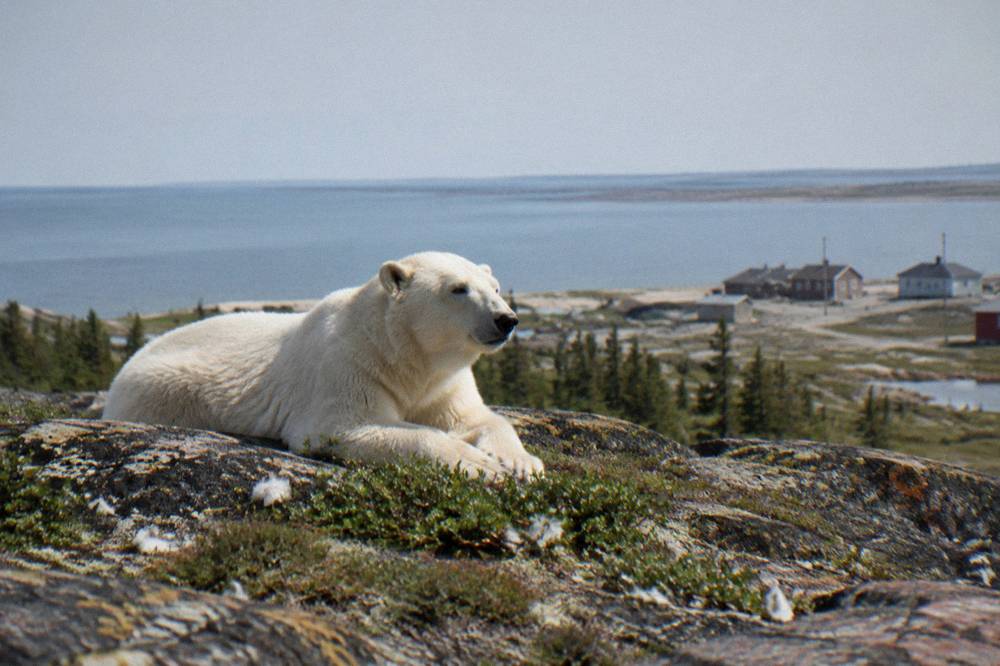
Travel Manitoba's guidance on summer bears is direct: you can spot polar bears from July to September, but in fewer numbers, and in August the bears roam the coast, making shoreline lodges the best vantage point. The summer bears are the same fasting animals, killing time in the coolest places they can find, which often means coastal eskers, river mouths and shade near the water. They are scattered rather than gathered, and a summer visitor who sees one bear has had a good day. The full index of guides sits on Churchill Polar Bear Tours Canada.
What summer lacks in bears it returns in whales. About 57,000 beluga whales make their way into Hudson Bay each year, with about 4,000 entering the Churchill River estuary, per Travel Manitoba, and July and August are the sure window. The contrast between the seasons is stark: autumn is hundreds of bears and empty water, summer is thousands of whales and a handful of bears. The seven-day Churchill Belugas, Bears and Blooms package, from $6,974 USD per person, is built around exactly that trade, pairing beluga time on the water with tundra excursions and the July and August wildflower peak.
The honest framing for a summer booking is this: go for the belugas, the blooms and the birds, and treat any bear sighting as a genuine bonus. Travellers who book summer specifically hoping for the autumn bear experience will be disappointed, and travellers who arrive expecting whales usually leave astonished. The Churchill beluga whale tours guide covers that season in detail.
What About Belugas, Aurora And The Other Churchill Seasons?
Churchill runs three distinct wildlife seasons: polar bears peak from mid-October to mid-November, belugas peak from mid-June to mid-September with July and August the sure window, and the northern lights run from late August into April, clearest and darkest in February and March. Each season needs its own trip, and each has its own booking calendar.
The aurora season deserves its own paragraph because it overlaps the bear season at exactly one point. Travel Manitoba notes the lights can appear 300 nights a year, with the best viewing from January to March, and the calendar blog adds that Churchill sits directly under the aurora oval, with February to March offering the clearest and darkest night skies. Late October and early November nights are long and often clear, so a bear trip can deliver an aurora night as a free second act, but the deep-winter months are the ones dedicated aurora travellers target. The Churchill Northern Studies Centre, about 23 km east of town, runs winter learning vacations built around the sky.
| Season | Window | What you are there for | Our listed tours that fit |
|---|---|---|---|
| Polar bears | Mid-October to mid-November | Bears waiting on the coast for freeze-up | Six-day package from Winnipeg, buggy day trips, private road safari |
| Belugas | Mid-June to mid-September, peak July and August | About 4,000 whales in the Churchill River estuary | Seven-day Belugas, Bears and Blooms package |
| Aurora | Late August to April, best January to March | Lights under the auroral oval | Private aurora night drive, six-day winter aurora package |
| Wildflowers and birds | July and August peak | Tundra blooms, 175-plus regional bird species | Seven-day Belugas, Bears and Blooms package |
The six-day Churchill Northern Lights and Winter Nights package, from $5,783 USD per person from Winnipeg, is the deep-winter counterpart to the autumn trips: six days timed for darkness and evenings spent watching for aurora under the oval. It carries a 5.0 rating from 4 reviews, a small pool, so read the reviews rather than trusting the number alone. The private five-hour aurora night drive, from $702 USD per private group of up to five with hotel pickup, suits travellers already in town on a bear trip who want one dedicated night chasing clear skies.
The overlap logic cuts both ways. If your heart is set on bears, book October. If it is set on whales, book July or August and accept fewer bears. If it is set on lights, book February or March and skip the bears entirely, or plan a return trip, which is what many visitors end up doing. Churchill rewards repeat visits precisely because its seasons do not overlap much.
How Weather, Light And Temperatures Affect Viewing
October in Churchill averages a mean daily temperature of about minus 1 C and November about minus 12 C on the long-term normals, with Frontiers North telling autumn travellers to expect days between minus 13 C and minus 2 C. Light shrinks fast through the season, from over 12 hours in early October to short winter days by November, which shapes both bear activity and photography.
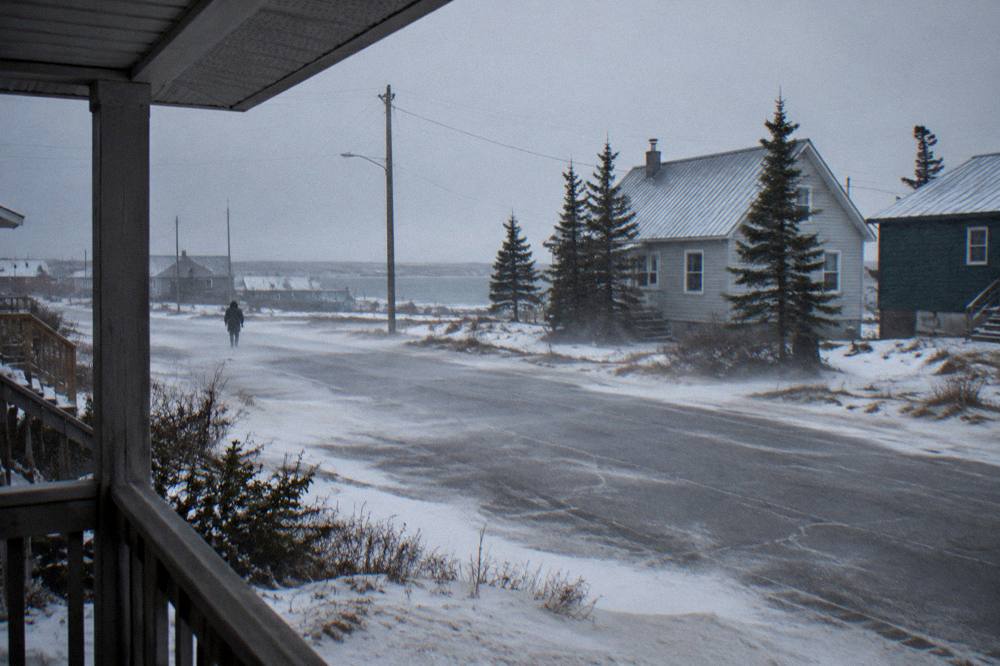
The verified climate normals for Churchill, from Environment and Climate Change Canada's 1981 to 2010 records, give the season its backbone. October's mean daily temperature is minus 1.15 C, with a mean maximum of 1.56 C and a mean minimum of minus 3.85 C. November drops to a mean of minus 12.7 C, mean highs near minus 9 C and mean lows near minus 16 C. Frontiers North's own pre-departure guidance for autumn tours quotes a working range of minus 13 C to minus 2 C, with strong winds pushing the felt temperature lower. Wind is the constant on the coast; it is a subarctic shore, and the buggy's heating, which the operator confirms is fleet-wide, is not a luxury.
| Month | Mean daily | Mean maximum | Mean minimum | What it means on the tundra |
|---|---|---|---|---|
| September | 6.4 C | 9.5 C | 3.2 C | Mildest bear-season conditions, very few bears |
| October | minus 1.2 C | 1.6 C | minus 3.9 C | The main season: frost, first snows, wind |
| November | minus 12.7 C | minus 9.0 C | minus 16.4 C | Winter conditions, ice forming, season ending |
| December | minus 21.9 C | minus 17.8 C | minus 25.9 C | Aurora season, no bear tours |
Light changes faster than temperature. Early October still delivers long working days for photographers; by the last week of the month the usable window has compressed to a few hours either side of midday, and November days are short and low. That compression is a real planning factor: on an eight-hour buggy day in late October, you may spend the first and last hours in near-darkness or flat grey. Wildlife behaviour shifts with it, with bears moving in the cooler hours and resting in what passes for midday warmth.
Weather also affects the machines, not just the people. Operators watch wind and temperature because they shape both the tundra surface and the shoreline ice. The town's own safety systems run in parallel: Manitoba's Polar Bear Alert Program keeps a controlled zone around the townsite where bears are not permitted, with a hotline at 204-675-2327 monitored around the clock in the active season. The polar bear safety guide covers what the program means for visitors. For clothing, the what to wear guide is the practical companion to the numbers above.
The autumn day tour format, from $496 USD per person with check-in around 7:45 a.m. at the Fifty Eight North shop and a return near 5 p.m., puts you outside through the coldest hours of the day. Its listing shows a 4.3 rating from 15 reviews, a modest pool, and the tour itself is non-refundable and cannot be changed, so the weather you get is the weather you ride in.
How Far Ahead Should You Book A Churchill Polar Bear Tour?
Book a peak-season Churchill polar bear tour about a year in advance, per Travel Manitoba's own advice for October and November. The buggy day tours are booked on average 180 days ahead, and Frontiers North's 2026 autumn calendar already shows many October and November departures sold out or limited, with 2027 dates promoted. Waiting lists are real; walk-ups are not.
The booking clock is the least romantic part of this guide and the most decisive. Travel Manitoba says it plainly: plan and book at least a year in advance, especially for peak season from October to November. Frontiers North's own pages echo it, noting that Tundra Buggy day tours have a tendency to sell to capacity and advising travellers to book as early as possible. The operator's booking terms add structure: a deposit of $750 CAD per person, non-refundable, with full payment due 120 days before departure. Those terms apply to the operator's packages; the day-tour listings on the booking pages carry their own non-refundable conditions, so read the cancellation line before you pay.
The sold-out pattern is visible right now. The operator's 2026 autumn calendar lists October and November departures with many marked sold out or limited, and 2027 dates are already being promoted. This is not a market where you browse in September for an October trip. The travellers on the tundra in late October booked the previous autumn, and the ones who will be there next year are booking as you read this.
If your dates are fixed and late October is the target, the six-day Classic Churchill Polar Bear Experience from Winnipeg, from $7,926 USD per person including round-trip flights and a 70 lb luggage allowance, is the format that most reliably puts you in the window: multiple Tundra Buggy days, town time, and dog sledding, all inside the peak fortnight. It carries a 4.8 rating from 59 reviews, the deepest review pool on the roster, and one guest review sums up what a well-timed week can deliver: "This trip has ben on our bucket list for a decade, and we finally went. Our guide, David, was fantastic, the town of Churchill was welcoming, and the polar bears did not disappoint." Another guest, on the same package, called it "beyond amazing and exceeded expectations!" Those are two travellers, in one week, with a guide and a season that cooperated. The date you pick is your part of that equation, and it is the one part you fully control. For the full picture of what each format costs across these weeks, start with the planning hub at Churchill Polar Bear Tours Canada and the tour cost guide.
Common Questions About The Best Time To See Polar Bears In Churchill
When is the best time to see polar bears in Churchill?
Mid-October to mid-November is the peak window, when Travel Manitoba reports an average of 600 bears along the Hudson Bay shore waiting for the ice to form. Late October typically concentrates the most bears and the most tour activity. No week guarantees sightings, since the bears and the freeze-up follow natural timing.
Can you see polar bears in Churchill in the summer?
Yes, from July to September, but in much smaller numbers than in autumn, per Travel Manitoba. Summer bears roam the coast in August, and shoreline areas are the best vantage points. Summer trips are best planned around beluga whales, with any bear sighting as a bonus.
When does the Churchill polar bear season end?
The season ends when Hudson Bay freezes, which the Churchill Northern Studies Centre places at approximately early November. Once the ice holds, the bears walk out onto it and disperse to hunt seals. By mid-November most bears have left the coast and the town shifts to its winter aurora season.
Is November a good month for polar bears in Churchill?
Early November can be excellent, with strong bear numbers plus snow, ice and the first bears walking onto new sea ice. The risk is that the same freeze-up ends the season quickly, so a mid-November trip may find the coast mostly empty. Early November is high reward with real timing risk.
How cold is Churchill during polar bear season?
On the long-term normals, October averages a mean daily temperature of about minus 1 C and November about minus 12 C. Frontiers North advises autumn travellers to expect between minus 13 C and minus 2 C, with wind pushing the felt temperature lower. Layered clothing and windproof outer layers are the standard advice.
How far ahead should I book a polar bear tour in Churchill?
Travel Manitoba recommends booking at least a year in advance for the October and November peak. The buggy day tours are booked on average 180 days ahead, and the operator's 2026 autumn calendar already shows many departures sold out or limited. Popular weeks do not have last-minute availability.