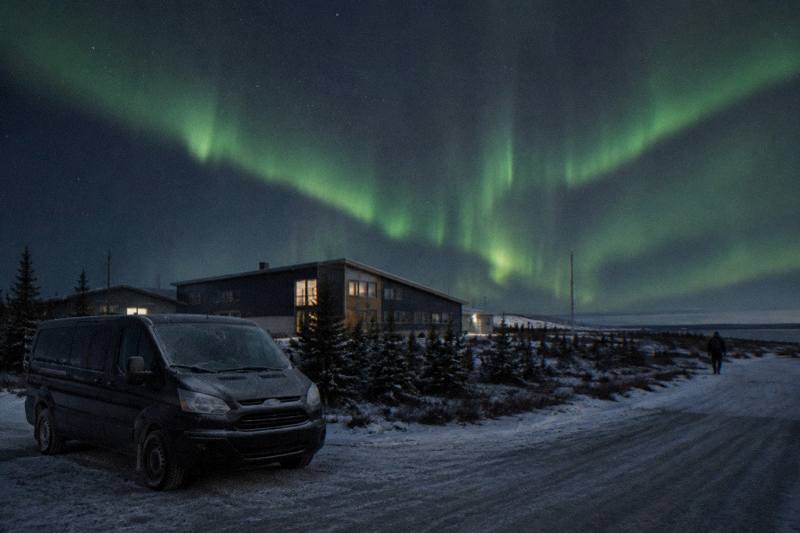
What Is The Best Month To See The Northern Lights In Churchill, Manitoba?
February and March give Churchill its darkest, clearest aurora nights. A month-by-month breakdown of northern lights odds, temperatures and tour options in Churchill.
What Is The Best Month To See The Northern Lights In Churchill?
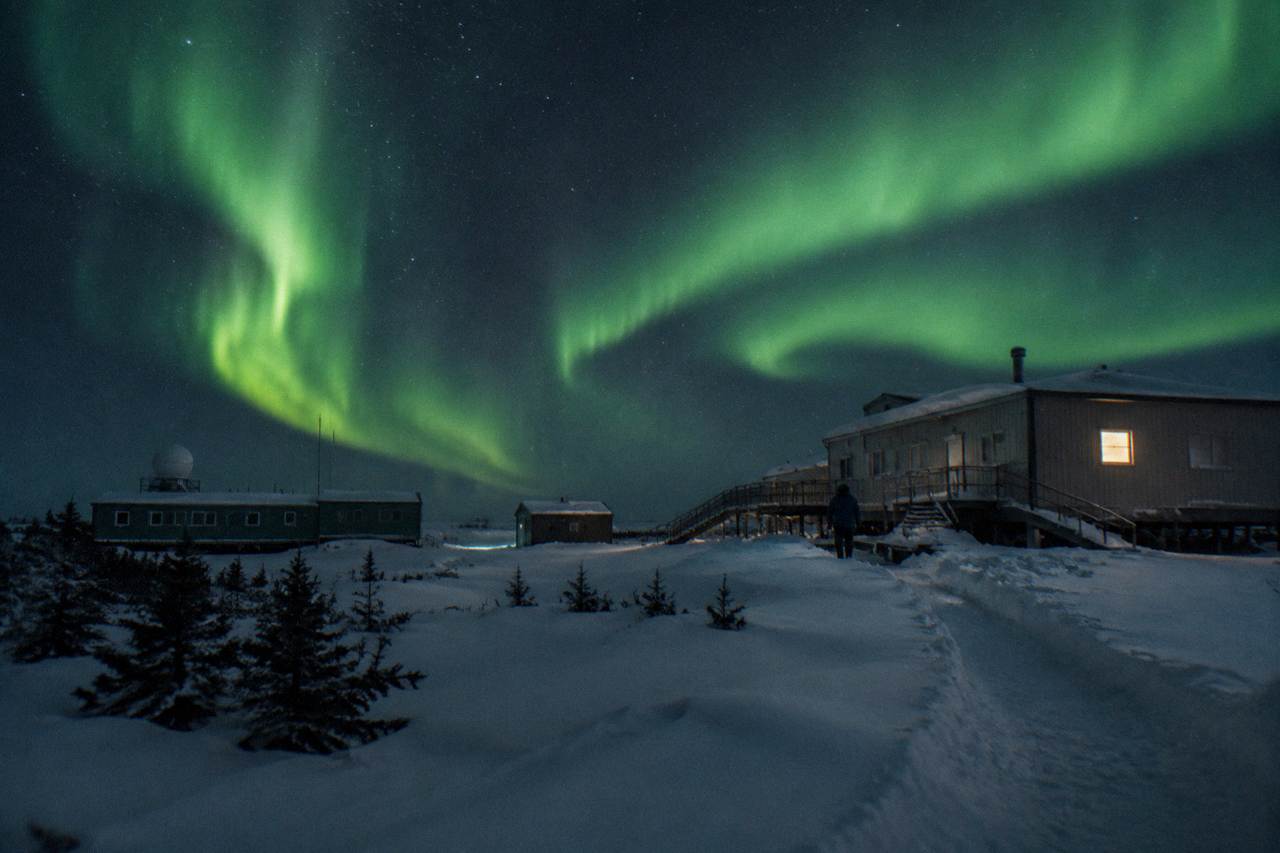
February and March are the best months to see the northern lights in Churchill. Travel Manitoba names January to March as the best viewing season, and its Churchill calendar guide says February to March offers the clearest and darkest night skies. Aurora activity runs from late August into April, so deep-winter months all carry real odds, but a trip built around the lights alone belongs in February.
The month question matters more in Churchill than almost anywhere else in Canada, because the town's position changes what each month gives you. Churchill sits directly under the auroral oval, the ring of aurora activity around the geomagnetic pole, so the lights can appear overhead here even on nights when forecasters would send observers farther south home disappointed. Travel Manitoba goes as far as calling Churchill one of the most reliable spots in the world to see the northern lights, with activity possible 300 nights a year. That figure is the tourism body's own claim, and it describes activity rather than a guarantee of a visible display on any given night, but the underlying geography is real: the oval sits over the town rather than south of it.
What separates the months, then, is not aurora frequency. It is darkness, weather and what else there is to do while waiting for the sky to cooperate. In summer the sky barely darkens at all this far north, and the aurora season effectively pauses. From late August the nights return, and by deep winter Churchill has some of the longest usable darkness in the accessible parts of Canada. The trade is cold: the verified climate normals put the January mean daily temperature at minus 26 C, and the best aurora months are among the coldest of the year. That shapes everything about how a trip gets planned.
For readers weighing the lights against the town's other headline season, the polar bear migration peaks in October and November, and late October can deliver both bears by day and aurora by night. The dedicated aurora traveler, though, gets more darkness per night in February than in the entire shoulder of late August and September combined. This article walks the calendar month by month, pairs each stretch with the tour formats that run in it, and ends with the practical questions buyers actually ask.
Why Churchill Sits Under The Aurora Oval
Churchill's far-northern latitude places it beneath the auroral oval, the zone where charged particles funnel into the upper atmosphere. The town's own tourism material says the lights can appear 300 nights a year, and the best viewing season runs January to March. The oval's position means displays can occur here at low geomagnetic activity levels that would produce nothing farther south.
The practical consequence of the oval is that Churchill does not need a strong solar storm to put on a show. Aurora forecast apps report activity on a Kp index scale, and Churchill counts at a Kp 1 threshold, meaning even quiet geomagnetic conditions register as overhead potential here. A traveler in southern Manitoba might need a Kp 5 or higher event to see anything; the same quiet night in Churchill can still hang green overhead. That is the whole argument for making the long trip north for the lights rather than watching from a cottage lawn two provinces closer to home.
The second consequence is that cloud cover, not geomagnetic activity, becomes the real enemy. An aurora at Kp 2 behind a solid overcast is invisible, and Churchill's coastal weather produces plenty of overcast. This is why the month-by-month discussion below leans so heavily on darkness hours and typical clear-sky patterns rather than on solar cycles, which the traveler cannot schedule around anyway. The fresh sweep's month counts, hedged as typical-year figures at the stated Kp threshold, are the closest thing to a planning number that exists for this question.
The Churchill Northern Studies Centre, a non-profit research and experiential education facility about 23 km east of town, adds a third piece to the puzzle: distance from town light. The centre sits far enough from Churchill's small grid that its skies run darker, and it operates an indoor aurora dome plus an outdoor observation deck for guests on its learning vacations. For independent travelers, that distance is the same logic: every kilometre away from the townsite buys back sky.
Month By Month Aurora Odds In Churchill
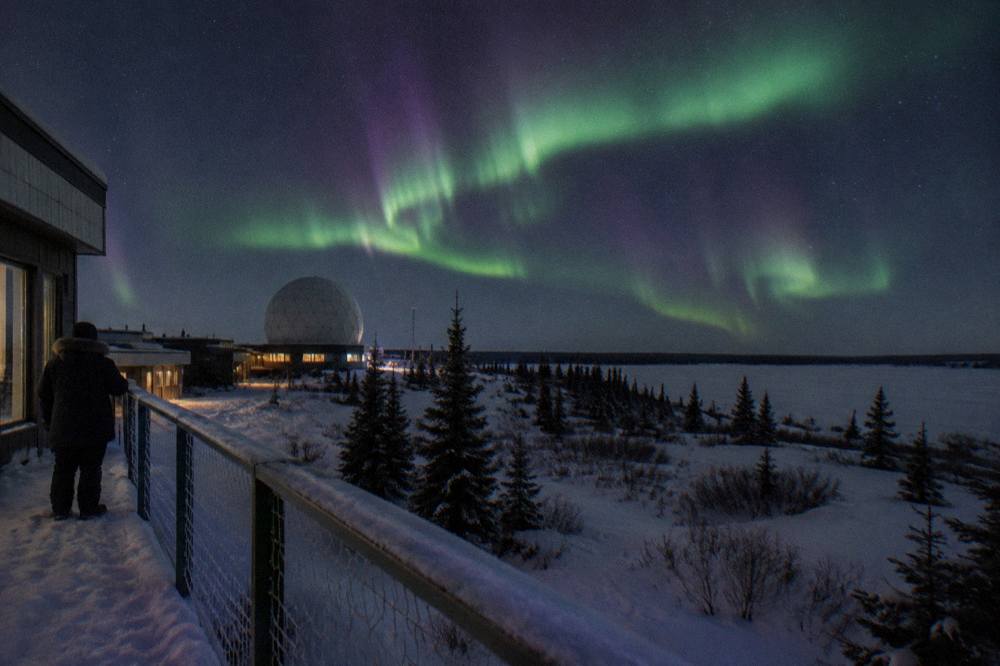
Across the aurora season, typical-year clear opportunity nights at a Kp 1 threshold come to roughly 12.7 for January, 12.2 for February and 10.6 for March. No comparable counts were verified for the shoulder months. The season runs late August to April, with the deep-winter stretch of January to March carrying the longest darkness and the strongest odds.
The table below is the honest version of the month question. The three counted months come from the fresh sweep and are hedged as typical-year figures; the qualitative rows for other months rest on the verified season framing and climate normals, not on invented counts. Temperatures are mean daily values from the verified Environment and Climate Change Canada normals for the Churchill station.
| Month | Aurora standing | Typical clear opportunity nights (Kp 1 threshold, typical year) | Mean daily temperature |
|---|---|---|---|
| January | Peak darkness, deep cold | about 12.7 | -26.0 C |
| February | Peak darkness, clearest skies per Travel Manitoba's calendar guide | about 12.2 | -24.5 C |
| March | Long darkness, noticeably milder | about 10.6 | milder than February |
| April | Season tapers as nights shorten | not counted in the sweep | -9.8 C |
| October | Shoulder season, bear migration by day | not counted in the sweep | -1.2 C |
| November | Good darkness, polar bear season | not counted in the sweep | -12.7 C |
| December | Deep winter, holiday-season cold | not counted in the sweep | -21.9 C |
| Late August | Season opens as darkness returns | not counted in the sweep | 12.3 C (August mean) |
| September | Growing darkness, mildest nights | not counted in the sweep | 6.4 C |
Two patterns deserve emphasis. First, the counted months cluster tightly: January, February and March are close enough in opportunity nights that the choice between them should come down to cold tolerance and flight logistics, not aurora odds. February wins the tie on the Travel Manitoba calendar guide's clearest-and-darkest framing. Second, the shoulder months are not zero. Late August and September carry real aurora potential once the sky darkens again, and they come with the mildest overnight temperatures of the whole season, well above freezing rather than deep below it. A traveler who cannot face deep cold gets a genuine, if shorter, window there.
The months left out of the table are left out for a reason. From late April through mid-August, Churchill's northern latitude delivers nights that never fully darken, and the verified sources frame the season as late August to April. June and July are not aurora months in Churchill, so plan for the bears and belugas instead.
What About Late August And September In Churchill?
Late August and September reopen the aurora season as darkness returns to Churchill, and they are the mildest months in which to stand outside waiting. The nights are shorter than midwinter's, so the viewing window each night is narrower, but the fresh sweep frames the season as running from late August into April. September's mean daily temperature of 6.4 C sits more than 30 degrees above the deep-winter months.
The shoulder-season case is a comfort case. Aurora watching is a waiting game played outdoors, often for hours, often standing on snow or tundra. In February that means serious layered kit and boot warmth; in early September it means a jacket. The trade is mathematical: a February night in Churchill offers well over twelve hours of usable darkness, while an early September night offers a fraction of that before twilight eats the sky. A Kp 1 display at 11 p.m. in September is a gift; the same display has hours more room to appear in February.
The shoulder also stacks activities. September sits inside the beluga window: Travel Manitoba's beluga page records over 57,000 whales moving into Hudson Bay each year, with about 4,000 of those entering the Churchill River estuary, and the whales gather between mid-June and mid-September. A September visitor can, in principle, watch belugas in the estuary in the afternoon and stand under an early-season aurora the same night, without the deep-winter cold. No single tour on this site's roster sells that exact pairing, but the private aurora night drive described below runs on any clear night the traveler books it, and the calendar does the rest.
The honest caveat is that shoulder aurora is a bonus, not the main event. Anyone whose trip exists specifically for the lights should still aim at the January to March core, where the counted opportunity nights sit and where Travel Manitoba points its own best-season advice.
How Cold Is Each Aurora Month In Churchill?
The verified climate normals for Churchill put January at a mean daily of minus 26.0 C, November at minus 12.7 C, April at minus 9.8 C and October at minus 1.2 C. February and December sit between January and November in depth of cold, and March runs noticeably milder than the other core months. The aurora months are the coldest months of the year, and the best viewing window, February and March, sits squarely inside them.
Cold is the price of darkness, and it deserves its own planning section because it decides what a traveler can actually do at night. Standing still for two hours in deep cold is a different activity from walking a town street near zero. The numbers below come from the verified Environment and Climate Change Canada normals table for the Churchill station, the climate reference this site treats as its standard.
| Month | Mean daily | Standing in the aurora season |
|---|---|---|
| January | -26.0 C | Coldest of the counted core months |
| February | -24.5 C | Clearest, darkest skies per Travel Manitoba |
| March | milder than February | The comfort compromise of the core season |
| November | -12.7 C | Bear season with usable darkness |
| December | -21.9 C | Deep winter, short days |
March is the quiet compromise of the aurora calendar. It keeps roughly 10.6 typical-year opportunity nights at the counted threshold while running milder than January and February on the mean daily, and its afternoons warm well past the January maximum. Travelers who want the core season without the deepest cold often land there, and the site's Churchill weather month by month guide carries the full year for anyone comparing against a different travel window.
For tour buyers the cold question translates into vehicle choice. A heated buggy or a warm private car turns a deep-cold vigil into a comfortable one, with dashes outside for photography. The private aurora option on this site's roster is built exactly around that logic, and the winter package pairs scheduled aurora watching with the shelter of a full itinerary.
Churchill Aurora Tours And What Each Month Suits
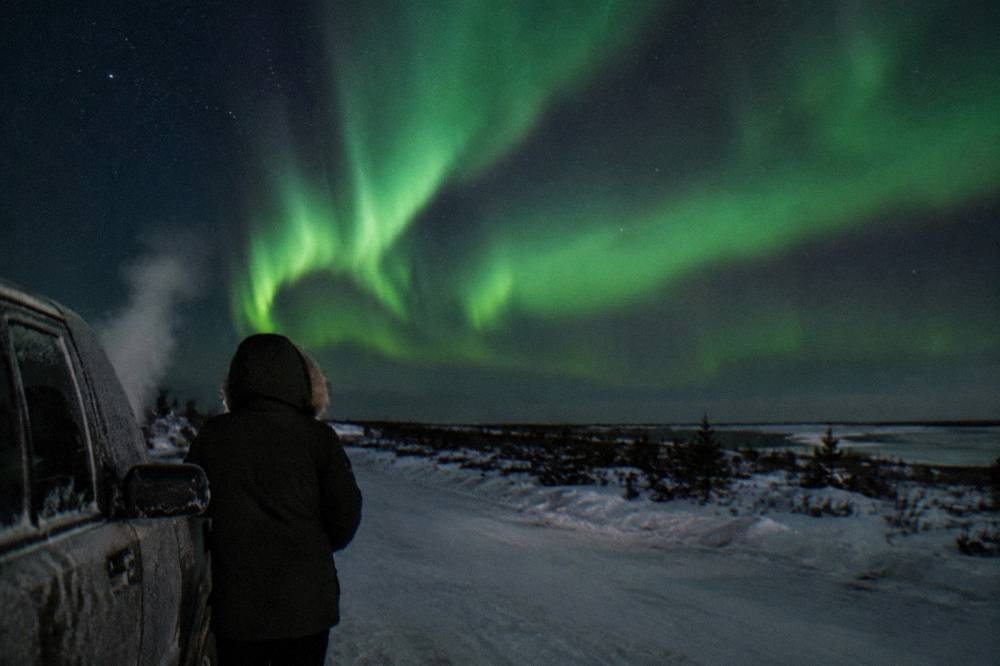
The aurora-relevant roster runs two formats: a six-day winter package from Winnipeg with Frontiers North Adventures, from $5,783 per person, holding a 5.0 rating from 4 reviews, and a private five-hour night drive from $702 per private group of up to 5, with hotel pickup and free cancellation up to 24 hours before. The package suits the February to March core; the private drive works across the season.
The two products answer different versions of the month question. The package, Churchill Northern Lights & Winter Nights, is a six-day, Winnipeg-departing itinerary timed for deep winter darkness, with a group capped at 20 travelers, meals listed, and round-trip flights from Winnipeg included under the packages' shared flight terms. It carries a 5.0 rating from 4 reviews, a small pool this site reports plainly rather than dressing up as a crowd verdict. Its departure structure is the point: the operator concentrates the itinerary inside the darkest weeks, so the month choice is partly made for the buyer.
The private option, Churchill: Private Northern Lights and Arctic Night Car Tour from JAINVOYAGERS INC, is a five-hour night drive out of town in a warm vehicle with just your group, priced from $702 per private group of up to 5 people, with hotel pickup included and free cancellation up to 24 hours before the start. It is a new listing with no reviews yet, which this site states rather than hiding. Because it is a single evening rather than a week, it slots into any month of the season: a February trip built entirely around the lights, or an October trip whose days belong to polar bears and whose nights go to the sky.
The six-day polar bear package in the trio below is the third reference point, less an aurora product than the format most October and November travelers actually buy. Its days run on the tundra in a Tundra Buggy; its nights are free for the sky. For readers comparing the full lineup, the northern lights tours in Churchill guide walks every option in depth.
Can You See Polar Bears And Northern Lights On One Churchill Trip?
Yes, and October into November is the window that does it. The polar bear migration peaks from mid-October to mid-November, when Travel Manitoba says an average of 600 bears roam the Hudson Bay shore, and the aurora season is already open by late August. Late October and November nights are long enough for real aurora viewing, so both headline experiences can share one itinerary.
This is the month question's most common practical form, and the answer changes the buying decision. A dedicated February aurora trip gets the best sky and no bears to speak of; a late-October trip gets the bear migration at its height and a genuine, if secondary, shot at the lights. The classic six-day package from Winnipeg, from $7,926 per person with a 4.8 rating from 59 reviews, is the roster's main vehicle for that combined trip: Tundra Buggy days on the tundra, town time in Churchill, and evenings that belong to whoever books them.
One verified guest review from that package captures why the combined format sells: "This tour was beyond amazing and exceeded expectations! Such a unique experience to see polar bears in their natural habitat and very well organized. Had an awesome guide that always made sure the entire group had everything they needed." That review is about the bears and the guiding, not the sky, which is the honest weighting: an October booking should be bought for the bears, with aurora as the possible bonus.
The combined-trip math also explains why this site's answer to the month question is February for aurora-first travelers and October for bear-first travelers, with the private night drive as the add-on that converts either trip into a two-season one. Its per-group pricing, from $702 for up to 5 people, splits to a per-person cost that undercuts every per-person product on the roster once the vehicle is full, and its 24-hour free cancellation makes it a low-risk evening add-on to a non-refundable package week.
Where To Watch The Aurora Around Churchill
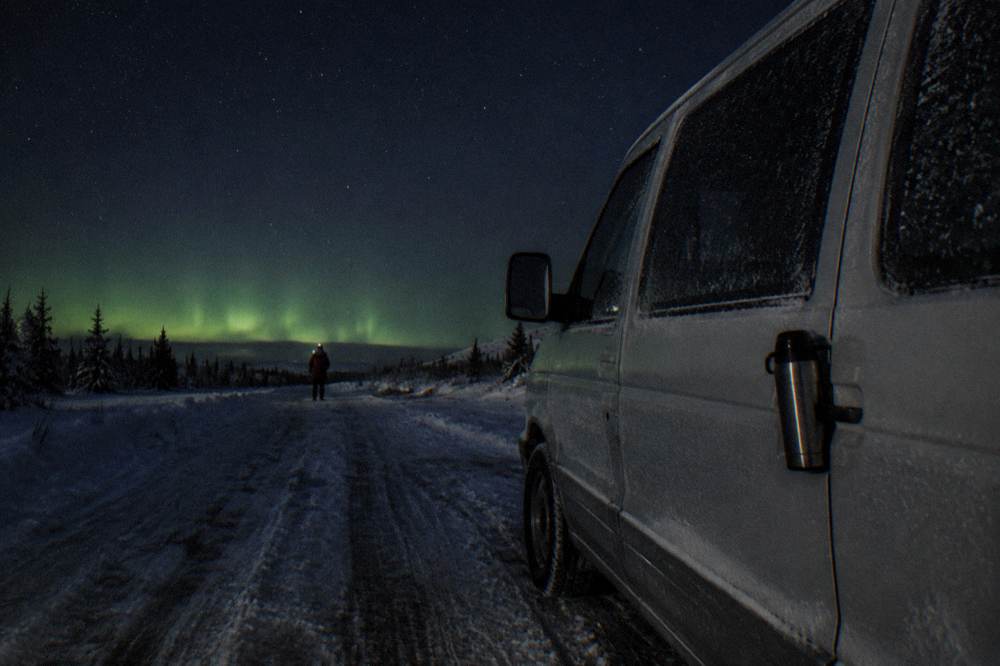
The main aurora viewpoints around Churchill are the open stretches outside the townsite, the Churchill Northern Studies Centre about 23 km east of town with its aurora dome and observation deck, and any dark roadside stop a private tour reaches. Within town, street and building light cuts contrast, so the standard advice is to get away from the grid or to accept dimmer displays in exchange for warmth and shelter.
The Studies Centre deserves its own paragraph because it is the region's institutional aurora venue. The non-profit facility, described on its own site as a research and experiential education centre just outside Churchill, runs learning vacations through the winter, including sky-watching programs in the February to March core, and offers the aurora dome as a heated indoor option alongside its outdoor deck. Its distance from town, about 23 km east, is the same darkness logic that private night drives follow when they head out on the coastal roads.
For independent travelers, the safety framing matters as much as the darkness. Churchill is polar bear country in every month, and the town's own guidance, echoed in this site's safety coverage, is to stay on main well-lit streets when walking at night is unavoidable and to report any bear sighting at once to the Polar Bear Alert line. Standing alone on a dark roadside is not the local custom; going out with an operator, or watching from a vehicle, is. The best time to see polar bears in Churchill guide covers the seasonal overlap in detail for anyone planning the combined trip.
Within the tours on this roster, the venue question is already answered by the product. The private night drive goes where the sky is clear and dark in a warm vehicle with a guide who knows the roads, and the winter package's aurora evenings are built into the itinerary rather than left to the traveler's improvisation. Both approaches convert the month odds in the table above into actual standing-under-the-sky time, which is the only number that finally matters.
Booking Windows And Practical Timing
Travel Manitoba advises planning and booking Churchill trips well ahead, and the verified research notes the autumn Tundra Buggy day tours tend to sell out and are on average booked about 180 days in advance. For a February or March aurora trip, the working assumption should be months of lead time, not weeks, with flights from Winnipeg as the tightest constraint since Churchill is reachable only by air or rail.
The lead-time point is the one buyers most often underestimate. Churchill sits more than 1,000 km northeast of Winnipeg, with no road access; the town of about 900 people, per Travel Manitoba, is served by Calm Air's scheduled flights and by the twice-weekly VIA Rail Hudson Bay line, which takes about 44 hours from Winnipeg. The three Frontiers North packages on this site's roster include the round-trip Winnipeg to Churchill flight, with a 70 lb total luggage limit split as 50 lb checked and 20 lb carry-on, which removes the flight-booking problem from the buyer's plate and is a real part of what the package price buys.
The month choice interacts with lead time in one specific way: February and March departures are booked in the preceding year, often during or just after the previous aurora season, while shoulder-season trips can sometimes come together faster. The private night drive's 24-hour free cancellation makes it the one product in this article that can be added late or changed late; the packages are non-refundable and cannot be changed, per their listings, so the month decision for those is a commitment the day it is made.
This is also where the site's own coverage earns its keep, as Churchill Polar Bear Tours Canada maintains the seasonal guides that turn the month question into a bookable plan: the aurora tour guide, the weather guide and the Winnipeg-departure guide each carry the roster detail this article only summarizes. Check availability on the winter package through the operator's live listing once the month is chosen, since dates and pricing move with each season's release.
Common Questions About The Best Month For Northern Lights In Churchill
What Is The Best Month To See The Northern Lights In Churchill?
February and March. Travel Manitoba names January to March as the best viewing season, and its Churchill calendar guide says February to March offers the clearest and darkest night skies. The typical-year clear opportunity counts at a Kp 1 threshold sit at roughly 12.7 nights for January, 12.2 for February and 10.6 for March, so the three core months are close; February wins the tie on the clearest-skies framing.
Can You See The Northern Lights In Churchill In Summer?
Not usefully. From late spring through midsummer the northern sky never fully darkens at Churchill's latitude, and the verified season framing runs late August to April. Aurora activity may continue overhead, but there is no dark sky to see it against, so summer trips to Churchill are beluga and tundra trips instead.
Is Churchill Good For Northern Lights Compared To Other Places?
Churchill sits directly under the auroral oval, which means displays can occur overhead at low geomagnetic activity levels that produce nothing farther south. Travel Manitoba calls it one of the most reliable spots in the world to see the lights, with activity possible 300 nights a year. The limiting factor is cloud cover, not latitude.
How Cold Is Churchill During Aurora Season?
Cold. The verified climate normals put the January mean daily temperature at minus 26.0 C, November at minus 12.7 C and October at minus 1.2 C. February and December run colder still, while March is the mildest of the core months. Most aurora viewing happens standing still outdoors at night, so heated vehicles and serious layering are part of the plan.
Can You Combine Polar Bears And Northern Lights In One Trip?
Yes, in late October and November. The polar bear migration peaks from mid-October to mid-November, Travel Manitoba says an average of 600 bears roam the Hudson Bay shore in that stretch, and the aurora season is open from late August. Days can go to the tundra and evenings to the sky, with the private night drive as the add-on that books the aurora portion.
Do You Need A Tour To See The Aurora In Churchill?
No, the aurora itself needs only a dark sky and clear weather, and the town's surroundings provide both. A tour adds warmth, local sky knowledge and safe movement at night in polar bear country, which is why the private five-hour night drive and the six-day winter package exist. Within town, the guidance is to stay on main well-lit streets at night.