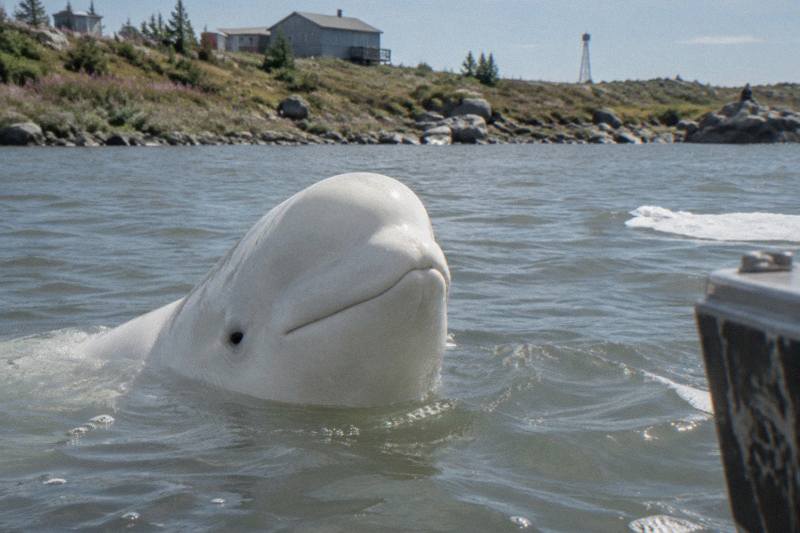
When Can You See Beluga Whales In Churchill?
Beluga whales reach the Churchill River estuary from mid-June to mid-September, with July and August the reliable window. Here is how the season works and which tours run in it.
When Can You See Beluga Whales In Churchill?
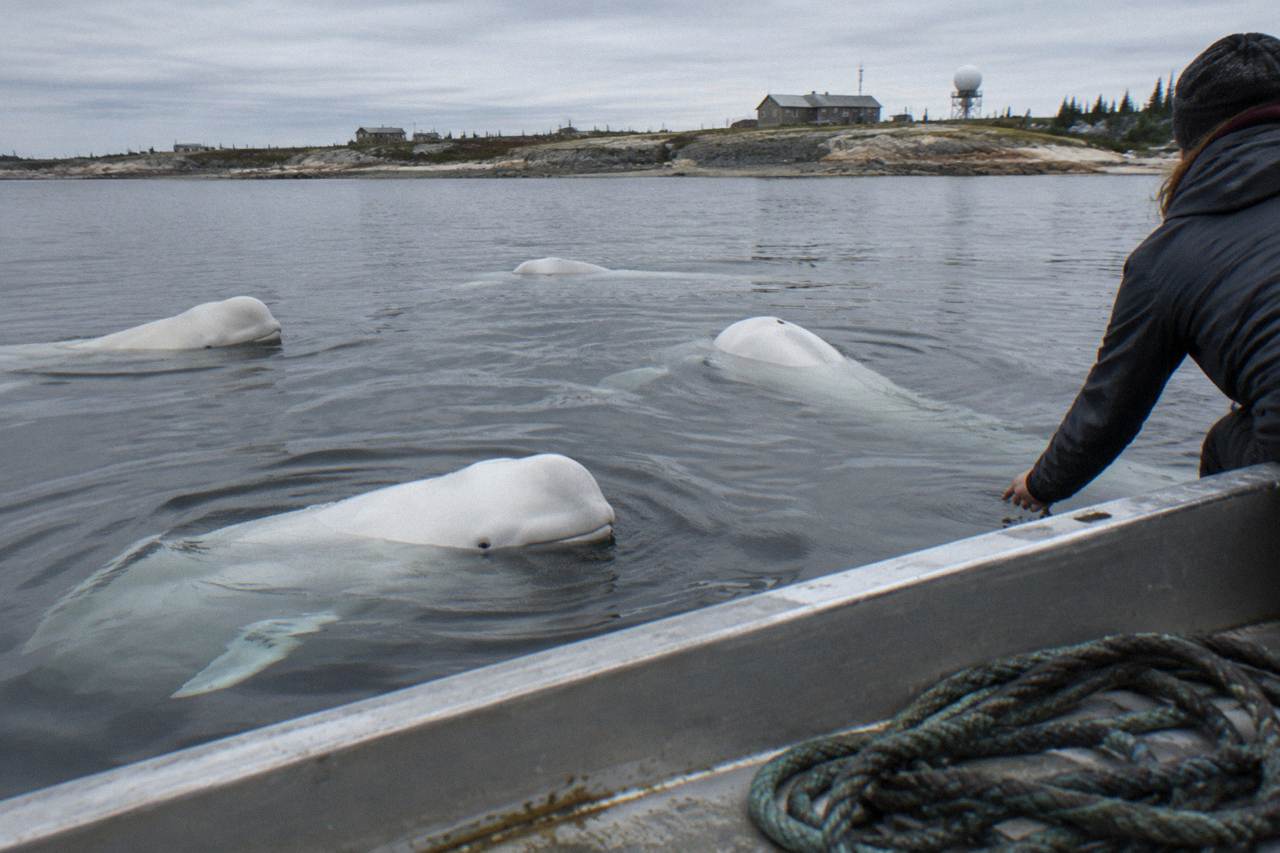
Belugas reach the Churchill River estuary between mid-June and mid-September, and July and August are the sure window. Travel Manitoba reports over 57,000 whales entering Hudson Bay each year, with about 4,000 of those in the Churchill River estuary, and the whales move into the river in biggest numbers when the July and August warmth peaks.
That is the short version, and it is the version that matters most for anyone booking flights. The longer version is that the beluga season in Churchill is not a single event but a slow tide. The first whales follow the retreating sea ice into the river mouth in June, the estuary fills through July, and the population thins again through the second half of September as the whales gather for their migration out of the bay. A trip planned for the shoulder weeks can still work, but it carries more variance, and the water can be quieter than the photographs suggest.
The reason so many whales come here at all is the Churchill River itself. Warm river water meeting cold Hudson Bay creates an estuary where belugas moult, calve and feed in relative shelter, and where the water is shallow enough that the whales surface constantly. Travel Manitoba's beluga page is the primary source for the estuary figures, and it frames Churchill as the beluga whale capital of the world, a claim the summer numbers do support. You can read the seasonal detail on Travel Manitoba's beluga whale page.
For travellers who want the estuary experience wrapped into a full week rather than a single boat ride, the seven-day Churchill Belugas, Bears and Blooms Adventure from Frontiers North Adventures is the one package on this site built around this exact season. It lists from $6,974 per person, runs from Winnipeg with flights both ways, and holds a 5.0 rating from 2 reviews, a small pool worth reading plainly rather than as a guarantee. It is aimed squarely at the July and August window when belugas, the few coastal polar bears that linger in summer, and the tundra wildflowers that peak in July and August all overlap.
If you are weighing how a beluga trip compares with the autumn polar bear packages or the buggy day tours, these three are the natural set to hold side by side.
What Does The Month-By-Month Beluga Season Look Like?
The season opens around mid-June as the ice clears, builds to its peak through July and August, and fades through the first half of September. Local operator Sea North Tours schedules its estuary tours from June 1 to August 31, pending ice, which is the clearest published marker of when the water is actually worked. July and August are the months to build a trip around.
June is the gamble month. The whales begin arriving as soon as the river ice breaks up, and some years the estuary has respectable numbers by late June, but floe ice and tide conditions can delay the start of small-boat touring, and Sea North Tours notes its June floe ice tours run ice and tide dependent, with times confirmed the day ahead. If you go in June, you are going early, and you should expect that some days on the water may be reshuffled around ice.
July is when the estuary turns white. The whales that spent the spring across the wider bay concentrate in the river to moult and to calf, and the surface activity on a calm day is constant: backs, blows, and pale shapes rolling under the boat. August keeps those numbers and adds the last of the summer warmth, and it is also when the tundra wildflowers peak, which is why the seven-day summer package from Winnipeg is timed for this stretch rather than for June.
September is the taper. The first half of the month can still deliver whales, and the mid-June to mid-September window that Travel Manitoba reports closes around the middle of the month. By late September the estuary is quiet, the town's attention turns to the polar bears that gather along the coast ahead of freeze-up, and the boats come out of the water. Anyone hoping to see both belugas and the autumn bear gathering in one trip should not try to squeeze them into the same week; the seasons barely touch.
| Month | Beluga presence | What to expect on the water |
|---|---|---|
| Mid-June | First arrivals, ice-dependent | Estuary tours begin pending ice; floe ice tours may run, times set day ahead |
| July | Peak concentrations | Full estuary numbers, calving and moulting activity, most reliable touring |
| August | Peak holds | Strong numbers, warmest water, wildflowers at peak on the tundra |
| Early to mid-September | Numbers thinning | Whales begin gathering to leave the bay; touring continues until the season closes |
| Late September onward | Effectively over | Estuary quiet; town shifts to polar bear season |
One planning note that follows from the table: the operators who run these boats do not publish a season that outlasts the whales. If a tour is listed as running, the whales are there in numbers worth going out for, and if the calendar shows the season closed, it is closed.
How Many Belugas Actually Come To Churchill?
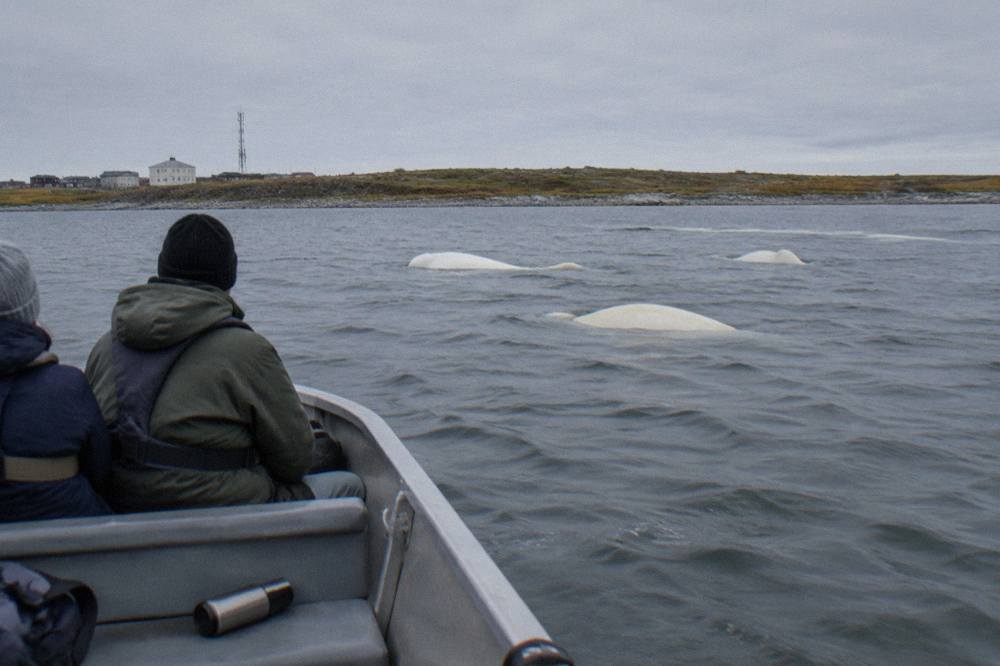
Travel Manitoba reports over 57,000 beluga whales entering Hudson Bay each year, with about 4,000 of those entering the Churchill River estuary. The wider bay figure and the estuary figure answer different questions: the bay total describes the western Hudson Bay population, while the estuary number is the one that matters for what you will see from a boat in Churchill.
The distinction is worth holding onto, because a lot of travel copy blurs it. Four thousand whales in one river estuary is an extraordinary density for a body of water you can cross by boat in an afternoon, and it is why the surface of the Churchill in late July can look almost crowded. The 57,000 figure describes the much larger western Hudson Bay population that spreads across the coastlines, bays and river mouths of the region, of which the Churchill River is one, heavily used piece.
Belugas come to the estuary for a mix of reasons that researchers have documented over decades: the relatively warm, shallow water lets calves grow, the river bottom gives them a place to rub off old skin during the moult, and the concentrated fish runs feed them through the summer. The Churchill Northern Studies Centre, the non-profit research facility about 23 km east of town, runs beluga-focused learning vacations in the same window, which is a reasonable signal of how reliable the summer gathering is as a study subject. Its facility page is at churchillscience.ca.
What the numbers do not promise is any single whale on any single day. Belugas move with tides and fish, and a tour crosses a wild river, not an aquarium. What the numbers do promise is that in July and August the odds of sharing the estuary with whales in serious numbers are about as good as whale watching gets anywhere, and the guest reviews from these waters describe exactly that density rather than luck.
Which Beluga Tours Run In Churchill, And What Do They Cost?
Sea North Tours, the primary local operator, lists 2026 zodiac estuary tours of about two hours at $162.75 CAD plus GST for adults, whale and Fort Prince of Wales tours of about 2.5 to 3 hours from $180 CAD, and kayaking of about three hours at $199.50 CAD plus GST with a minimum age of 8. Its season runs June 1 to August 31, pending ice.
Those are the operator's own listed figures, and they describe the small-boat layer of the beluga experience: short outings from town that put you on the water among the whales for a couple of hours. The zodiac estuary tour is the standard entry point, a fast run out to where the whales concentrate. The Fort Prince of Wales tour pairs the whales with the stone fort across the river at a slightly longer runtime. Kayaking is the closest-to-the-water option, and it is the one with an age floor, so families with young children should read the listing carefully before booking it.
The other layer is the package layer. The seven-day Churchill Belugas, Bears and Blooms Adventure bundles the summer season into a full itinerary from Winnipeg: flights both ways, a 70 lb luggage split of 50 lb checked and 20 lb carry-on, and a group capped at 20 travelers. It lists from $6,974 per person, meals are listed as included, and departure is from the Lakeview Signature hotel in Winnipeg rather than a Churchill meeting point. Its 5.0 rating comes from 2 reviews, so treat it as a promising early record rather than a verdict.
| Tour or package | Format | Listed price | Season fit |
|---|---|---|---|
| Zodiac estuary tour (Sea North Tours) | About 2 hours, small boat | Adult $162.75 CAD plus GST | June 1 to August 31, pending ice |
| Whale and Fort Prince of Wales tour (Sea North Tours) | About 2.5 to 3 hours, boat | From $180 CAD | Same season window |
| Beluga kayaking (Sea North Tours) | About 3 hours, kayak | Adult $199.50 CAD plus GST, minimum age 8 | Same season window |
| Churchill Belugas, Bears and Blooms Adventure | 7 days from Winnipeg, flights included | From $6,974 USD per person | Timed for the July and August peak |
The choice between the two layers is mostly a choice about how much of Churchill you want the trip to carry. A two-hour zodiac run is a morning out of a trip you have built yourself, which suits travellers already in town for other reasons. A seven-day package is the whole trip, built around the estuary and the summer tundra, and it removes the work of stitching flights, lodging and boat days together in a town that has no road access. If you are still deciding between formats, the site's guide to Churchill beluga whale tours walks the options in more detail.
For travellers whose interest in the whales is one part of a wider Churchill plan, the autumn packages are the other half of the town's year, and the classic six-day polar bear experience is the one most often compared against the summer week.
Can You See Belugas And Polar Bears On The Same Trip?
Yes, but the seasons barely overlap, so it usually takes two trips or one carefully timed week. Belugas peak in July and August, polar bears gather from mid-October to mid-November, and the only listings that touch both are the summer package, which mentions polar bears as a secondary sight, and the autumn bear tours, which run after the belugas have left.
The overlap problem is the single most common planning mistake in Churchill. The town markets two great wildlife seasons, and they sit at opposite ends of the calendar. Summer belongs to the whales, the tundra blooms and the birds. Autumn belongs to the bears, which gather along the Hudson Bay shore from mid-October to mid-November waiting for the ice, an average of 600 bears by Travel Manitoba's count, and to the Tundra Buggy days that go out to meet them. Between the two sits late September, when the whales are mostly gone and the bears have not yet arrived in force. The rest of the planning pages sit on Churchill Polar Bear Tours Canada.
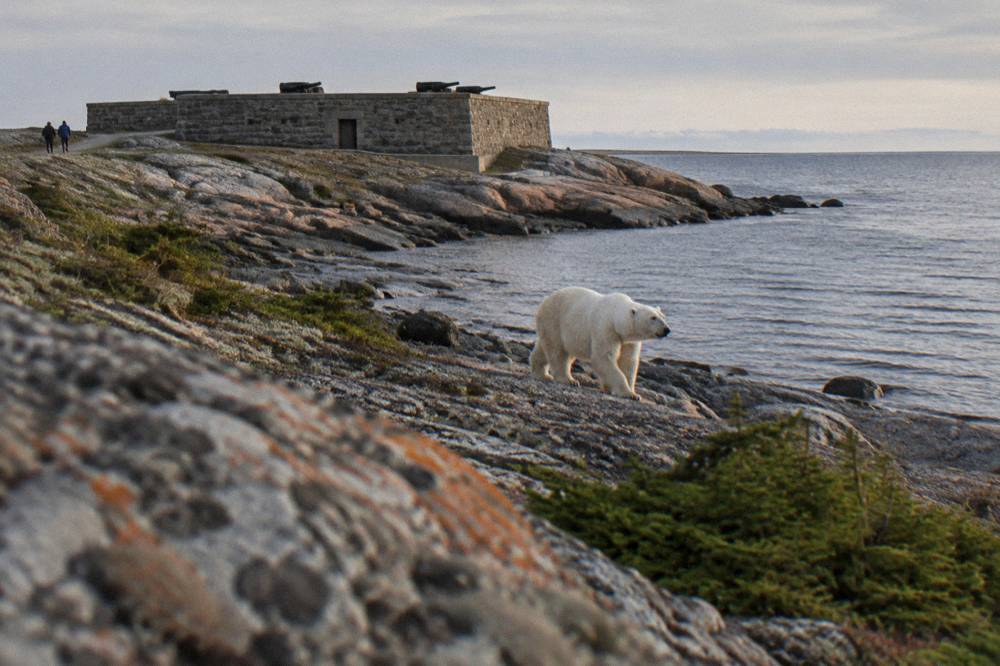
There are two honest ways to bridge it. The first is the seven-day summer package, which names polar bears in its title alongside the belugas, and which does give you a chance at the small number of bears that stay along the coast through July, August and September, though Travel Manitoba notes these are fewer in number than the autumn gathering and that shoreline lodges are the better vantage for them. That is a summer trip with a bear possibility, not a bear trip with whales attached, and it should be booked as the former.
The second is the autumn option, where the bears are the headline and the whales are simply gone. The classic six-day package from Winnipeg, from $7,926 per person with a 4.8 rating from 59 reviews, is the established version of that trip, and guest reviews describe it in exactly those terms. One verbatim review from Michelle G. reads: "This tour was beyond amazing and exceeded expectations! Such a unique experience to see polar bears in their natural habitat and very well organized. Had an awesome guide that always made sure the entire group had everything they needed." That is an autumn bear review, and it is representative of what that season delivers.
For a shorter taste of the autumn side, the eight-hour buggy day with lunch aboard lists from $484 per person and holds a 4.6 rating from 30 reviews, with guests reporting double-digit bear days. One verbatim review from Debbie (Canada) reads: "Our guide, Luke, was passionate and knowledgeable about the area and Polar Bears. His stories were entertaining and informative. He ensured we had the best experience possible resulting in seeing about 12 bears starting with a momma bear and two cubs." Those counts are one guest's day, never a promise, but they explain why the autumn weeks sell out and why the beluga summer is the quieter, easier-booking half of the year.
How Should You Plan Getting To Churchill For Beluga Season?
Churchill has no road access, so the trip in is by air or by rail. Calm Air provides the scheduled direct flights from Winnipeg and Thompson, and VIA Rail runs the Hudson Bay line year-round with two weekly departures in each direction, a journey of about 44 hours. The packages from Winnipeg include the round-trip flight and a 70 lb luggage split.
The rail option is the memorable one. The Hudson Bay line is the only land connection the town has, and the northbound train leaves Winnipeg on Tuesdays and Sundays, arriving in Churchill on the morning of the third day. It is a genuine journey rather than a transfer, and travellers with the time to spend often treat it as part of the trip. The schedule and the year-round service are on VIA Rail's Winnipeg to Churchill schedule page. The site's own Winnipeg to Churchill train guide covers the practical detail of booking it.
For a one-week beluga trip, most travellers fly. The summer package handles this directly, since the round-trip flight from Winnipeg is inside the listing and the luggage rules are fixed at two pieces totalling 70 lbs, 50 checked and 20 carried. Independent flyers book Calm Air themselves, and the frequency of direct flights varies with the season, so summer travellers should check the schedule against their dates rather than assume a daily service.
Timing the arrival matters as much as the mode. A July or August trip wants the flights and the first night in town arranged so that the boat days sit in the middle of the week, not pressed against the travel days. Weather rarely stops the estuary tours outright in peak season, but tides and wind reshuffle departure times, and a buffer day at either end absorbs that without costing you a whale day. The site's Churchill weather guide has the month-by-month numbers; July and August means sit at 12.66 C and 12.28 C on the long-term normals, the two warmest months of the Churchill year.
What Else Comes With The Beluga Weeks?
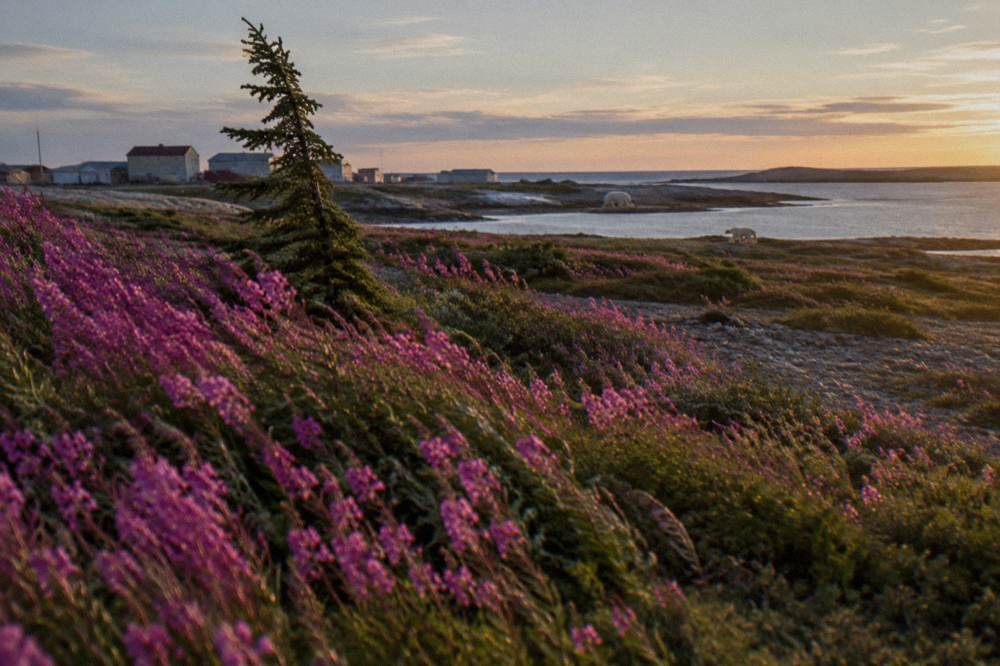
The beluga weeks are also Churchill's wildflower and birding peak. The tundra blooms in July and August, fireweed colours the late July and August fields magenta, and regional birding records list more than 175 species, with nesting activity highest from mid-June to mid-July. The summer package is built around exactly this stack.
This is the part of the summer that surprises first-time visitors. People come for the whales and find a coast in full bloom, because the subarctic compresses its entire growing season into the weeks when the whales are in the river. The same calm, long-light days that make the estuary pleasant to be on make the tundra behind it worth walking, and the two experiences share a season by necessity, not by accident.
The birding runs slightly ahead of the flowers. The mid-June to mid-July stretch is when the shorebirds, waterfowl and Arctic specialists are nesting, so a late-June trip trades a little beluga certainty for peak bird activity, while an August trip trades the birds for the fullest estuary. There is no week that wins everything, which is the honest answer to the question of when exactly to go: pick the week that matches what you most want, and accept that the rest of the summer will be slightly past or slightly early.
The practical stack for a summer week, then, looks like this: whales in the estuary on the water days, wildflowers and bears along the coast on the land days, and long evenings that, by late August, begin to carry the first northern lights of the new aurora season, which Travel Manitoba frames as running from late August into spring. A late-August trip is the only week that touches all three, and it is a reasonable target for travellers who want the fullest version of Churchill's summer. The site's northern lights tours guide covers the aurora side if that third season is pulling at you.
When Should You Book A Beluga Trip?
Book a summer package as far ahead as you can, and treat the peak July and August weeks as the scarce commodity they are. Travel Manitoba advises planning and booking well in advance for Churchill's peak seasons, and while the beluga summer is less pressured than the October and November bear weeks, the town's small bed base and the fixed capacity of its boats do not stretch.
The bear season is the extreme case, and it is instructive rather than directly relevant: the autumn Tundra Buggy days are known to sell to capacity, and the operator's own pages tell travellers to book as early as possible. The beluga summer has not reached that pitch, but the physics of the town are the same. There are a handful of hotels, a small fleet of boats, and a short season, and the week you want is the week everyone else who has read this far also wants.
The cancellation terms are the other thing to read before booking. The seven-day summer package is listed as non-refundable and cannot be changed, which is the standard pattern on the Frontiers North packages from Winnipeg. The two private tours on this site, the road safari and the aurora night drive, are the listings with free cancellation up to 24 hours before start, but they are not beluga products. For the whale week, the honest reading is that the money is committed when the booking is made, and travel insurance is the standard response to that.
If the timing question is still open, the simplest framing is this: decide whether the trip is a whale trip or a Churchill trip. A whale trip goes in late July or August and books the estuary days first. A Churchill trip can go any week of the beluga window and lets the whales be one strand of a week that also carries the flowers, the birds and the coast. The seven-day package serves the second traveller well, and the small-boat listings serve the first.
Before the practical questions, here again are the three products that bracket this decision, the summer beluga week and the two autumn options most often weighed against it.
Common Questions About Beluga Whales In Churchill
When Can You See Beluga Whales In Churchill?
Belugas reach the Churchill River estuary between mid-June and mid-September, and July and August are the sure window. Travel Manitoba reports over 57,000 whales entering Hudson Bay each year, with about 4,000 of those in the Churchill River estuary. Sea North Tours schedules its estuary tours from June 1 to August 31, pending ice.
How many beluga whales come to Churchill each summer?
Travel Manitoba reports over 57,000 belugas entering Hudson Bay annually, with about 4,000 entering the Churchill River estuary. The estuary figure is the one that matters for what you will see from a boat in Churchill.
Can you swim or snorkel with the belugas in Churchill?
Some local operators offer on-water experiences including kayaking, which Sea North Tours lists at about three hours and $199.50 CAD plus GST per adult with a minimum age of 8. What is available, and under what conditions, is set by the operator and the ice and tide state, so check the live listing for the format offered on your dates.
Can you see belugas and polar bears on the same trip?
The seasons barely overlap. Belugas peak in July and August, while polar bears gather along the coast from mid-October to mid-November. The seven-day summer package includes polar bears as a secondary summer sight, in smaller numbers than the autumn gathering, but a trip built around both seasons at full strength usually means two trips.
How cold is Churchill during beluga season?
July and August are the two warmest months of the Churchill year, with long-term daily means of 12.66 C and 12.28 C. On the water the air feels cooler than the town, so layers are the standard advice for boat days.
How do you get to Churchill for beluga season?
Churchill has no road access. Calm Air provides scheduled direct flights from Winnipeg and Thompson, VIA Rail runs the Hudson Bay line year-round with two weekly departures in each direction taking about 44 hours, and the seven-day packages from Winnipeg include the round-trip flight with a 70 lb luggage split.